
For years, the cannabis world has operated on a simple, if not entirely accurate, rule of thumb: indicas for relaxation, sativas for energy. The catchy phrase "in-da-couch" perfectly summed up the expected sedative effect of an indica. But as we've learned more about the plant's science, it's become clear that these labels are just the tip of the iceberg.
The real driver behind a strain's effects isn't its name, but its unique chemical makeup.
Debunking the Indica vs Sativa Myth
For a long time, the community's shorthand worked well enough. You picked a sativa for daytime focus and an indica to unwind at night. This framework was easy to grasp, but it’s an oversimplification that cannabis science has since moved beyond. The true story is far more complex and interesting, and it’s all written in the plant's chemical fingerprint.
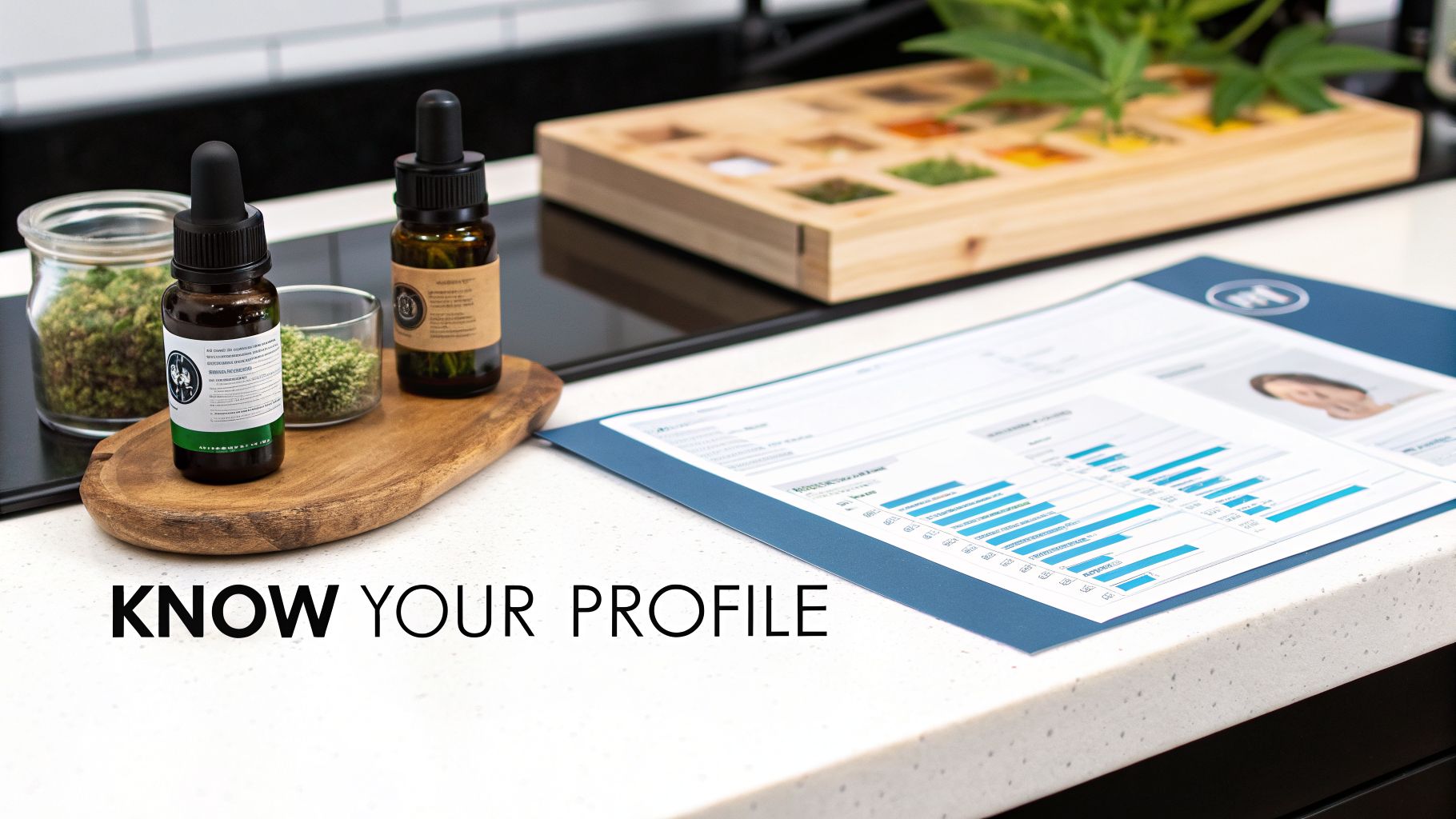
This profile is what we call a chemotype. It’s a detailed breakdown of all the active compounds in a strain, including cannabinoids like THC and CBD and the aromatic oils called terpenes. How these compounds work together—a synergy known as the entourage effect—is what truly shapes your experience.
Key Insight: Two different "sativa" strains can feel worlds apart. If one is rich in the citrusy, uplifting terpene limonene and another has high levels of the more sedative myrcene, you’re going to have two very different experiences. The chemical data matters more than the label.
From Folklore to Science
To really get a handle on this, let's contrast the old way of thinking with what modern science tells us. Funnily enough, the terms "indica" and "sativa" were originally botanical terms that described a plant's physical traits—its height, leaf shape, and flowering time—not its effects.
Understanding this shift helps you make smarter, more predictable choices. When you start paying attention to a strain’s chemotype, you can find what consistently works for you. For instance, digging into the profile of a sativa-dominant hybrid like Blue Dream will tell you more about its likely effects than just its "hybrid" label.
The table below lays out the old beliefs versus our current scientific understanding.
Traditional Beliefs vs Modern Science
This table contrasts the traditional, often misleading, classifications of cannabis strains with the modern, science-backed understanding based on chemical profiles.
| Strain Type | Traditional Perceived Effect | Modern Scientific Driver of Effects | Common Terpene Profile |
|---|---|---|---|
| Indica | "In-da-couch" sedative, full-body relaxation, ideal for nighttime. | High concentrations of the terpene myrcene, often with linalool and caryophyllene, steering the THC toward relaxation. | Myrcene, Linalool, Caryophyllene |
| Sativa | Uplifting, creative, cerebral energy, ideal for daytime activities. | Dominance of terpenes like limonene, terpinolene, and pinene, which guide THC toward stimulating effects. | Limonene, Pinene, Terpinolene |
| Hybrid | A balanced mix of both, or dominant in one direction (e.g., indica-dominant). | A blended profile of cannabinoids and terpenes designed to achieve a specific, targeted outcome (e.g., pain relief with alertness). | Varies widely based on genetics. |
Ultimately, true mastery over your cannabis experience comes from looking past the indica, sativa, and hybrid labels. By focusing on the detailed lab results and terpene profiles—information that a good delivery service like Green Express DC should provide—you can pinpoint the perfect product for whatever you're looking to achieve, whether it’s deep relaxation, creative energy, or social buzz.
Why Strain Labels Are Becoming a Thing of the Past
If you’ve been around the world of cannabis for a while, you probably learned the classic "rules." Indica for "in-da-couch" relaxation, sativa for a soaring, energetic buzz, and a hybrid for somewhere in the middle. For a long time, it was our only roadmap. But the truth is, those labels were never meant to describe a strain's effects.
Believe it or not, the terms date back to 18th-century botanists. Cannabis sativa was simply their name for the tall, skinny-leafed plants in warmer climates. Cannabis indica described the short, bushy plants with wide leaves from the cooler mountains of India and Afghanistan. It was purely about a plant's physical structure—not its chemical magic.
The Great Genetic Mix-Up
So, how did we get from a simple botanical description to a confusing market? Decades of enthusiastic cross-breeding have turned the cannabis gene pool into one big, beautiful, and very complicated soup. Growers have been chasing specific flavors, higher potencies, and unique effects for so long that nearly every strain you'll find today is technically a hybrid.
Finding a pure, untouched landrace sativa or indica is now like spotting a unicorn. This genetic free-for-all means you can no longer judge a book by its cover; a plant that looks like a classic indica might deliver a racy, cerebral high you'd expect from a sativa.
The market stats back this up. It's estimated that over 60% of cannabis strains on the market today are hybrids, completely upending the old indica vs. sativa debate. This huge shift happened because growers figured out that blending genetics gives them far more control over the final experience. Think about it—some of the most popular strains, like GG4 (with around 20% THC) for deep relaxation or certain Sour Diesel hybrids (hitting up to 31% THC) for stress-melting energy, are all hybrids. You can learn more about how the industry's evolution has reshaped strain chemistry by reviewing these findings.
Beyond Indica and Sativa: Meet the Chemotype
If the old labels are failing us, how can we reliably predict our experience? The answer is to look at a strain’s chemotype—its unique chemical fingerprint. This is where we move past the folklore and focus on the data that actually matters. It all comes down to two key players.
- Cannabinoids: These are the main active compounds, with THC and CBD being the most famous. Their specific ratio and percentage are the primary drivers of a strain's potency and overall effects.
- Terpenes: These are the aromatic oils that give a strain its unique smell and taste. But they do so much more—they are the "steering wheel" for your high, shaping and directing the effects of the cannabinoids.
Think of a strain's chemotype as its nutritional label. It provides precise, actionable information, letting you move beyond the guesswork of "indica vs sativa vs hybrid effects" and choose a product based on a predictable outcome.
Here’s a perfect example of why this matters. You could have two different strains, both testing at 22% THC. But one is packed with the relaxing, sedative terpene myrcene, while the other is full of the bright, zesty terpene limonene. Despite having the same THC level, their effects will be worlds apart. One will have you melting into the couch for a movie marathon, while the other might have you cleaning your entire apartment with a smile.
This is exactly why a modern, transparent service like Green Express DC prioritizes providing you with detailed, lab-verified data. When you can see a strain's full chemical profile, you can stop shopping by a name and start shopping by the numbers. It’s the key to making an informed choice and finding the exact experience you’re looking for, every single time.
Understanding the Entourage Effect
So, if the indica, sativa, and hybrid labels are just loose guidelines, what really determines how a strain makes you feel? The answer is a fascinating chemical symphony inside the plant called the entourage effect. It’s the simple idea that all the compounds in cannabis work together, creating an effect that’s much greater than the sum of its parts.
Think of it like a band. THC is the charismatic lead singer, setting the main vibe and getting most of the attention. But the experience isn't complete without the other musicians—the other cannabinoids like CBD and, crucially, the aromatic compounds known as terpenes. They're the guitarist, bassist, and drummer who add depth, shape the melody, and define the overall mood of the song.
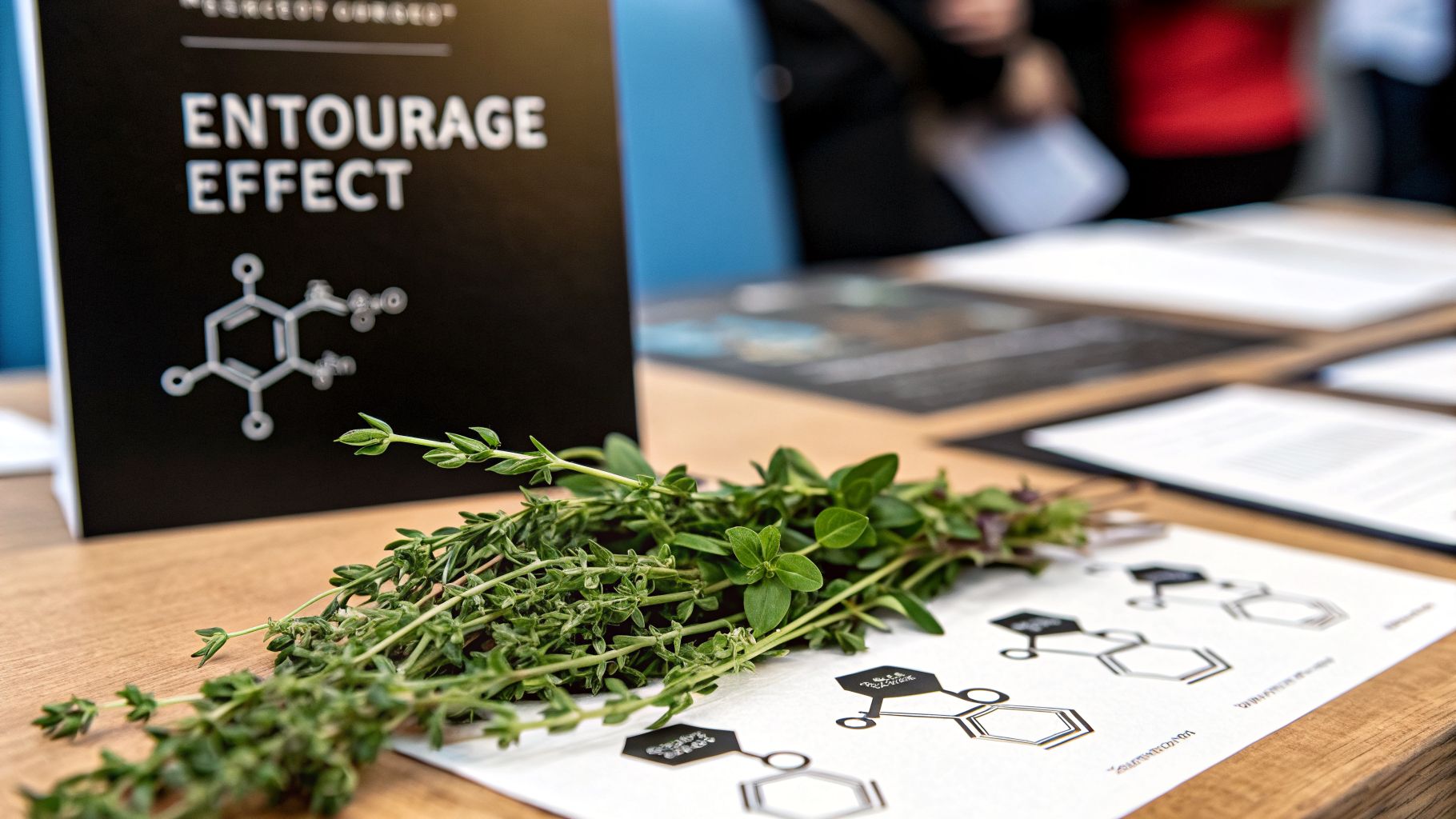
This is why fixating on THC percentage is one of the biggest mistakes you can make. A strain with 20% THC can feel worlds apart from another one with the exact same potency. The entourage effect is the reason why.
The Dynamic Duo: Cannabinoids and Terpenes
To really get a handle on this, you need to know the two main groups of compounds that create the entourage effect. These are the key players that truly define the indica vs sativa vs hybrid experience.
First, you have the cannabinoids, which are the primary active compounds. THC (Tetrahydrocannabinol) is the most famous, of course—it’s what produces the psychoactive “high.” Then there's CBD (Cannabidiol), which is non-intoxicating but plays a huge role in toning down THC's intensity, often reducing potential anxiety and adding its own therapeutic qualities. The ratio between these two is a massive factor.
Next up are the terpenes. These are the fragrant oils that give different strains their signature smell and taste, from the sharp citrus of a Haze to the deep, earthy pine of a Kush. But they do so much more than just smell nice. Terpenes are bioactive, meaning they work directly with cannabinoids to steer the high in a specific direction.
Key Takeaway: The entourage effect is the powerful synergy between cannabinoids and terpenes. You can think of terpenes as the "directors" of the experience, guiding THC to produce targeted effects like relaxation, creativity, or focus.
How Terpenes Steer Your High
Terpenes are the true secret to dialing in your perfect cannabis experience. While there are over 150 known terpenes, just a handful tend to dominate a strain’s profile and have a huge say in its final effects.
Getting to know these main players is a far more accurate way to predict how a strain will hit than just going by the old indica/sativa labels.
Common Terpenes and Their Typical Effects:
- Myrcene: This is the terpene most people associate with classic "indica" effects. It has a musky, earthy aroma and is known for promoting sedation and deep relaxation. If you’ve ever felt "couch-locked," you can probably thank myrcene.
- Limonene: Just like the name suggests, this one has a bright, zesty citrus scent. It's tied to an uplifting mood, stress relief, and a burst of energy, making it a star player in many "sativa" profiles.
- Pinene: With a crisp, clean scent of pine, this terpene is thought to help with alertness and memory retention. It’s fantastic for cutting through the potential mental fog that THC can sometimes bring.
- Caryophyllene: This terpene has a spicy, peppery kick. What’s unique about caryophyllene is that it also acts like a cannabinoid, binding to receptors in the body to help ease pain and inflammation.
The real story behind indica, sativa, and hybrid effects isn't in the name, but in the chemical profile. Indicas often have a higher CBD-to-THC ratio for that body-heavy relaxation, but the terpenes seal the deal. Myrcene (often 0.5-3% in indicas) pushes sedation, while pinene (0.2-0.8% in sativas) sharpens your mind. Hybrids? They're just a blend of these profiles, offering incredible versatility.
For anyone shopping with Green Express DC—from first-timers to experienced users picking up prerolls, vapes, or concentrates—this knowledge is power. It means you can look at a lab-tested menu and choose a product whose effects are backed by science, not by old-school myths. Since California's medical legalization in 1996, the data we've gathered on strains has shown that chemical composition leads to 90% more accurate outcomes for consumers. Discover more insights about strain chemistry on Healthline.com.
By learning to read these chemical cues, you can move beyond the labels and choose a product for its true properties, ensuring you get exactly the experience you’re looking for.
Matching Strain Profiles to Your Needs
Knowing the science behind chemotypes and the entourage effect is interesting, but the real fun starts when you apply that knowledge. This is how you move past the old "indica vs. sativa" debate and start choosing cannabis with a specific goal in mind, whether that's firing up your creativity, dialing down pain, or just letting go of the day. It’s all about finding a strain whose chemical makeup aligns with what you want to feel.
Let's walk through how different chemotypes work for different situations. The secret is to look at the main terpenes in a strain and think about how they'll play with cannabinoids like THC and CBD.
Morning Creativity vs. Evening Relaxation
Picture this: you have a big creative project to tackle first thing in the morning. You’re looking for focus and a spark of inspiration, not something that will glue you to the couch. This is the perfect job for a strain high in limonene and pinene. A classic choice would be something like a Jack Herer phenotype, whose profile is all about promoting alertness and a clear-headed buzz ideal for brainstorming.
Now, flip the script to the end of the day. Your goal is to unwind, melt away stress, and set yourself up for a good night's sleep. You'll want a completely different profile, this time one loaded with myrcene and linalool. A strain like GMO Cookies, famous for its powerful and deeply relaxing effects, is a perfect fit here. Its terpenes guide the high toward physical calm and sedation.
Practical Tip: Instead of just asking your budtender for an "indica," try asking for something "with a lot of myrcene for sleep." If you need a daytime boost, ask for a strain that's "high in limonene for focus." Speaking in terms of terpenes gets you much closer to the effect you’re actually looking for.
Market trends absolutely back this up. Sativas like Green Crack (around 17% THC) are popular for their energetic buzz, while Lemon Haze (18% THC) is a favorite for shaking off fatigue. On the other side of the spectrum, indicas like Purple Punch (19% THC) are synonymous with relaxation, and the heavy-hitting GMO Cookies (often over 25% THC) is a go-to for pain and insomnia. Hybrids, which saw a 40% jump in sales after 2018, are often bred for these specific outcomes—from the happy buzz of Sherbert (18% THC) to the pain-soothing relief of a high-CBD strain like Sour Tsunami (<1% THC, 12% CBD). You can see more about how consumers are choosing strains based on these effects on Cannavine.com.
Tailoring Strains for Specific Scenarios
This approach of matching chemotypes to your needs works for just about any situation you can think of. Once you get a feel for what the key terpenes do, you can start building a personal cannabis toolkit for any occasion.
Common Scenarios and Ideal Profiles:
- Social Gatherings: If you want to feel relaxed but still sharp and chatty, look for a balanced mix of linalool (for calm) and limonene (for mood). A moderate THC level is also a good idea to keep any potential anxiety at bay.
- Enhancing a Workout: It might sound strange, but the right strain can be a fantastic workout partner. You’ll want a profile rich in terpinolene and pinene. A great example is the pure sativa Durban Poison, known for its clean, focused energy that won't weigh you down.
- Easing Chronic Pain: For nagging, persistent pain, a combination of high THC and the terpene caryophyllene (known for its anti-inflammatory properties) is often the answer. Adding myrcene to the mix can bring a welcome layer of physical relaxation to soothe sore muscles and joints.
When you shift your focus from the simple indica/sativa labels to the richer details of a strain's chemical profile, you gain an incredible amount of control. It means you can browse a delivery service like Green Express DC and pick something not just because of its name, but because you know its science-backed profile will deliver the exact effect you need in that moment.
How to Choose the Right Strain for You
Walking into a dispensary or browsing an online menu can feel like staring at a foreign language. With countless strains and confusing names, how do you find the one that’s actually right for you? It's easy to get lost, but there's a straightforward way to cut through the noise. The secret is to stop focusing on the old indica vs. sativa labels and start looking at the strain’s actual chemical makeup.
It all boils down to one simple question: What is your goal? Before you even glance at a strain name, you need to know what you want to feel. Are you looking to spark some creative energy for a project? Maybe you need to unwind and get a solid night's sleep. Or perhaps you're just trying to find some relief from nagging pain. Your desired outcome is the single most important piece of the puzzle.
This little flowchart is a great starting point for thinking about your goals.
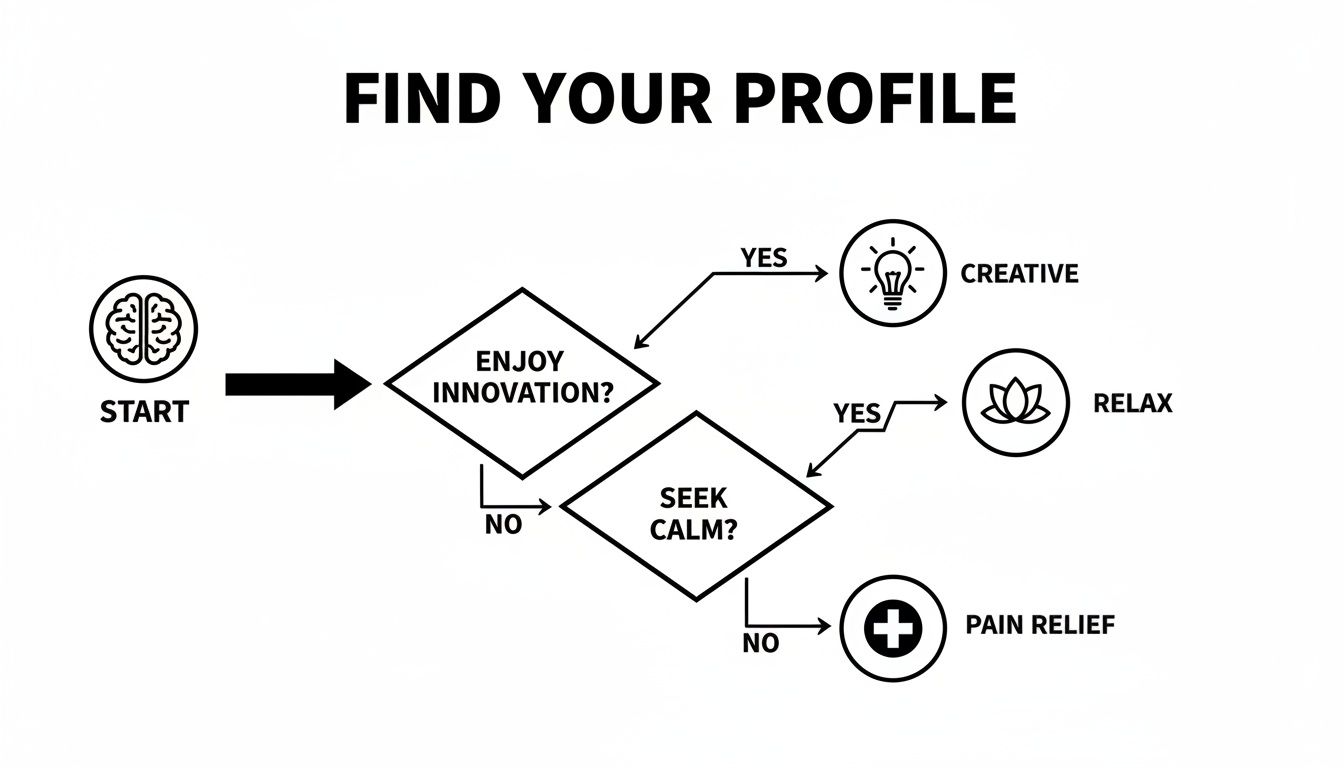
Think of this as your first fork in the road. It helps you move from a vague idea to a more specific target like creativity, relaxation, or pain management.
Analyze the Chemical Profile
Once you have a goal, it's time to play detective with the product details. The lab-tested numbers are where the real magic happens—this data tells you what a strain will actually do, far more accurately than its name or classification.
1. Check the Cannabinoid Percentages
First, look at the THC and CBD levels. THC is what provides the main psychoactive effect, so that percentage gives you a good idea of the strain's overall strength. If you're newer to cannabis or know you're sensitive, a strain with 5-15% THC is a comfortable place to start. For those with more experience, something in the 20-30% range might be more suitable. A higher CBD content can often mellow out the THC, leading to a much clearer and less anxious high.
2. Hunt for the Dominant Terpenes
This is the single most important step for understanding the vibe of the high. If cannabinoids are the engine, terpenes are the steering wheel. They truly direct the experience.
- Want to feel energized and focused? Look for strains high in limonene, pinene, or terpinolene.
- Looking for deep relaxation and sleep? You’ll want a profile rich in myrcene and linalool.
- Need pain and inflammation relief? Prioritize strains that list caryophyllene and myrcene as dominant.
A top-notch delivery service like Green Express DC makes this part easy by giving you detailed descriptions of their lab-tested, organic products. That kind of transparency is your best friend when you're trying to find the perfect match.
Consider Your Consumption Method
Finally, don't forget that how you use cannabis completely changes its effects. You can take the exact same strain, but the experience will be wildly different depending on whether you smoke it or eat it.
- Inhalation (Flower/Vapes): This is the fast track. You’ll feel the effects within minutes, but they also fade more quickly. This gives you a ton of control over your dosage—you can take a single puff, wait 10-15 minutes to see how you feel, and then decide if you want more.
- Ingestion (Edibles/Tinctures): This method delivers a much heavier, longer-lasting body high. Because the effects are delayed (30-120 minutes), the golden rule is to start low and go slow. A typical beginner dose is just 2.5-5mg of THC.
By asking yourself these three things—what's my goal, what's the chemotype, and how will I consume it?—you can navigate any menu like a pro. It turns guesswork into a reliable process. For instance, if deep relaxation is what you're after, you could start by looking into a classic like the Bubba Kush strain and checking its profile for that tell-tale myrcene content.
Getting Your Consumption Right: Safety and Best Practices
Knowing the difference between an indica and a sativa is a great start, but how you consume it matters just as much. If there's one piece of advice to take to heart, it's this: “start low and go slow.” This isn't just a catchy phrase; it's the single best way to guarantee a good experience, especially if you're new to cannabis or trying a stronger product.
Everyone reacts differently. Your personal tolerance, body chemistry, and even what you ate for lunch can change how a strain affects you. A dose that’s perfect for your friend might be way too much for you, so approaching with a little caution is always smart.
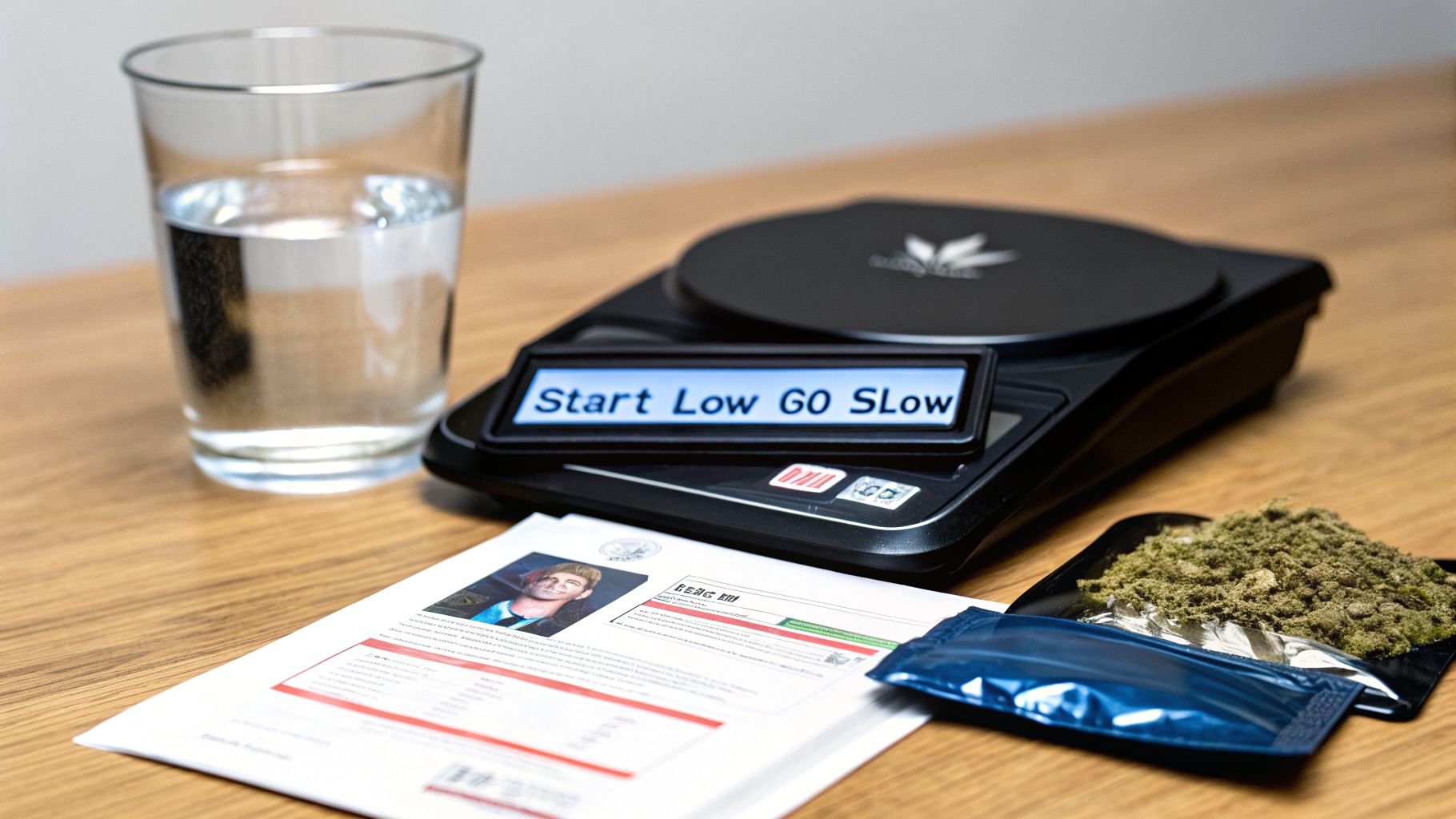
This advice is doubly important when you're dealing with edibles. Because they're processed through your liver, the effects take much longer to kick in and can be significantly more powerful and long-lasting than smoking or vaping.
What to Do If You've Had Too Much
Even seasoned users can sometimes find themselves in a little deeper than they intended. If a high becomes uncomfortable and you start feeling anxious or paranoid, don't panic. These feelings are temporary and manageable.
Here’s what you can do to get back to a comfortable headspace:
- Change Your Scenery: Find a quiet, cozy spot where you feel secure and can relax.
- Hydrate: A simple glass of water can be surprisingly grounding. Just sip on it slowly.
- Grab Some CBD: If you have any CBD oil or flower on hand, it can work wonders to ease the intensity of THC and mellow you out.
- Breathe: It sounds simple, but focusing on slow, deep breaths is a powerful tool for calming your nervous system.
The easiest way to handle side effects is to avoid them in the first place. Sticking to strains with a more balanced THC-to-CBD ratio or those high in calming terpenes like linalool can help you have a much more predictable and gentle experience.
A Quick Note on DC's Local Rules
Enjoying cannabis in the District means playing by the local rules. First and foremost, you must be 21 or older to possess or consume cannabis products here.
When you place an order with a delivery service like Green Express DC, be prepared to show a valid, government-issued photo ID to the driver. This is a mandatory step for every single delivery, ensuring everything stays safe and legal for everyone. A little mindfulness about the law and your own consumption goes a long way in making every cannabis experience a great one.
A Few Common Questions
It's natural to have questions as you navigate the world of cannabis, especially with terms like indica, sativa, and hybrid still being so common. Here are some straightforward answers to help you make smarter choices, especially for those of us enjoying cannabis here in Washington, D.C.
If Indica And Sativa Labels Are Unreliable, Why Do Dispensaries Still Use Them?
Honestly, it’s mostly out of habit. These labels are a throwback to the old days of cannabis culture, and they give people a familiar, if flawed, starting point. For a long time, it was the only system we had.
While a strain's actual chemical profile (chemotype) tells you the real story, the old labels can sometimes offer a clue about a plant's genetic background or even how it grew. Just remember to treat the lab data as the truth and the indica/sativa label as a suggestion.
How Can I Place An Order As A Visitor In DC?
Ordering cannabis in DC is incredibly simple, whether you're a tourist or a local. All you need to be is 21 or older. You just find a delivery service you like, browse their menu online, and place your order.
Just have your valid, government-issued photo ID handy to show the driver when they arrive. Keep in mind that most services have a minimum order amount and usually operate on a cash basis.
A Budtender's Tip: When you're trying to figure out how a strain will really feel, the terpene profile is your most trusted guide. An "indica-dominant" label doesn't promise relaxation any more than a "sativa-dominant" one guarantees energy. The terpenes run the show.
Does An Indica-Dominant Hybrid Guarantee Relaxing Effects?
Not at all. While the "indica-dominant" tag is meant to suggest a calming experience, the terpenes are the ones actually steering the ship. For example, you could have an indica-dominant hybrid that's high in an energizing terpene like limonene, and it might end up feeling surprisingly uplifting.
Always look for the dominant terpenes listed in the product description. That will give you a much more accurate forecast of the effects you can expect.
Are Edible Effects Different From Smoking The Same Strain?
Yes, and it's a night-and-day difference. When you eat cannabis, your liver gets involved and converts THC into a compound called 11-hydroxy-THC. This new compound is much stronger and lasts significantly longer than the THC you inhale.
This process is why edibles produce such a powerful body high that can take anywhere from 30 minutes to two hours to kick in. It is absolutely crucial to start with a very small dose, like 2.5-5mg of THC, and wait to see how you feel before even thinking about taking more.
Ready to find your perfect match with a menu that's all about transparency and quality? Green Express DC delivers premium, lab-tested flower, vapes, and edibles right to your door. Check out our selection and place your order today.