
The standard preroll often serves as a cautionary tale of low-quality shake and inconsistent burns. For the discerning professional in the District, settling for generic products or unreliable wait times isn’t a necessity. You deserve a sophisticated experience that prioritizes purity and precision. Finding reliable preroll delivery dc services means looking for transparency, lab-tested quality, and a commitment to current regulations.
It’s frustrating to wait hours for a delivery that arrives in indiscreet packaging or contains sub-par material. We understand that your time and privacy are paramount. This guide provides the blueprint for identifying top-shelf, organic cannabis and accessing a seamless concierge service. You’ll learn how to verify product testing, select joints that offer a clean burn, and secure same-day delivery that fits into a high-performance lifestyle. We’re moving past the guesswork to establish a new gold standard for your cannabis needs.
Key Takeaways
- Learn to distinguish between harsh shake fillers and premium, organic flower used in high-tier artisanal joints.
- Access 24/7 same-day preroll delivery dc to ensure your products arrive discreetly and exactly when you need them.
- Understand how professionally rolled options eliminate the need for grinding or preparation, providing a portable solution for busy schedules.
- Identify the ideal cannabis strains for every professional occasion, from focus-driven sativas to relaxing indicas for evening recovery.
- Prioritize safety and reliability by choosing lab-tested products that meet rigorous quality standards and District compliance.
What are Prerolls and Why are They the Gold Standard for DC Convenience?
A preroll is a professionally manufactured cannabis joint, prepared for immediate consumption. It removes the manual labor of grinding, packing, and rolling, offering a consistent experience every time. Historically, consumers relied on hand-rolled options with varying degrees of success. The market has since evolved into a sophisticated industry where artisanal quality meets clinical precision. Modern products are lab-verified for purity and potency to ensure safety. If you’re curious about the origins and cultural context of this method, What is a cannabis joint? provides a foundational look at its history.
In Washington, DC, the demand for high-end prerolls has surged among professionals who value their time and privacy. The local market operates within a unique legal framework. While the District has transitioned toward a more formally regulated market under the ABCA, the I-71 compliance model established the foundation for the current “gifting” and delivery culture. For many residents, preroll delivery dc represents the ultimate utility. It bypasses the need for specialized equipment and provides a ready-to-use solution that fits into a high-performance lifestyle.
The Anatomy of a Professional Preroll
Quality begins with the internal structure. A professional preroll features a sturdy crutch, or filter, at the base. This component is vital for maintaining consistent airflow and structural stability. It prevents the joint from collapsing and ensures you don’t inhale loose plant material. Uniformity is the next hallmark of excellence. A perfectly tapered conical shape promotes a slow, even burn. This prevents “boating,” where one side burns faster than the other. High-quality rolling papers also play a critical role. Premium services use ultra-thin, organic hemp or rice papers that burn cleanly without altering the delicate terpene profiles of the flower.
Why Preroll Delivery is Growing in 2026
The shift toward concierge-style retail is accelerating in metropolitan areas. DC residents often manage demanding schedules and require services that mirror their need for efficiency. Waiting in physical lines is no longer the standard for a premium experience. Modern preroll delivery dc services focus on three primary advantages:
- 24/7 Availability: Reliable services cater to the city’s unique rhythm, offering access at any hour.
- Logistical Speed: Same-day fulfillment consistently outperforms the time spent traveling to and from a traditional dispensary.
- Privacy: Discreet packaging and direct-to-door service provide a level of security that retail shopping cannot match.
By choosing a professional delivery model, you’re opting for a streamlined, tech-forward solution. It removes the guesswork from the selection process and ensures that top-shelf, organic cannabis is always within reach.
Anatomy of a Top-Shelf Preroll: Quality vs. Shake
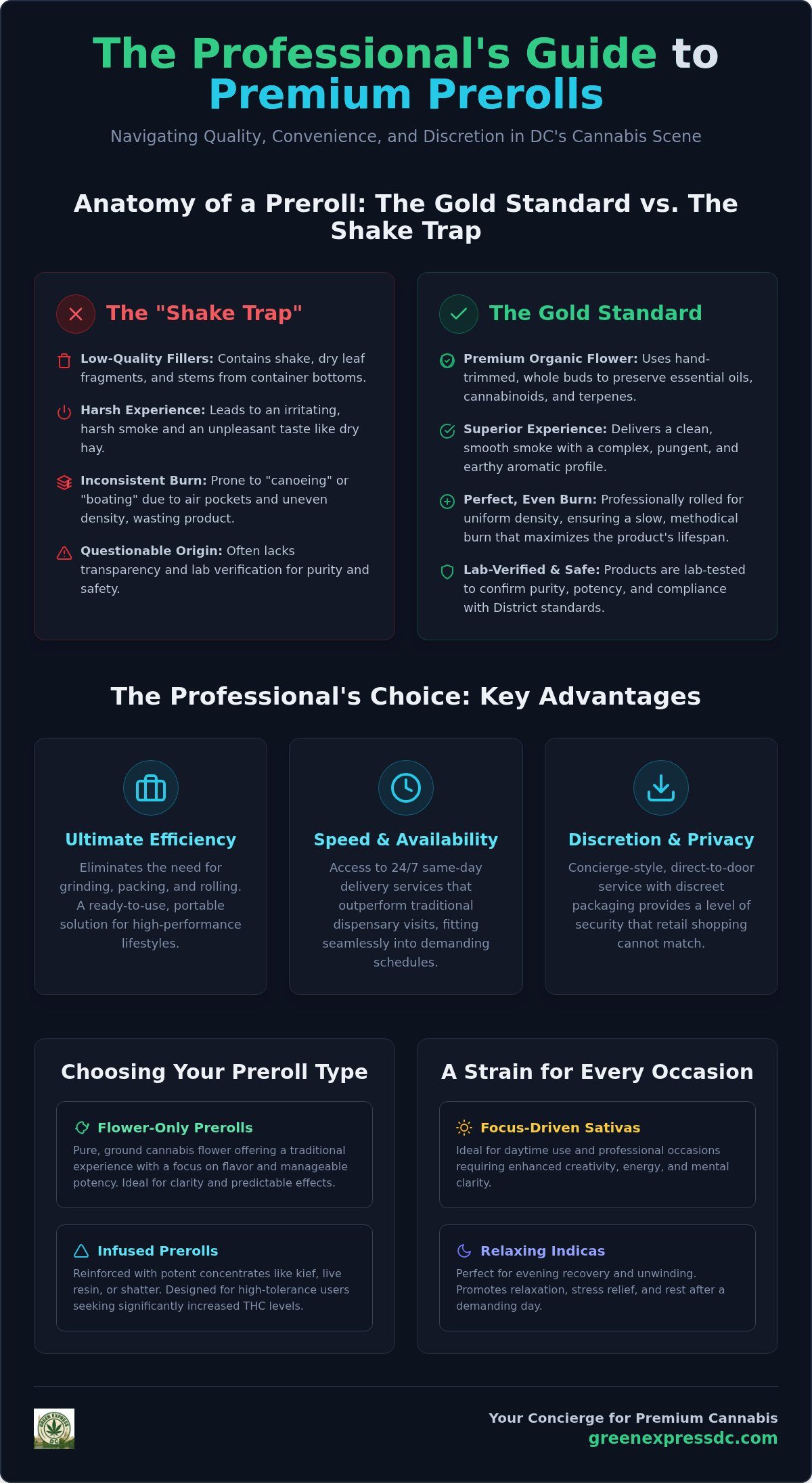
The “shake trap” is a common pitfall for those seeking value over quality. Low-cost products often contain the debris left at the bottom of storage containers. This material includes dry leaf fragments and stems that lead to a harsh, throat-irritating smoke. In contrast, a top-shelf joint uses hand-trimmed, organic flower. This preserves the essential oils and cannabinoids that define the strain’s character. When utilizing a preroll delivery dc service, verify that the provider uses whole buds. Premium flower offers a complex aromatic profile. It should smell pungent and earthy, never like dry hay.
Professional rolling technology ensures a superior burn rate. Manual rolling often results in air pockets or uneven density. These flaws cause “canoeing,” where the fire travels up one side of the joint. Reliable preroll delivery dc providers use specialized equipment to achieve perfect uniformity. This leads to a slow, methodical burn that maximizes the lifespan of your cannabis and ensures no product is wasted.
Flower-Only vs. Infused Prerolls
Standard rolls contain pure, ground cannabis flower. They offer a traditional experience with a focus on flavor and manageable potency. These are ideal for those who prefer a controlled, predictable effect during the day. Infused prerolls are a modern innovation for high-tolerance users. They are reinforced with concentrates like kief, live resin, or shatter wax. This significantly increases the THC percentage. For a professional lifestyle, flower-only options usually align best with a need for clarity and focus. If you choose an infused product, ensure the concentrate is also lab-tested to maintain the highest safety standards.
The Importance of Lab Verification
Safety and transparency are non-negotiable in the modern District market. A Certificate of Analysis (COA) serves as your primary tool for vetting quality. This lab report confirms the product is free from harmful contaminants like pesticides, mold, and residual solvents. Understanding DC marijuana laws ensures you are sourcing from compliant providers that value consumer health. Organic, lab-tested cannabis is the only choice for health-conscious individuals. You can read our guide on How to Identify Lab-Verified Top-Shelf Cannabis to understand the technical markers of purity. Verified data protects your well-being and guarantees a clean experience.
Prioritizing these quality markers transforms a routine purchase into a premium ritual. You can view our menu of lab-tested options to find a product that meets these rigorous standards.
Efficiency and Discretion: Why Professionals Choose Pre-Rolled Joints
Time is the most valuable asset for a high-performance individual in Washington, DC. Manual preparation, including grinding flower, selecting papers, and rolling, is a meticulous process that requires both time and cleanup. Pre-rolled joints eliminate these logistical hurdles entirely. They arrive ready for immediate use, allowing you to focus on your schedule rather than preparation. For those managing complex workloads, the convenience of preroll delivery dc provides a streamlined solution that integrates seamlessly into a busy day.
Portability is another significant factor. A professionally rolled product is durable and easy to transport to social events or weekend travel. Because these items are manufactured with precision, you receive a consistent experience with every order. This reliability is essential for those who need to understand the exact health effects of cannabis and maintain a controlled, predictable routine. You don’t have to worry about a roll being too loose or too tight; it simply works as intended.
Discretion in the District
Operating in high-traffic zones like Capitol Hill, Chinatown, or Navy Yard requires a high level of privacy. Professionals often live in managed apartments or work in secure offices where overt cannabis packaging is inappropriate. Green Express DC prioritizes a concierge-level experience by using unmarked, professional courier services. Every order is secured in discreet, opaque packaging that looks no different than a standard document or high-end retail delivery. This commitment to privacy ensures that your personal choices remain your own, regardless of your location in the city.
The Cost-Benefit of Professional Rolling
When evaluating the cost of a preroll, consider the value of your hourly rate. Spending fifteen minutes on preparation and cleanup several times a week adds up to significant lost productivity. Professionally measured rolls also offer the benefit of precise dosing. You aren’t guessing the weight of the flower or the concentration of the strain. This accuracy is a hallmark of The Professional’s Guide to Quality and Discretion. By outsourcing the labor to experts, you ensure a superior burn and a high-tier product without traditional retail friction. It’s a premium utility designed for those who demand excellence in every facet of their lives.
Selecting the Right Strain: A Guide for Every DC Occasion
Choosing the right cannabis strain is a strategic decision. It requires matching specific plant chemistry to your intended activity. For the busy professional, preroll delivery dc provides the fastest access to these tailored experiences. Whether you need to sharpen your focus for a networking event or decompress after a high-stakes meeting, the chemical profile of the flower dictates the outcome. We prioritize transparency by providing detailed strain information, allowing you to select products that align with your specific goals.
Terpene profiles are the key to mastering your mood. These aromatic compounds do more than provide scent; they interact with cannabinoids to modulate the experience. For instance, strains high in limonene often provide a citrusy aroma and an uplifting effect. Conversely, those rich in linalool may offer floral notes and promote a sense of calm. By understanding these profiles, you can move beyond generic categories and select a product with clinical precision.
Daytime Strains for the Active Professional
Sativa-dominant prerolls are engineered for daytime utility. These strains prioritize creative energy and cognitive clarity. They are the preferred choice for weekend projects or daytime social engagement where mental sharpness is required. High-tier sativas often feature “clear-headed” terpene profiles, such as pinene, which promote alertness without heavy physical sedation. Understanding the nuances of Sativa vs Indica Effects allows you to curate your day with precision. These options ensure you remain productive while enjoying the benefits of top-shelf cannabis.
Hybrid strains offer a versatile middle ground. They are particularly effective for social gatherings in active neighborhoods like Adams Morgan. A well-balanced hybrid provides a gentle lift while maintaining physical comfort. This makes them ideal for environments where you need to be socially present and physically relaxed. We focus on organic cultivation to ensure these effects are clean, predictable, and free from the “heavy” feeling associated with lower-quality grows.
Evening Selection for Decompression
Indica-heavy rolls are the gold standard for evening restoration. After a long shift in areas like the Navy Yard or Downtown, these strains facilitate deep physical relaxation. They are often rich in myrcene, a terpene known for its calming properties. Selecting an indica for a quiet night in Georgetown or Shaw ensures a restful transition into restorative sleep. The physical “body high” helps release tension and manage the stress of a demanding career.
The quality of the cultivation is just as important as the strain type. Organic flower provides a smoother experience with a cleaner comedown. This prevents the “foggy” feeling often caused by residual chemicals or low-grade material. By utilizing a reliable preroll delivery dc service, you guarantee that your evening recovery is supported by the highest purity standards. This commitment to quality control ensures that your relaxation is never compromised by inconsistent product performance.
Ready to experience the difference of artisanal quality? Order your premium prerolls now for discreet, same-day delivery across the District.
Seamless Preroll Delivery: The Green Express DC Experience
Green Express DC provides a logistics-first approach to premium cannabis. Our 24/7 preroll delivery dc model ensures that top-shelf products are available whenever your schedule allows. We operate across the District and Northern Virginia, bringing a concierge level of service to every interaction. Our team understands the unique layout of neighborhoods like Navy Yard and Dupont Circle. This local expertise translates to faster fulfillment and more accurate delivery times, even during peak hours. We navigate the city’s complexities so you don’t have to.
Every joint in our inventory is lab-tested and crafted from organic flower. We maintain strict quality control standards to guarantee that the product you receive matches the description on our menu. This commitment to purity ensures a safe, consistent experience for every client. We don’t just deliver cannabis; we facilitate a reliable, high-tier ritual that respects your health and your time. Our service is built on transparency and clinical precision.
Ordering Made Simple
The process is designed for speed and clarity. First, browse our curated catalog of premium prerolls to find the strain that fits your current needs. Once you’ve made your selection, provide your delivery details through our secure platform. Our team processes orders immediately to facilitate fast, same-day fulfillment. You’ll receive clear communication throughout the process, ensuring you know exactly when your discreet package will arrive. It’s the most reliable cannabis service in the District, built for those who value their time and demand excellence.
Service Areas and Reliability
Our reach extends beyond the District lines. We provide comprehensive coverage across Washington DC, Arlington, and Alexandria. This broad service area ensures that whether you’re at the office in Rosslyn or home in Old Town, premium cannabis is accessible. Our professional couriers utilize real-time updates to navigate traffic and maintain our commitment to speed. We prioritize privacy by using unmarked vehicles and opaque packaging. This ensures your delivery remains confidential from the moment it leaves our facility. Browse Our Premium Preroll Menu to see our full range of organic, lab-tested options and experience the gold standard of preroll delivery dc.
Elevate Your DC Cannabis Experience
Securing high-tier cannabis in the District shouldn’t be a matter of chance. By prioritizing lab-tested, organic flower over generic shake, you ensure a clean and consistent experience that supports your high-performance lifestyle. We’ve explored how the right strain selection can sharpen your daytime focus or facilitate deep evening restoration. A sophisticated preroll delivery dc service removes the logistical friction of traditional retail, allowing you to focus on your schedule rather than your preparation.
Our 24/7 same-day delivery model is designed with the modern professional in mind, offering a level of discretion and efficiency that is unmatched in the city. You can trust that every product is vetted for purity and delivered by professional couriers who understand the importance of privacy. It’s time to move past the guesswork and embrace a concierge-level solution for your cannabis needs. Order Premium Prerolls for Same-Day DC Delivery and experience the gold standard of quality and convenience today. Your journey toward a more refined and reliable ritual begins now.
Frequently Asked Questions
Is preroll delivery legal in Washington, DC?
Yes, cannabis delivery is legal for adults 21 and older in Washington, DC. The market is regulated by the Alcoholic Beverage and Cannabis Administration (ABCA). Licensed services provide a safe, regulated way to access products without the legal ambiguity of the old gifting model. You must present a valid government-issued photo ID upon delivery to verify your age. This ensures every transaction remains compliant with District laws and safety standards.
What is the difference between flower and shake in a preroll?
Flower consists of whole, hand-trimmed buds that contain the highest concentration of cannabinoids and terpenes. Shake refers to the dry leaf fragments and stems that collect at the bottom of storage containers. Premium joints use only flower to ensure a smooth, flavorful experience. Shake often results in a harsh burn and inconsistent potency. Choosing flower-only options guarantees a superior product that reflects the true profile of the specific strain.
How long does same-day delivery take in DC?
Delivery times vary based on your specific location and current traffic conditions within the District. Most professional services prioritize efficiency and aim for rapid fulfillment to accommodate busy schedules. Green Express DC operates a 24/7 model to provide consistent access at any hour. You’ll typically receive real-time updates from your courier to ensure you’re available for the discreet hand-off. This streamlined process minimizes wait times compared to traditional retail shopping.
Can I get prerolls delivered to Arlington or Alexandria?
Yes, our service area extends beyond the District lines to include Arlington and Alexandria. We recognize that many professionals live or work in Northern Virginia and require the same level of quality and discretion. Our couriers are experienced in navigating these metropolitan areas to ensure timely arrival. Whether you’re in Rosslyn or Old Town, you can access premium preroll delivery dc services that bridge the gap between DC and Virginia efficiently.
Are the prerolls from Green Express DC lab-tested?
Every preroll in our inventory undergoes rigorous third-party laboratory testing. This process verifies that the cannabis is free from harmful pesticides, heavy metals, and mold. We prioritize organic, top-shelf quality to ensure the highest safety standards for our clients. Lab verification also provides an accurate profile of cannabinoid and terpene content. This transparency allows you to make informed decisions about the products you consume, guaranteeing a pure and predictable experience.
What is the most discreet way to receive a cannabis delivery?
The most discreet method involves using a concierge service that utilizes unmarked vehicles and opaque, professional packaging. This ensures the delivery is indistinguishable from a standard high-end retail or document delivery. Professional couriers maintain a low profile and communicate directly with you to coordinate a private hand-off. Avoiding overt branding on packages or vehicles protects your privacy in high-traffic areas like office buildings or managed apartment complexes in neighborhoods like Dupont Circle.
Do I need a medical card for preroll delivery in DC?
No, a medical marijuana card isn’t required for adult-use delivery in the District. Anyone 21 years of age or older with a valid government-issued photo ID can legally access delivery services. While medical patients have specific purchase limits, the regulated adult-use market provides a seamless way for residents and visitors to obtain lab-tested products. This accessibility ensures that all adults can benefit from the convenience of professional preroll delivery dc without additional medical documentation.
How should I store my prerolls to keep them fresh?
Proper storage is essential for preserving the terpene profile and potency of your cannabis. Keep your joints in an airtight container, such as a glass jar or the original child-resistant packaging, to prevent oxidation. Store the container in a cool, dark place away from direct sunlight and moisture. Excessive heat can dry out the flower, leading to a harsh smoke. Maintaining a stable environment ensures that your products stay fresh and effective for a longer duration.