You're standing in Arlington, staying with a friend in Northwest DC, and meeting coworkers in Bethesda later. You open your phone and search for weed delivery. What pops up looks similar at first glance, but the rules change the moment you cross a bridge or a county line.
That's the part that trips people up in the DMV. In DC, you'll hear terms like cash and carry DC and gifting. In Maryland, the process is much closer to standard retail. In Virginia, the answer is usually more restrictive than people expect, especially if they're looking for recreational delivery. If you assume all three places work the same way, you can make a bad decision fast.
That confusion makes sense. People already expect convenience in modern commerce. In 2024, U.S. spending on food and beverages reached $2.58 trillion, and food-away-from-home accounted for $1.52 trillion, which shows how normal fast fulfillment has become in everyday buying habits, according to the USDA food prices and spending data. Cannabis shoppers bring those same expectations with them, but the law doesn't move at the same speed as consumer behavior.
I've seen the same questions come up from locals, tourists, and even longtime residents who only shop occasionally. Can you order to a hotel in DC? Why is one service asking for cash while another takes card payments? Why does Maryland feel straightforward while Virginia feels murky?
If you're trying to sort it out, a practical starting point is this guide on how to buy weed in DC. From there, the bigger picture gets easier: DC, Maryland, and Virginia each run on a different legal logic.
Welcome to the DMV Your Guide to Navigating Cannabis Delivery
A friend visiting from out of town usually asks some version of the same question: “Can't I just order it the way I order dinner?” In Maryland, that question can lead you in one direction. In DC, it leads somewhere else. In Virginia, it may lead to a dead end unless you qualify under the medical system.
That difference matters because people use the same words for very different systems. Someone says “delivery” in DC and might mean an Initiative 71 gifting transaction. Someone says it in Maryland and means a licensed dispensary retail order. In Virginia, someone advertising recreational delivery deserves extra skepticism because the legal structure there isn't built like Maryland's.
Why the DMV feels unusually confusing
The region is compact, but the rules aren't. You can live in one jurisdiction, work in another, and go out in a third on the same day. That creates a lot of accidental risk.
Here's the plain-English version:
- DC works through gifting for many non-medical consumers. You're not treated like you're making a standard retail cannabis purchase.
- Maryland uses a licensed recreational framework. The transaction is more direct and more familiar to anyone who has used a regulated dispensary.
- Virginia is much narrower in practice. Medical access is the safer lane to understand. Recreational delivery claims should raise questions.
Crossing from one DMV jurisdiction to another doesn't just change your route. It can change what kind of transaction is legal in the first place.
What people usually want to know first
Most readers aren't looking for theory. They want answers to practical questions:
| Situation | The real issue |
|---|---|
| You're in DC and want same-day delivery | Whether the service is following the gifting model properly |
| You're in Maryland and want a normal checkout flow | Whether you're dealing with a licensed dispensary |
| You're in Virginia and see a recreational delivery ad | Whether the service is operating outside the state's legal framework |
| You're visiting the area | Whether your location at the moment of delivery matters |
If you keep one mental model in mind, make it this: the DMV is one metro area, but not one cannabis market.
Understanding DCs Cash and Carry Gifting Model
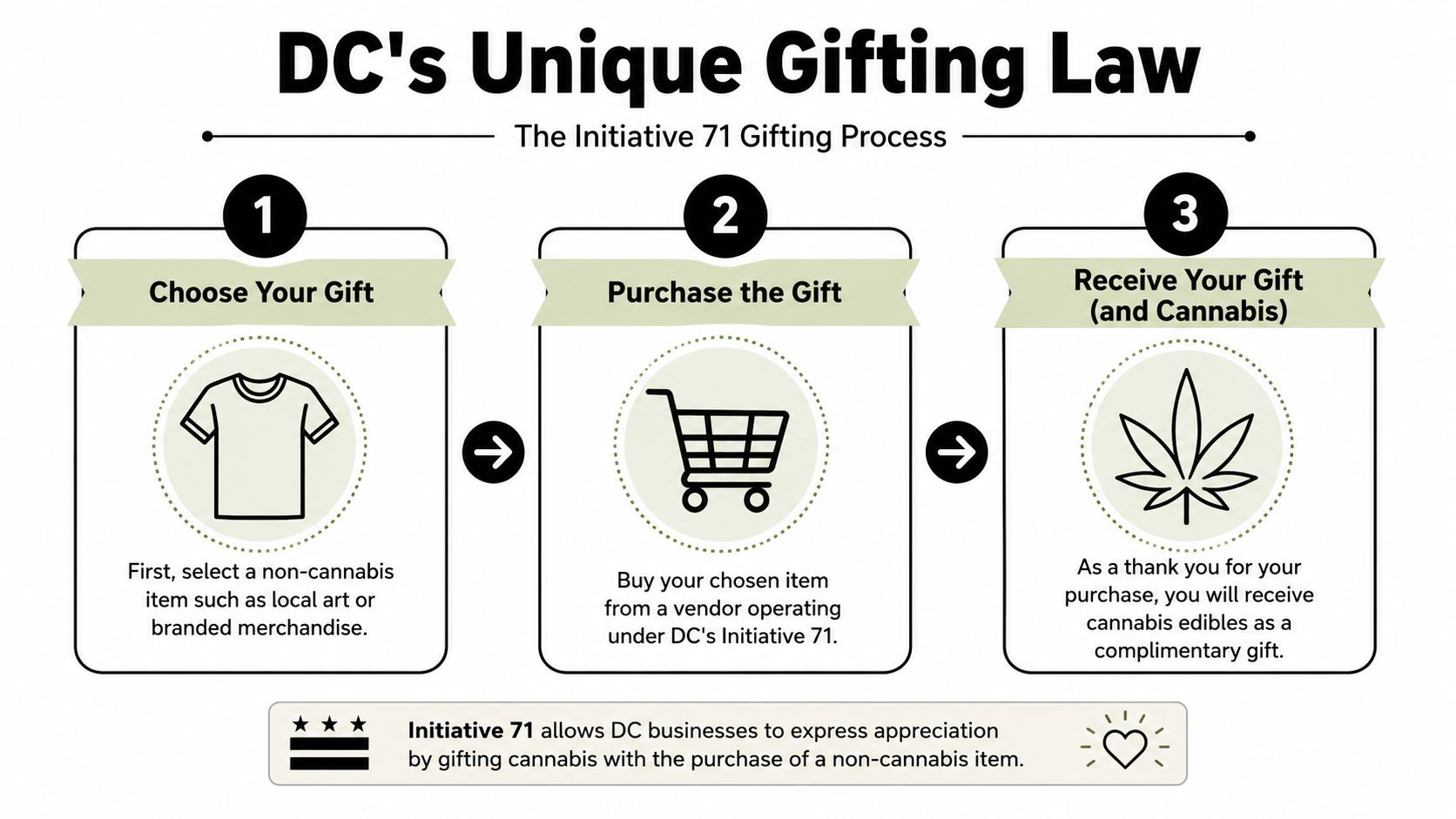
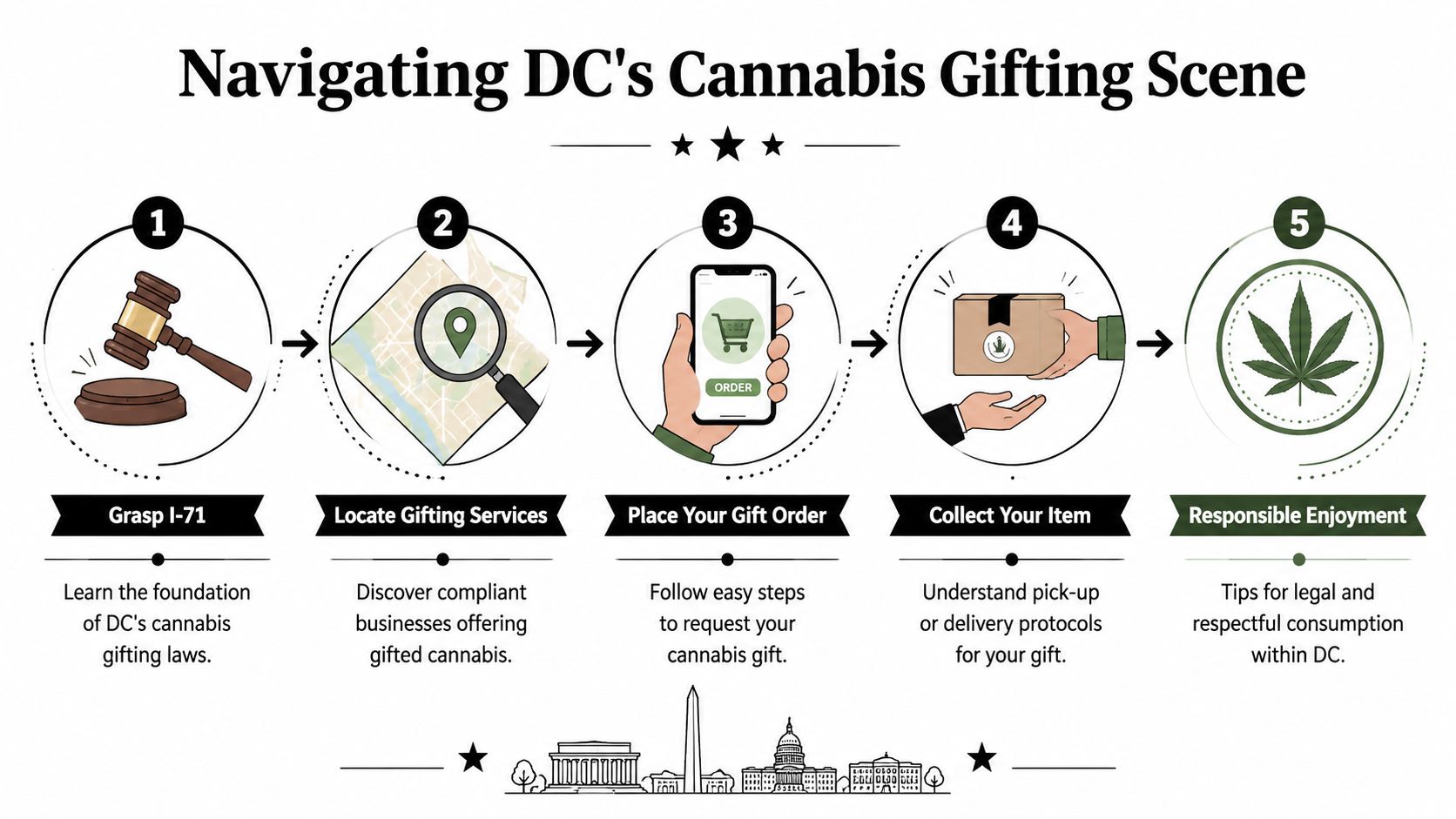
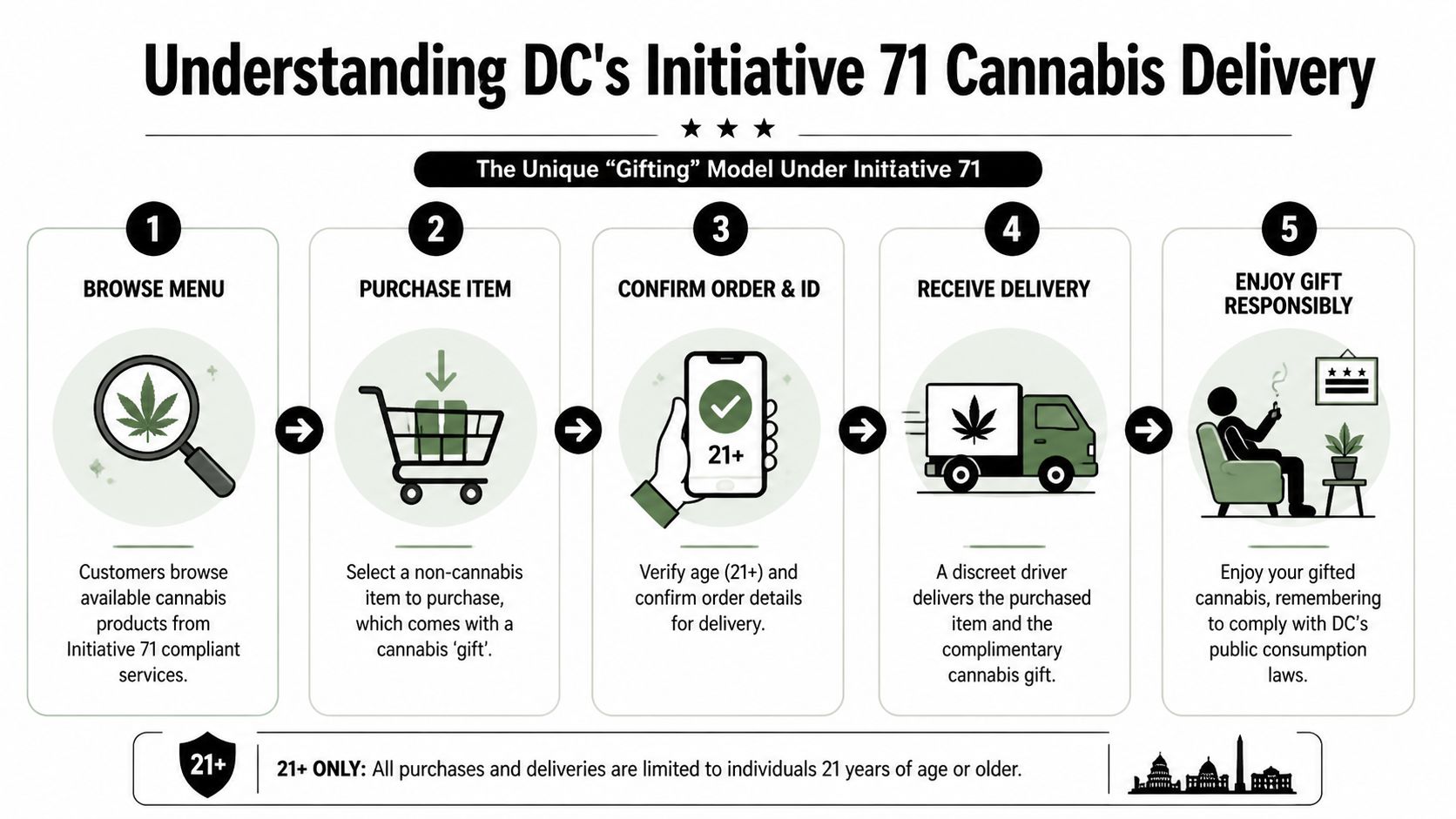
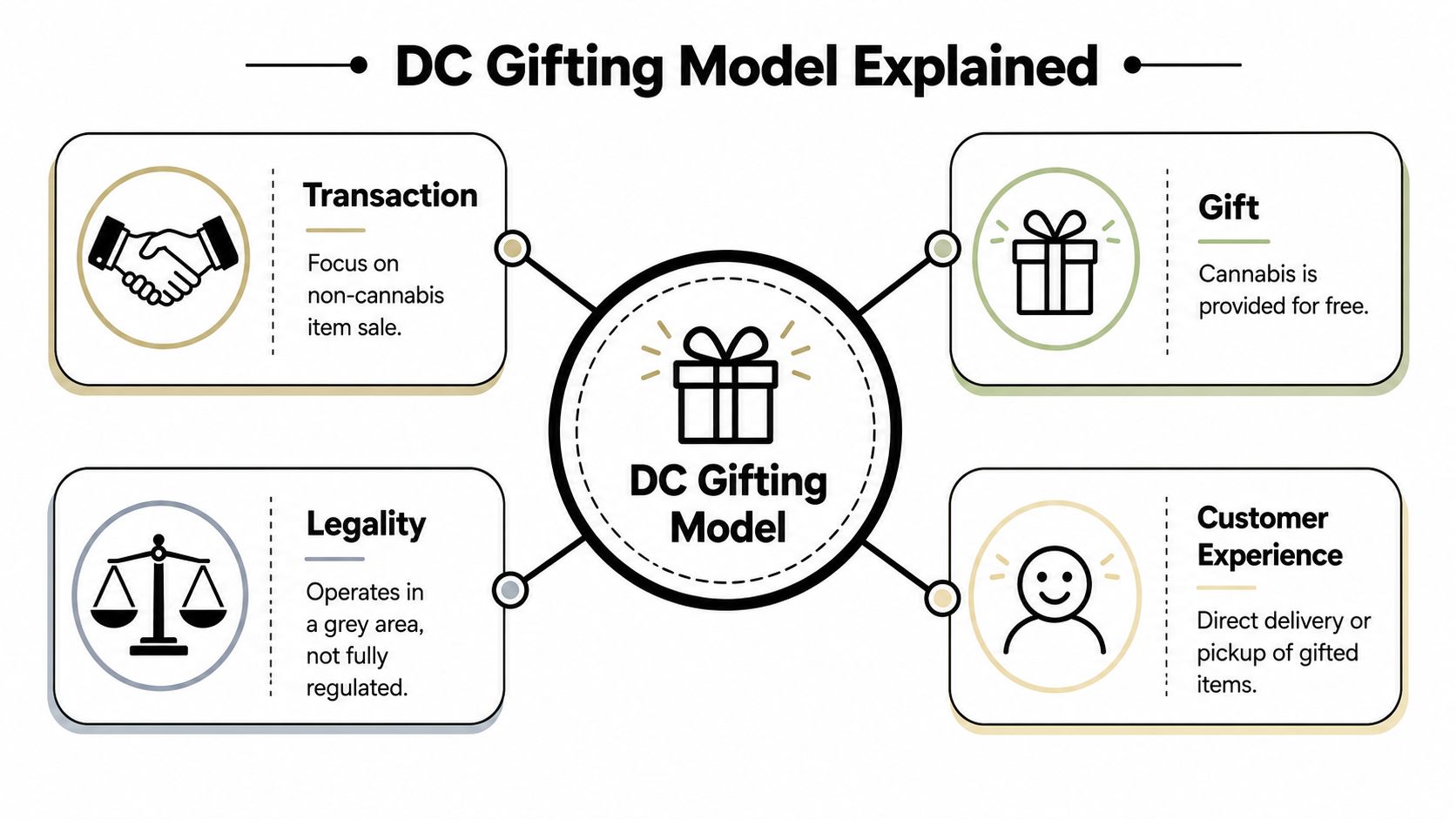
In DC, “cash and carry” doesn't usually mean a straightforward cannabis sale. It refers to the local reality that many services operate through a gifting model tied to Initiative 71. That's why first-time buyers often feel like the process sounds indirect. It is.
The easiest analogy is a “free toy with a meal” setup, except the legal item comes first and the cannabis is presented as the gift. A customer purchases a separate item such as branded merchandise, artwork, or another non-cannabis product. The cannabis isn't framed as the item being sold retail in the ordinary way.
Why cash is common in DC
People often get confused. If you're new to DC, cash-on-delivery can feel old-fashioned or suspicious. In this context, it's often part of how the local transaction structure works in practice.
The phrase cash and carry DC comes from a much older business idea. Historically, cash-and-carry meant the buyer pays on pickup or delivery and takes possession right away, which reduces seller credit risk and keeps transactions moving. That general model still makes sense in high-volume markets. The USDA's spending data helps show why speed and immediacy remain so central in commerce, even outside cannabis, as noted earlier.
What the customer experience usually looks like
A typical DC gifting order often follows this pattern:
- You browse a menu tied to legal items or packages.
- You choose the option associated with the gift you want.
- You arrange delivery or pickup inside DC.
- You show ID at handoff.
- You pay when the courier arrives, often in cash.
That doesn't mean every operator is careful. Some are organized. Some are sloppy. The point is that the structure is different from Maryland's direct retail sale.
Practical rule: If a DC service can't explain its gifting process clearly, that's a reason to slow down.
Why compliance language matters
In the District, legal quirks aren't a side note. They shape the whole customer experience. That's why many people search for operators listed among I-71 compliant shops in DC. They're trying to separate a service that understands the local framework from one that's just using the right buzzwords.
Another local clue is how normal identity checks are in DC transactions. DC Health's vital-records system accepts multiple forms of ID and can require three forms of identification, including at least one from the primary list, when automated authentication fails, according to the DC Health vital records requirements. That doesn't govern cannabis delivery directly, but it does show that ID-verified, compliance-heavy transactions are already normal in the District.
If you remember nothing else, remember this. In DC, you usually aren't “buying weed” the way you buy a product off a normal retail shelf. You're participating in a gifting structure, and the details matter.
Maryland Weed Delivery The Recreational Market
Maryland feels simpler because, for the consumer, it usually is. The big difference is that you're dealing with a licensed recreational market, not a gifting workaround. That changes the tone of the whole transaction.
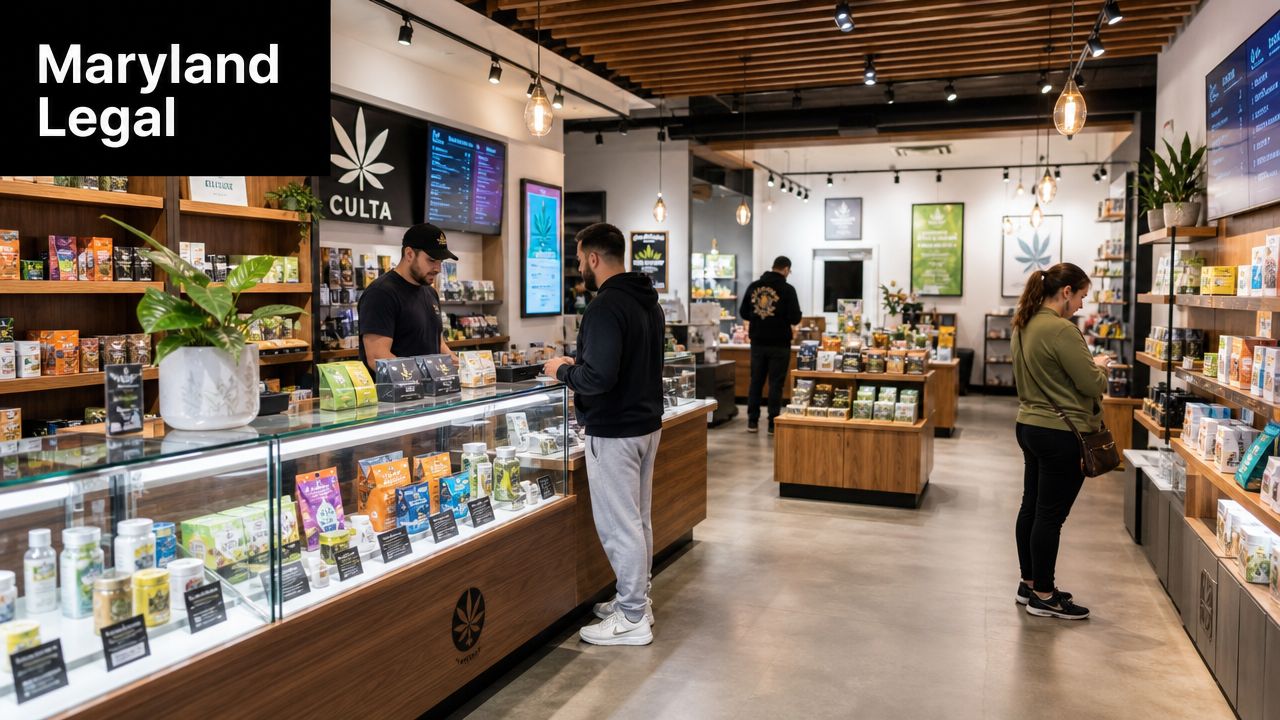
When you order through a Maryland dispensary, the basic expectation is direct retail. You browse actual cannabis products, choose what you want, submit the order through the dispensary's system, and follow that business's delivery or pickup process. You're not trying to decode whether a T-shirt, sticker pack, or art print is the formal item in the transaction.
How Maryland differs from DC
The contrast is easiest to see side by side:
| Topic | DC gifting model | Maryland recreational market |
|---|---|---|
| Core structure | Non-cannabis item plus cannabis gift | Direct cannabis retail sale |
| Payment style | Often cash at handoff | Often more conventional dispensary checkout options |
| Consumer experience | Legal workaround logic | Regulated retail logic |
| Main concern | Whether the gifting process is handled properly | Whether the dispensary is licensed and following state rules |
That regulated setup gives buyers a clearer sense of what they're ordering. Product descriptions, packaging, and pickup or delivery rules usually feel more standardized.
What that means for shoppers
If you've only used DC services before, Maryland can feel refreshingly plain. That's a compliment. You don't need to spend as much time interpreting the transaction itself.
A few practical differences stand out:
- Product selection is more retail-like. Menus typically look like dispensary menus, not gifting menus.
- The purchase language is direct. You're selecting cannabis products, not trying to infer the “gift” behind another item.
- Consumer expectations are clearer. If something goes wrong, you're thinking like a dispensary customer, not someone navigating a legal gray area.
Maryland is the place in the DMV where the process usually feels closest to ordinary commerce.
That doesn't mean every order is identical. Delivery zones, timing, inventory, and ID checks still vary by operator. But the framework is much easier for a first-time buyer to understand. If DC requires you to learn local legal slang, Maryland usually doesn't.
Virginia Cannabis Delivery The Medical Focus
Virginia is the part of this conversation where people most often over-assume. They know cannabis laws changed in public discussion, they hear from friends in DC and Maryland, and they figure Virginia must offer something similar. It doesn't work that way.

For practical purposes, Virginia is the medical-focused jurisdiction in this three-way comparison. If someone is looking for clearly lawful access and asking about delivery, the medical channel is the one to understand first.
What Virginia is not
Virginia is not Maryland with different branding. It also isn't DC with a gifting workaround copied across state lines. That's where people get into trouble.
If a site or social account makes recreational delivery in Virginia sound casual and routine, pause. The legal footing there is not the same as a licensed Maryland dispensary sale, and it's not the same as DC's Initiative 71 gifting culture.
How to think about Virginia safely
Use this filter:
- Medical patient with proper state-recognized access needs. You're looking at the lawful lane Virginia is built around.
- Adult seeking recreational delivery because it worked in DC. That assumption can be wrong.
- Service advertising broad recreational drop-offs in Virginia. Treat that claim cautiously.
This is one of those places where “everyone knows someone who ordered before” is not a legal standard. It's just hearsay.
The cleanest comparison in the DMV
If you want a short version, here it is:
| Jurisdiction | What delivery most closely resembles |
|---|---|
| DC | Gifting and handoff logistics |
| Maryland | Licensed retail |
| Virginia | Medical access pathway |
Virginia also tends to require more discipline from the customer. Instead of asking “Who's fastest tonight?” the safer question is “What kind of legal access does the state recognize here?”
If you're in Virginia, don't borrow assumptions from DC or Maryland. Start with the medical rules and work outward.
That mindset saves time and reduces risk. It also helps you ignore the loudest listings, which aren't always the most reliable. In Virginia, clarity matters more than convenience marketing.
Your Step by Step Guide to Ordering Delivery in the DMV
You're staying near Dupont, your friend is in Bethesda, and someone else is heading back to Arlington later tonight. The ordering process can look similar on a phone screen, but the legal path behind that order changes as soon as the address changes. In the DMV, the delivery location sets the rules.
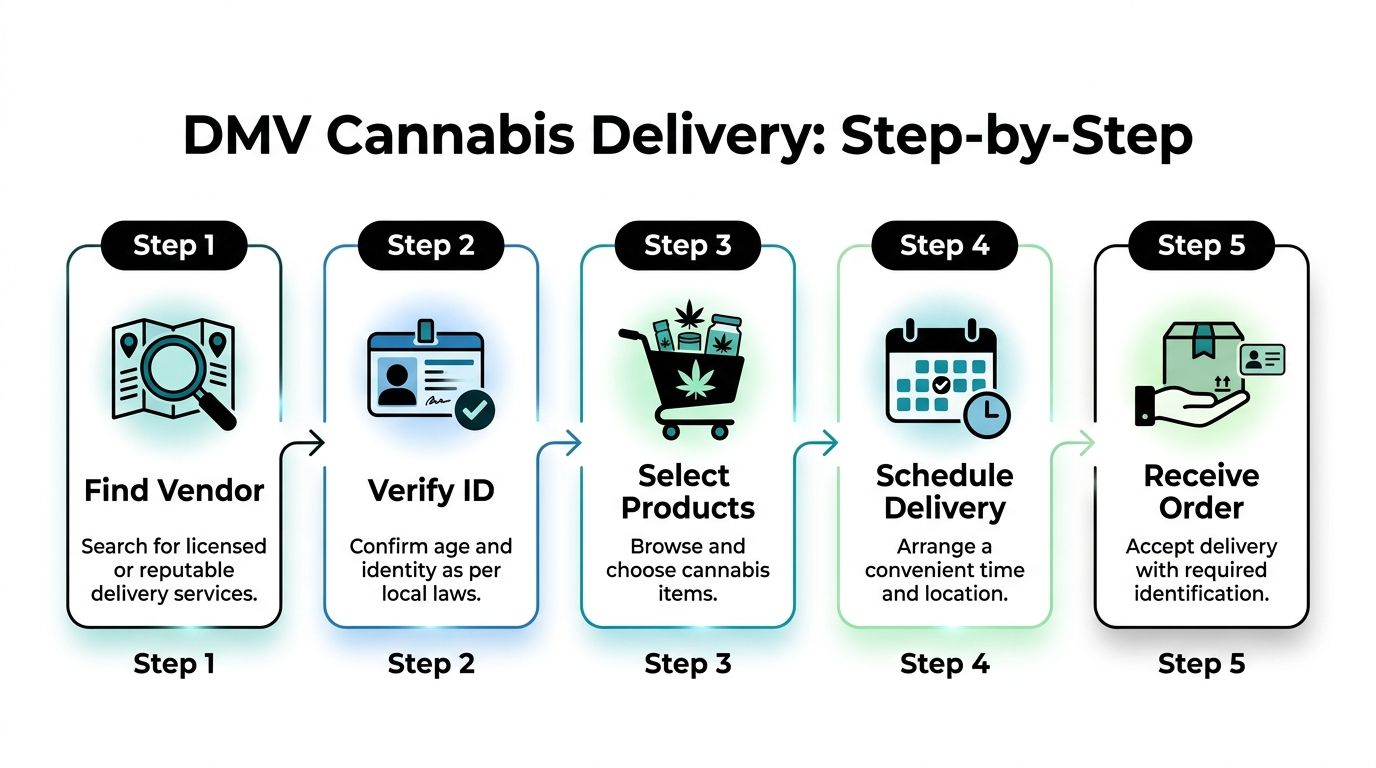
Start with one question: Where will the handoff happen?
That answer matters more than the menu, the price, or how familiar the service looks online. DC, Maryland, and Virginia each use a different system, so a smart order starts with the jurisdiction and then moves to the checkout steps that fit that place.
Ordering in DC
DC usually works like a gifting transaction paired with delivery logistics. If you are new to it, treat it like following the house rules at a venue. You may recognize the general flow, but the local terms and expectations matter.
- Confirm the delivery address is inside DC. A service may advertise to the wider DMV, but the handoff location is what counts.
- Read the menu wording carefully. In DC, the way the offer is presented often tells you how the service is framing the transaction.
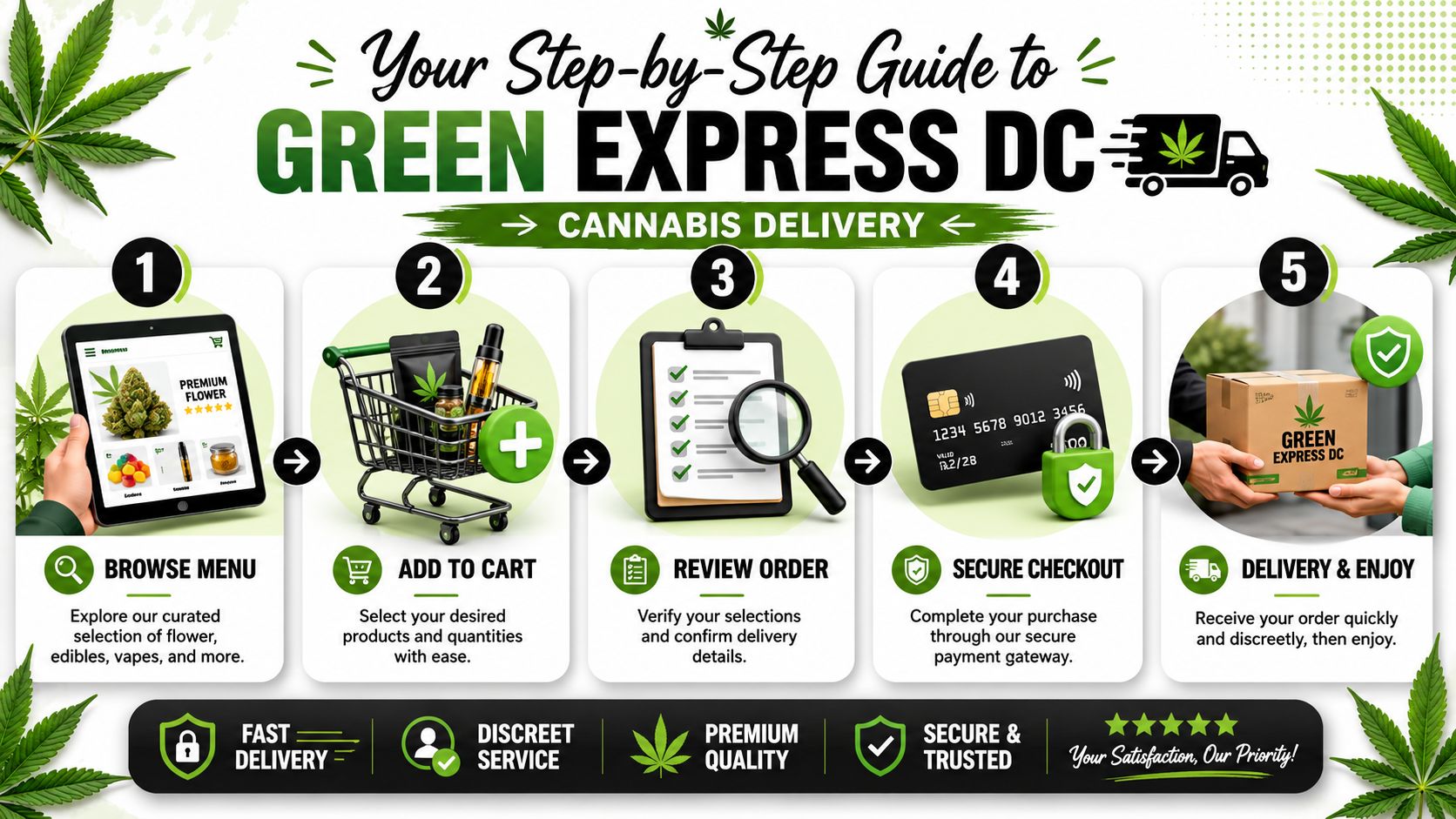
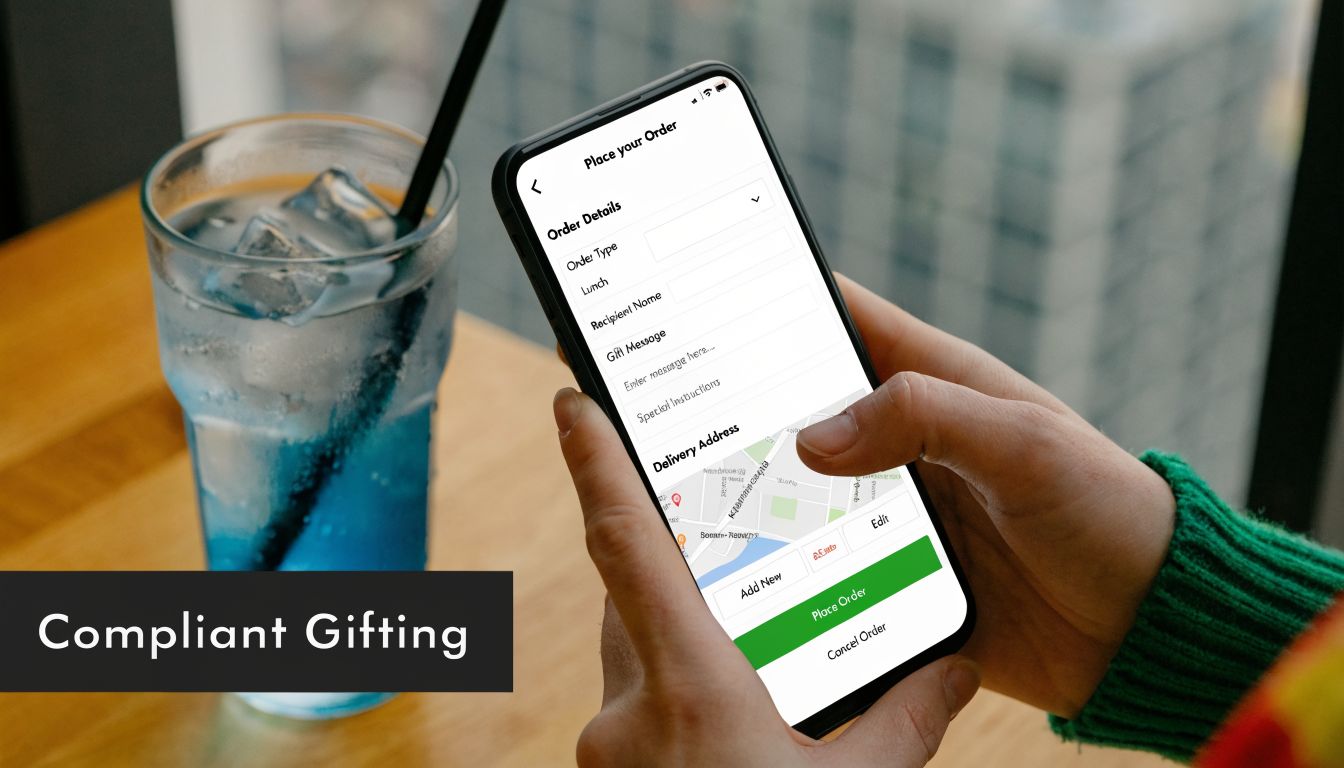
- Place the order through the service's system. That may be a website, text thread, or phone order.
- Set the handoff details. Expect to confirm a meeting spot, time window, and contact method.
- Have your ID and payment ready. Cash is still common.
If you want a practical pre-handoff checklist, review this guide on how to prepare for delivery.
Green Express DC is one example of a DC operator using the local gifting framework, with menu browsing, order placement, ID verification at handoff, and cash on delivery for eligible adults in the District.
Ordering in Maryland
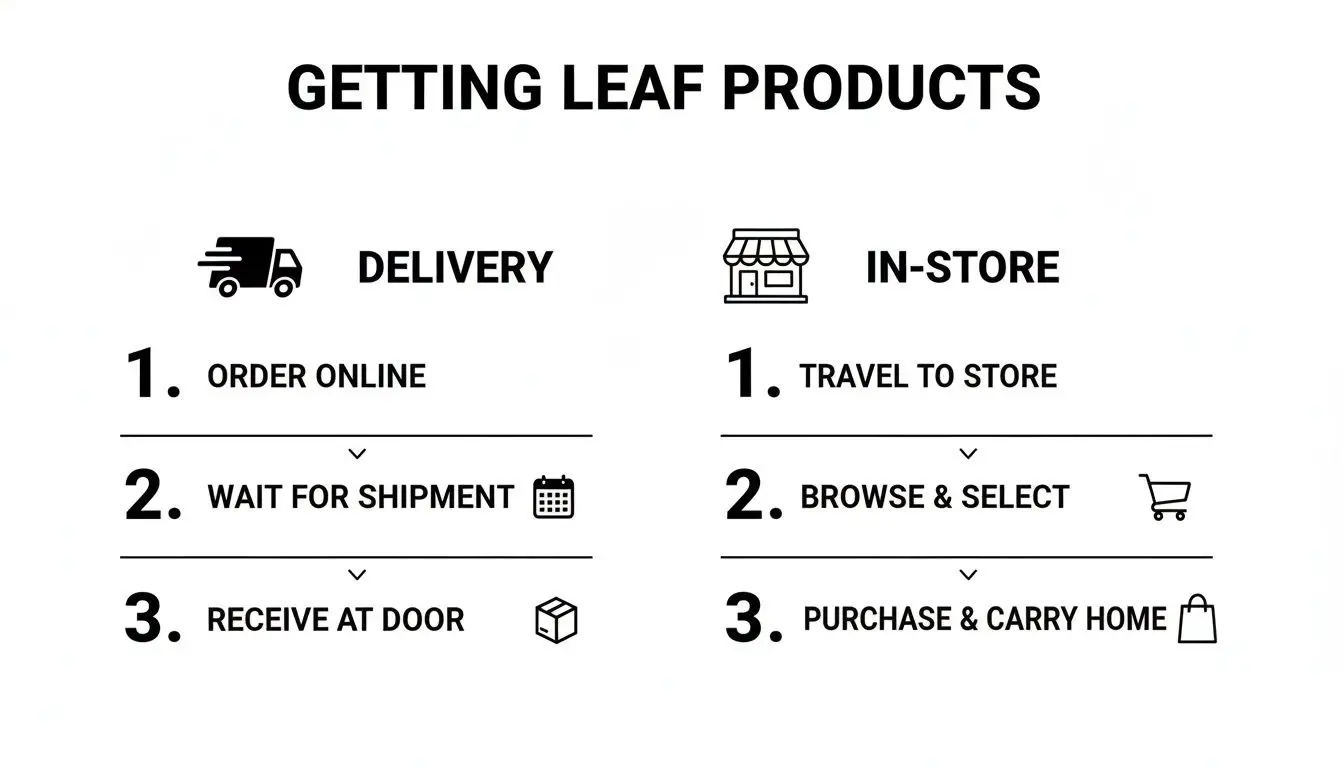
Maryland usually feels more familiar because the process is closer to standard retail. You choose a licensed dispensary, browse available products, add items to your cart, and complete the dispensary's checkout process.
A simple way to picture the difference is this. Maryland ordering works more like a regulated store purchase with delivery attached. You spend less time decoding the structure of the transaction and more time checking product details, availability, and store policies.
A typical Maryland order looks like this:
- Choose a licensed dispensary
- Browse the dispensary menu
- Add products to your cart
- Complete checkout and any required verification
- Follow the store's instructions for delivery or pickup
What changes in Virginia
Virginia requires a different starting point. If your access depends on the medical system, the first step is confirming that lawful access route before you worry about menus or delivery timing.
That is why the same customer can have three very different first steps across the DMV:
| If you are in… | First question to answer |
|---|---|
| DC | Does this order fit the local gifting model? |
| Maryland | Am I ordering from a licensed dispensary? |
| Virginia | Do I have a lawful medical access path here? |
This approach saves confusion. It also helps you avoid the common mistake of treating the DMV like one market with three ZIP codes. It is really three separate rule sets that happen to sit next to each other.
Safety ID Verification and What to Expect from Your Courier
A serious service asks for ID. That's not the annoying part of the process. It's one of the reassuring parts.
In DC especially, strict identity checks fit the broader local culture of compliance-heavy transactions. As noted earlier, the District already normalizes strong ID verification in other settings. If a cannabis courier acts casual about age or identity, that's not a convenience perk. It's a warning sign.
What professional verification looks like
A legitimate handoff usually includes a few predictable things:
- Government-issued ID check. The courier should confirm you're old enough and that the order is going to the right person.
- Clear communication. You should know where to meet, roughly when they're arriving, and what payment to have ready.
- No pressure tactics. If something feels off, you should be able to walk away.
Where to meet and how to handle payment
In DC, cash is often part of the process. That means basic street smarts matter.
Choose a location that is:
- Easy to identify
- Well lit
- Comfortable for you
- Appropriate for a short handoff
If you're at a hotel or apartment building, make sure you understand where the courier expects to meet. Don't assume they'll wander through a lobby, wait indefinitely, or call repeatedly if building access is confusing.
Meet where you can identify the courier quickly and finish the handoff without confusion.
What the courier should and shouldn't be like
A professional courier usually behaves like any experienced local delivery worker. They communicate clearly, keep the interaction brief, verify identity, and complete the handoff without drama.
You should be cautious if a courier:
- Won't verify your ID
- Changes the meeting terms repeatedly
- Can't explain the order clearly
- Pushes you to improvise in a way that feels rushed
Check the order before you separate
You don't need to make a scene. Just confirm the basics before the courier leaves.
Use this quick receipt check:
| Check | Why it matters |
|---|---|
| Order appears complete | Prevents obvious mix-ups |
| Packaging looks intact | Helps you spot handling issues |
| Item names or categories make sense | Confirms you received what you expected |
Safe ordering isn't about paranoia. It's about recognizing that a clean transaction has a certain feel to it. Calm, organized, verified, and easy to understand.
DMV Cannabis Delivery FAQs
A lot of confusion in the DMV comes from how close everything feels. You can have dinner in DC, sleep in Maryland, and work in Virginia. Cannabis law does not follow that rhythm. Each jurisdiction has its own rules, and delivery only makes sense if you treat DC, Maryland, and Virginia as three separate systems.
Crossing borders and staying in the right system
Can I take cannabis from DC into Maryland or Virginia?
No. Keep your order in the jurisdiction where you received it. The roads connect the region, but cannabis rules stop at the border.
Is recreational delivery in Virginia the same as DC?
No, and this trips people up all the time. DC's cash and carry setup grows out of the District's gifting model. Virginia operates under a different legal structure, with medical access playing a much larger role. If something is commonly offered in DC, that does not mean it is lawful a few miles away in Arlington or Alexandria.
Do I need to be a resident to order?
Usually, no. What matters more is your age, your ID, and where you are physically located when the handoff happens. A visitor in a legal delivery area can often order more easily than a resident who is standing in the wrong jurisdiction.
Why DC, Maryland, and Virginia feel so different
The short version is that the DMV has three separate playbooks.
In DC, “cash and carry” usually means an order is arranged first, then completed through an in-person handoff tied to the District's gifting model. In Maryland, the recreational market feels more like standard retail, so the customer experience is often more familiar. Virginia is different again, with medical rules shaping what is available and how patients access it.
That difference explains why payment methods, menu presentation, and the overall ordering process can feel inconsistent from one side of the region to the other. It is not random. You are seeing three legal frameworks side by side.
Practical questions people ask in real life
What if I'm staying in a hotel in DC?
Confirm the meeting process before the courier arrives. Some hotels allow a simple lobby handoff. Others have stricter guest access, which can slow things down if you have not agreed on a clear meeting spot.
What kinds of deals do people usually look for?
People usually watch for bundle pricing, vape bundles, concentrate specials, and limited-time menu promotions. The smart move is to check the current menu right before ordering, because offers can change quickly.
What does cash and carry DC usually mean in practice?
It usually means a short, direct handoff rather than a dispensary-style checkout. You place the order, confirm the details, meet the courier, show ID, and complete the exchange at the agreed location.
One local example mentioned earlier is Green Express DC, which uses menu browsing, cash-on-delivery handoff, and ID verification at drop-off for adults 21+ in the District.
A simple rule set for the whole DMV
If you want one mental checklist that works across DC, Maryland, and Virginia, use this:
- Know which jurisdiction you are in
- Follow the rules for that jurisdiction only
- Expect age and ID verification
- Do not carry your order across borders
- Skip any service that feels disorganized or unclear
That approach clears up a lot. The DMV may feel like one metro area, but for cannabis delivery, it helps to treat it like three neighboring rulebooks.