
Posted on Leave a comment

How Long Do Weed Edibles Last? A DC, MD & VA Guide

TL;DR: How long do weed edibles last? Most edible highs last 4 to 12 hours, which is much longer than smoking, which usually lasts 1 to 4 hours. Your full timeline depends on dose, metabolism, and what you’ve eaten, so timing can feel very different from one person to the next.

You’re probably here because you want a straight answer before you open a gummy, split a chocolate, or order for the weekend. Maybe you’re in DC after work and don’t want to be uncomfortably high at midnight. Maybe you’re visiting from Virginia or Maryland and want something easier to plan around than smoking. Maybe you’ve had the classic edible thought: “If I take this now, when will it hit, and when will it stop?”

That caution is smart. Edibles can be great for a long, steady experience, but they’re also the cannabis format people misread most often. The biggest reason is simple: they don’t behave on your schedule just because you want them to.

Your Guide to a Predictable Edible Experience in DC

A lot of DMV consumers aren’t trying to get wildly high. They want a controlled evening. A museum day in DC without needing to step outside and smoke. A quiet movie night in Bethesda. A relaxed Saturday in Arlington that doesn’t turn into “why am I still feeling this?”

That’s where edibles can either shine or go sideways.

Take a common local scenario. Someone staying near Dupont Circle wants a low-key night in. They eat a gummy at 7:30, don’t feel much by 8:15, and start wondering if they took too little. That’s the moment when people get themselves into trouble. They assume “nothing’s happening,” take more, and then both doses land later than expected.

Practical rule: If you want a predictable edible experience, your first job isn’t choosing the strongest product. It’s choosing a product with clear labeling and a serving size you can actually trust.

That matters even more in the DC area, where people often have mixed levels of familiarity with cannabis laws and product quality. A resident may know the routine. A tourist from Virginia may not. Someone from Maryland might be comfortable with cannabis but still new to edibles specifically.

Reliable labeling helps remove guesswork. So does understanding the local purchasing process before you order. If you need a plain-language overview of local rules and what adults should expect when shopping, this guide on how to buy weed in DC is useful background.

A good edible experience usually comes down to three things. Known dose, enough patience, and the right setting. Once those are in place, the question “how long do weed edibles last” gets much easier to answer in real life.

The Four Stages of an Edible High Timeline

A lot of edible mistakes happen in the middle, not at the start. The gummy goes down, an hour passes, and someone in DC starts wondering whether they should take another half. Then the first dose shows up late and the night gets a lot less predictable.

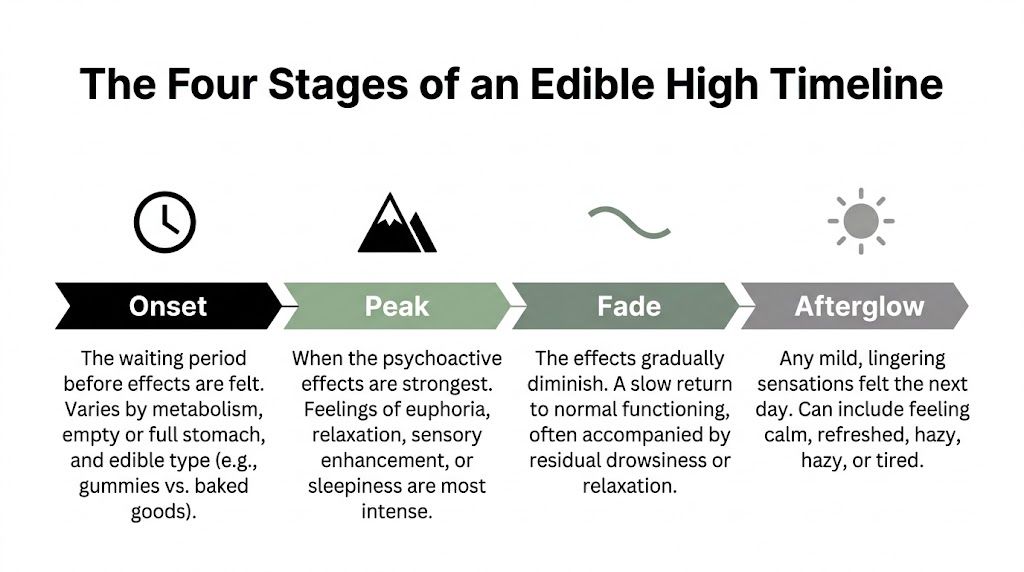
A better way to read the experience is in stages. Edibles usually move through four recognizable phases: onset, peak, fade, and afterglow. The exact timing varies from person to person, but the pattern is familiar enough that it helps you plan your evening, especially if you are ordering from a trusted local service and want a calmer, more controlled result.

A diagram outlining the four stages of an edible cannabis high: Onset, Peak, Fade, and Afterglow.

Onset

This is the quiet phase. You have taken the edible, but your body is still working through digestion before the effects become obvious.

For a DMV customer, this is often the hardest part because it can feel like nothing is happening. A tourist in Adams Morgan, a Maryland resident trying gummies for the first time, and a longtime DC shopper can all make the same mistake here. They confuse delayed effects with weak effects.

Some products may come on a bit faster than others, but patience matters more than guessing. If you want a clearer sense of what that waiting window can feel like, this guide on when edibles kick in breaks it down in plain language.

Peak

The peak is the strongest part of the ride. It often arrives later than beginners expect, which is why the second dose is so often the one people regret.

Edibles usually build in layers. You may feel a little different, then more relaxed, then suddenly realize you are much higher than you planned to be. It is less like flipping a light switch and more like a dimmer knob that keeps turning up for a while.

That delayed climb is a big reason lab-tested products matter. Clear serving sizes give you a better shot at predicting where the peak will land.

The edible did not fail just because it stayed quiet at first.

Fade

The fade is gradual. You are coming down, but you may still feel altered, heavy, or slower than usual.

This stage catches people off guard because the strongest effects are over, yet the edible is still influencing the rest of the night. If you planned to head across town, meet friends, or get to bed at a specific hour, leave yourself extra room. In the DC area, where people often build edibles into dinners, events, or hotel stays, that cushion matters.

Afterglow

After the main high softens, some people notice a lingering tail. They may feel mellow, sleepy, thirsty, a little foggy, or not fully back to baseline.

That does not mean anything is wrong. It means the experience has a long runway. For cautious consumers in Washington DC, Maryland, and Virginia, the practical takeaway is simple. Treat an edible like an evening plan, not a quick errand.

The Science Behind Why Edibles Last So Long

The short version is that your body handles swallowed THC differently than inhaled THC. That difference is the whole game.

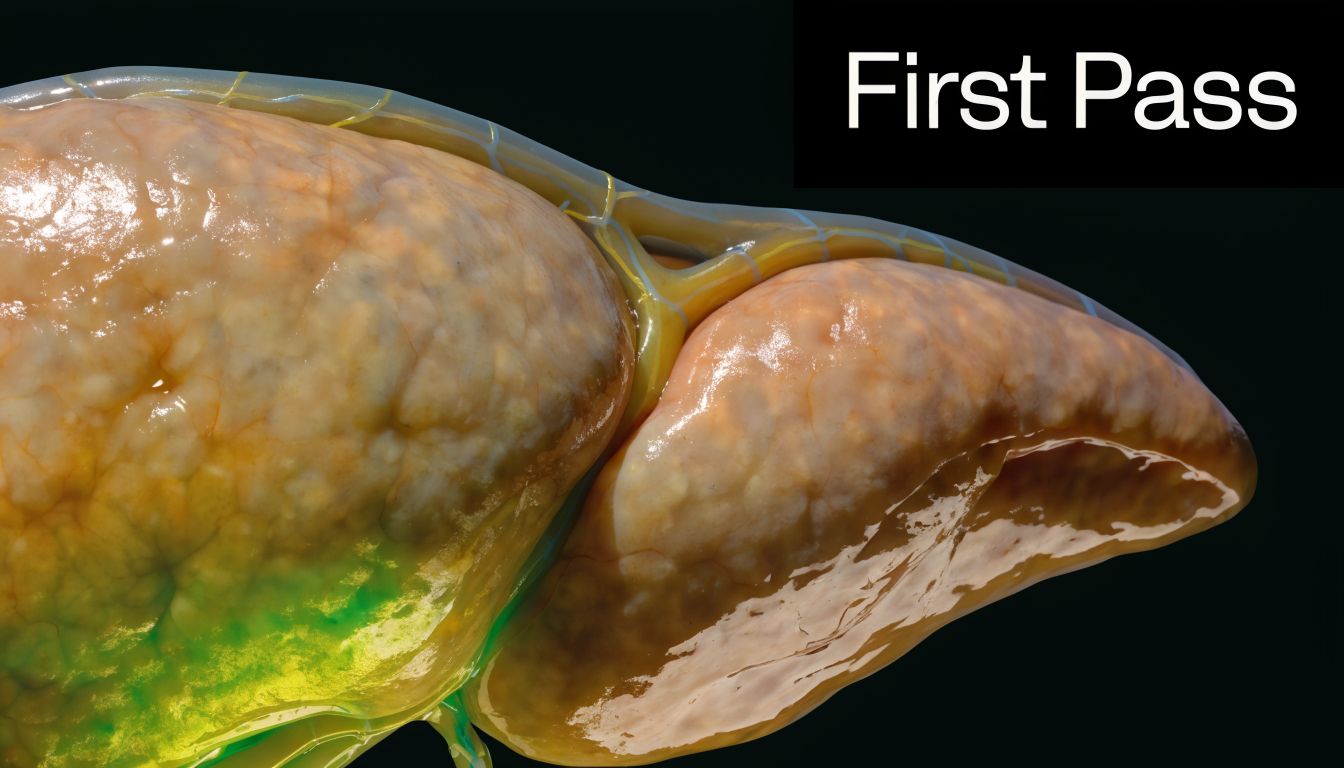
When you inhale cannabis, THC gets into your system through the lungs. When you eat it, your digestive system and liver get involved first. That takes longer, and it changes the form of THC along the way.

A 3D render showing a detailed anatomical model of a human liver on a black background.

Your liver changes the experience

According to this dosing explainer on edible metabolism, when you eat an edible, your liver converts THC into 11-hydroxy-THC, which is more potent and has a longer half-life than THC itself. The same source says this is the main reason edibles have a delayed onset of 30 to 120 minutes and a much longer duration of 6 to 12 hours compared to inhaled cannabis.

That’s why a 10mg edible doesn’t feel like a “10mg puff.” Same cannabinoid family, different route, different ride.

Why this matters in plain language

Think of smoking as quick entry and quicker exit. Think of edibles as slower entry, stronger body processing, and a longer runway on both sides.

That’s also why beginners sometimes underestimate them. They expect the feedback loop to be immediate. It isn’t. Your body is taking its time, and once it has processed the edible, you can’t un-eat it.

Respect the delay. The delayed start is exactly what makes edibles feel so manageable at first and so powerful later.

For cautious consumers in DC, Maryland, and Virginia, that science matters less as trivia and more as a planning tool. If you know your liver is doing the heavy lifting, you’ll stop expecting edible timing to behave like smoking.

Five Factors That Personalize Your Edible Duration

Two DMV customers can order the same gummy from the same delivery menu, take the same milligrams, and still have very different experiences. That difference usually comes down to five personal variables. Once you know them, edibles feel a lot less mysterious and a lot more predictable.

1. Dose sets the length of the ride

Dose has the biggest effect on how long an edible stays noticeable.

A lower dose often fits a shorter, lighter experience. A higher dose usually stretches the timeline and can leave a next-morning tail, especially for newer consumers. As noted earlier, stronger servings can last much longer than people expect.

Dose (THC) Typical Duration Best For
2.5 to 5mg 4 to 6 hours Beginners, cautious users, lighter plans
10 to 20mg 6 to 8 hours More experienced users who want a longer evening
25mg+ 8+ hours High-tolerance users who understand the commitment

A 5mg gummy before a quiet evening at home is one plan. A 25mg edible after dinner is a bigger commitment, closer to blocking off your whole night.

2. Your tolerance changes the same label

The package tells you how much THC is in the edible. It does not tell you how your body will respond to it.

Someone who uses cannabis rarely may feel a small serving for hours. Someone with a higher tolerance may feel less intensity from that same serving. For DC, Maryland, and Virginia shoppers, this is one reason lab-tested products matter so much. Clear labeling gives you a reliable starting point, even though your personal response is still your own.

3. Metabolism affects both timing and tail

Your digestive system is part of the timeline.

Some people feel edibles sooner and clear them sooner. Others get a slower start and a longer finish. If you have ever heard one friend say, “It hit me in 45 minutes,” and another say, “I didn’t feel it for two hours,” this is often part of the reason.

That variation is normal.

4. Food in your stomach can shift the whole schedule

Meal timing changes how the edible enters your system. According to this guide on edibles and meal timing, taking an edible on an empty stomach can lead to faster onset, while taking it with a high-fat meal can delay onset and make the effects last longer.

People often get tripped up by this. Someone takes a gummy before dinner and feels it relatively soon. Someone else eats the same gummy after burgers and fries, assumes nothing is happening, then gets a late stronger wave.

If you want consistency, keep your routine consistent too. Similar meal timing often leads to more repeatable results.

5. Product format changes the feel

A gummy, chocolate, baked good, beverage, and tincture-style edible can each feel a little different, even when the THC number looks similar. The difference is not always dramatic, but it can be noticeable in onset, body feel, and how evenly the experience builds.

That is one reason homemade edibles can be harder to predict. If you want a better sense of why consistency matters, this guide on how edibles are made and portioned helps explain the basics. For many DMV consumers, especially tourists or occasional users ordering delivery, a lab-tested product with clear serving sizes is the safer bet.

The simple takeaway is this. The label gives you the dose. Your body, your meal, your tolerance, and the product format decide how that dose plays out.

A Safe Start Dosing Advice for DMV Residents

If you’re new, occasional, visiting DC, or just trying a product that’s unfamiliar to you, the smartest approach is simple. Start low and go slow.

That advice sounds basic because it works.

A human hand holding a small metal spoon against a bright blue sky background.

A practical first-timer plan

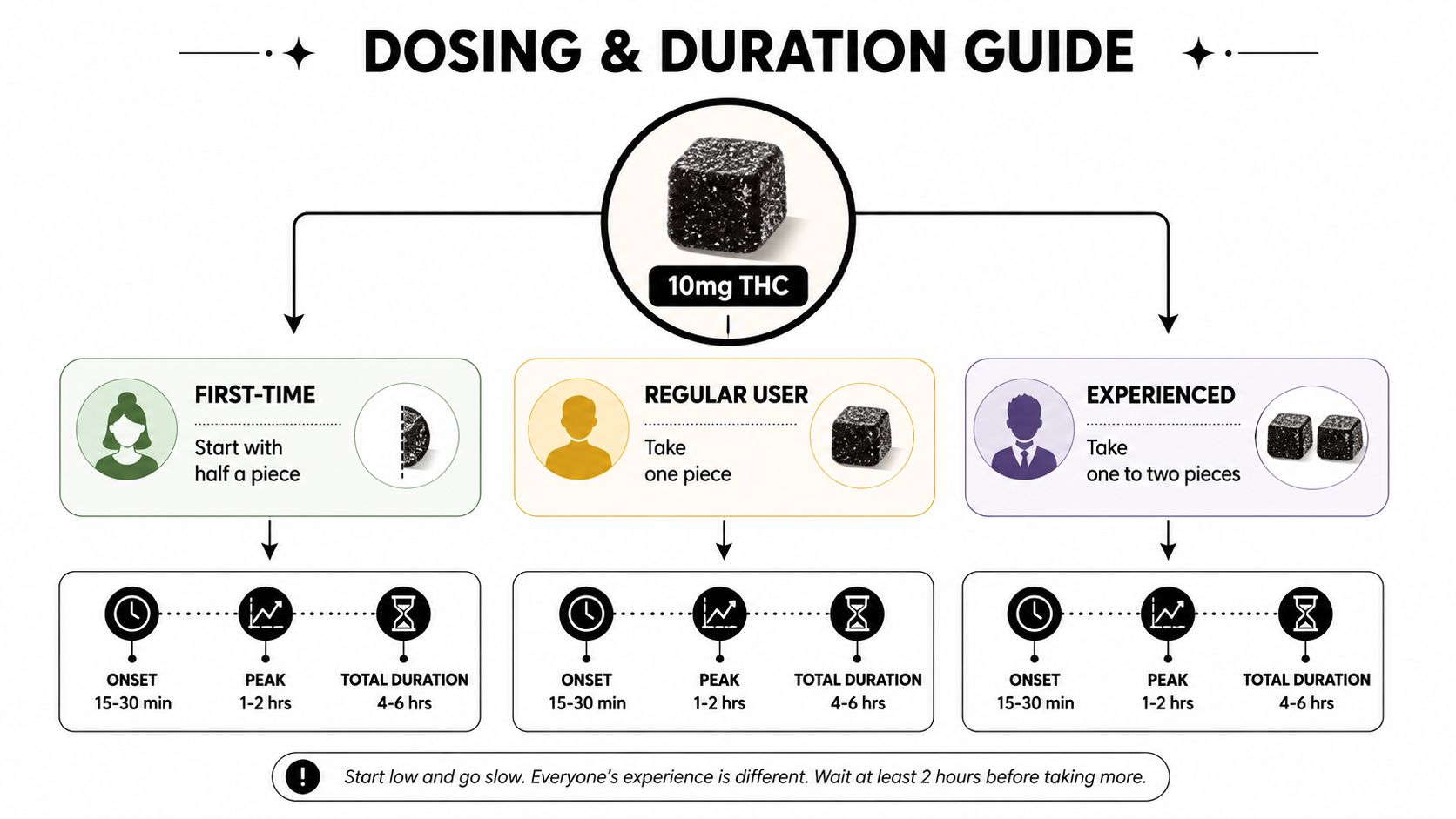
For many adults, a low starting point means 2.5mg or 5mg THC. Beginners are often advised to start at 5mg, and the verified data also supports waiting 2 hours before taking more, especially with consistently dosed, lab-tested products.

If you buy a gummy labeled by serving, take one serving or even half if that makes you more comfortable. Then stop. Don’t bargain with yourself at the one-hour mark.

A good edible night also starts with logistics:

  • Choose your timing carefully so you don’t need to drive, work, or make decisions later.
  • Stay in a comfortable setting with water, snacks, and a low-stress plan.
  • Avoid stacking products if you don’t yet know how one edible affects you.
  • Keep the package nearby so you can check the serving size instead of guessing.

Why clear labeling matters

Homemade edibles and unlabeled products can be hard to predict. One piece may not match the next. A brownie corner isn’t the same thing as a clearly marked serving.

That’s why many experienced consumers prefer professionally made products with consistent potency. You’re not just buying convenience. You’re buying a better shot at a repeatable experience.

If you’re curious how infused products are made and why potency can vary so much when people DIY them, this guide on how to make edibles shows why homemade dosing can get uneven fast.

Before you try anything, a visual refresher can help:

What cautious users in DC, Maryland, and Virginia should remember

A tourist staying in DC for one night should dose differently than a longtime user with a free weekend. A Maryland resident taking an edible before a big dinner should expect a different timeline than someone taking the same dose on an emptier stomach. A Virginia customer who’s only smoked before should not assume that edible timing will feel intuitive.

Best habit: When trying a new edible, treat it like your first time with that specific product, even if you’ve used cannabis before.

That mindset prevents most bad edible stories before they start.

What to Do If Your Edible Experience Is Too Intense

If an edible feels too strong, the first thing to know is that you’re not stuck this way forever. The feeling will pass.

It's common to need reassurance before anything else. Edibles can feel mentally loud when you overshoot your comfort zone, especially if the effects built slowly and then arrived all at once.

A woman sitting on a beige couch breathing mindfully with hands pressed together in a relaxing setting.

What helps right away

Start by changing your environment. Sit or lie down somewhere calm. Lower the lights if that feels better. Put on familiar music, a comfort show, or something gentle and predictable.

Then do the basics:

  1. Sip water slowly. You don’t need to chug anything.
  2. Eat a light snack if that sounds appealing.
  3. Take slow breaths and keep them steady.
  4. Remind yourself it’s temporary. That sentence matters more than people think.
  5. Text or call someone you trust if being alone makes things worse.

What not to do

Don’t keep checking the clock every minute. Don’t pile on more THC. Don’t start panic-searching your symptoms and convincing yourself something catastrophic is happening.

If you have CBD available and you personally find it calming, some people like to use it during an overly intense THC experience. The bigger win, though, is reducing stimulation and waiting it out in a safe place.

If you’re overwhelmed, your job is to get comfortable, not to “fix” the high instantly.

When to get help

If someone is having a severe reaction, is unsafe, or has a medical issue that goes beyond feeling too high, contact appropriate medical help. There’s no prize for trying to tough it out if the situation feels serious.

Generally, though, the answer is calmer than that. Quiet room. Water. Reassurance. Time.

How to Store Edibles for Maximum Freshness and Potency

Storage affects more than taste. It affects consistency.

Heat, light, air, and moisture are the main enemies. They can dry products out, spoil them, or weaken the cannabinoids over time. That matters if you buy edibles for occasional use and expect the last piece to feel like the first.

According to this guide on edible shelf life and storage, gummies can last 6 to 12 months in a cool, dark place, while fat-based products like butters may last only 3 to 4 weeks at room temperature before oxidation and THC degradation become a problem. That same source notes that freezing is the most effective method for long-term preservation.

Best ways to store common edible types

  • Gummies and candies do best in a cool, dark place in their sealed packaging or an airtight container.
  • Chocolates and fat-based edibles need extra protection from heat because warmth can damage texture and quality faster.
  • Baked goods are more like regular food. If they contain perishable ingredients, treat them that way.
  • Bulk purchases are often best split into smaller, sealed portions so you only open what you will use.

The simplest storage rule

If you’re unsure, choose cool, dark, dry, and sealed. If you want the longest possible life, freezing is the safest bet.

Also, keep edibles clearly labeled and out of reach of kids, pets, or unsuspecting adults. Good storage isn’t just about potency. It’s about not creating a preventable problem at home.

Edibles FAQ for DC Maryland and Virginia

How long do edibles stay in your system for a drug test

The high and the detection window are not the same thing.

According to this guide on edible detection windows, while the high from an edible lasts 4 to 12 hours, THC may be detectable in urine for about 3 days for infrequent users and 30 days or more for heavy or chronic users. Hair tests can detect THC for up to 90 days.

If you have testing concerns, don’t assume that “I don’t feel high anymore” means you’re in the clear.

Do drinks or tinctures work faster than solid edibles

Some do feel faster for some users, especially if part of the absorption happens in the mouth rather than only through digestion. In practice, many people find drinks or tincture-style products easier to time than a dense baked edible.

Still, it’s smartest to treat any new format cautiously until you know how your body responds.

Is it legal and safe to get edibles delivered in Washington, DC

Adults in DC often use compliant local delivery services that follow local procedures, including age verification at drop-off. The main safety question isn’t just “can it be delivered.” It’s whether the product is clearly labeled, professionally packaged, and sourced through a service that takes compliance and customer screening seriously.

For Maryland and Virginia readers, the local rules are different from DC’s, so don’t assume one jurisdiction works exactly like another. If you cross between DC, Maryland, and Virginia often, it’s worth checking the current rules before ordering or carrying anything.

What’s the biggest mistake people make with edibles

Taking more too soon. Nothing else comes close.

The second biggest mistake is taking an edible without planning the rest of the day. If your night requires precision, edibles may not be the best match unless you dose very conservatively.

What’s the safest mindset for a first edible

Treat the first try like an experiment, not an event. Keep the dose low, your plans light, and your expectations modest.

That approach may sound unglamorous, but it’s how people end up liking edibles enough to use them again.


If you’re ordering in the District and want a more predictable edible experience, Green Express DC is a practical place to start. Adults 21+ can browse a menu of premium, lab-tested, clearly labeled products with discreet delivery, same-day service in DC, and ID verification at drop-off, which makes it easier to choose a dose you can plan around with confidence.

Posted on Leave a comment

Edible Nerds Rope: A DC, VA & MD Guide to Safe Dosing

You’re probably here because you saw a brightly colored “medicated Nerds Rope” online, in a group chat, or on a delivery menu and thought the same thing many do. Is this a real cannabis product, a fake candy bag, or something in between?

That confusion is normal. The name comes from a familiar candy, but the cannabis version lives in a very different world. In DC, Virginia, and Maryland, that matters because the rules, the delivery options, and the safety risks aren’t the same across the region.

A lot of people also make one dangerous assumption. If it looks like candy, it must be mild. With an edible nerds rope, that can be a costly mistake. Some versions are extremely potent, onset can take longer than people expect, and counterfeit packaging makes it hard to know what you’re really holding.

This guide is for adults in the DMV who want straight answers. If you’re curious about dosing, trying to understand what’s legal where you live, or figuring out how to avoid sketchy copycat products, keep reading.

An Introduction to the Edible Nerds Rope Phenomenon

The original Nerds Rope started as candy, not cannabis. It was introduced in 2001 by Nestlé’s Willy Wonka Candy Company, building on the original Nerds candy that first launched in 1983. Later, Ferrara acquired the brand in 2018, and the company’s launch of Nerds Gummy Clusters in 2020 helped push retail sales from $50 million to approximately $500 million, according to Tasting Table’s history of how Nerds Gummy Clusters revived the brand.

A person holding a smartphone displaying a colorful candy swirl image against a bright blue sky.

That history matters because it separates a mainstream candy product from the cannabis item people now call an edible nerds rope.

Why people get confused

The candy version is nostalgic. The cannabis version often borrows the same look, same name, and same visual cues. So when someone in DC, VA, or MD sees a colorful rope in a familiar package, they may assume it’s an official infused product.

It usually isn’t.

Addressing the Issue

Many individuals aren’t just asking what it is. They’re asking three practical questions:

  • Is it legal where I am
  • How strong is it
  • How do I avoid buying something fake or unsafe

Simple rule: Treat any “Nerds Rope” cannabis product as a high-potency edible first, and a novelty candy second.

That mindset helps. It shifts your focus from packaging to potency, from branding to sourcing, and from impulse buying to safety. In the DMV, that’s the difference between a manageable edible experience and a long night you didn’t plan for.

Candy vs Cannabis The Two Worlds of Nerds Ropes

A person in DC might see a bright, familiar rope candy package on a delivery menu, while someone in Virginia spots a similar bag through a friend, and a Maryland buyer sees one at a smoke shop counter. The package looks familiar. The product category is not.

That confusion starts with one simple fact. There are really two different products people call a Nerds Rope, and they belong to different worlds.

The official candy

The original candy is a regular sweet. It has a gummy center coated with crunchy Nerds candy, and it is made through standardized food manufacturing for taste, texture, and visual consistency.

In other words, candy companies build it like a packaged snack. The goal is a predictable bite every time, not an intoxicating effect.

The cannabis version

A cannabis "Nerds Rope" is usually an infused edible that copies the look of the candy. In many cases, it is not an official Ferrara product at all. It is a separate edible made by a cannabis manufacturer, a small-batch producer, or, in riskier situations, an unknown source using unofficial packaging.

That distinction matters more in the DMV than many buyers realize. In DC, delivery options can expose shoppers to both legitimate lab-tested edibles and loosely sourced copycats. In Virginia and Maryland, the legal rules and retail channels are different enough that the same package can mean very different things depending on where and how it is being sold.

A good comparison is store-brand cereal in a familiar-looking box. It may resemble the national brand on the shelf, but the maker, ingredients, and quality controls can be completely different. Cannabis ropes work the same way, but the consequences are more significant because THC dose and safety testing matter.

Product type What it is What to watch for
Candy Nerds Rope Standard candy sold as a snack No THC effect
Cannabis “Nerds Rope” Infused edible made to resemble the candy Potency, legitimacy, labeling, and source

Why the confusion keeps causing problems

Copycat branding works because it lowers a buyer’s guard. Familiar candy graphics can make a high-potency edible feel harmless, especially for first-time buyers or tourists in DC who are trying to sort out gifting, delivery, and gray-market products quickly.

That is where mistakes happen.

A buyer may assume the product came from a licensed candy company. Another may assume the dose is low because it looks playful. Someone else may trust the bag more than the label. None of those shortcuts are safe.

Here are the checks that matter most:

  • Packaging is only packaging. It does not confirm THC content, lab testing, or legal origin.
  • The seller should be able to explain the product clearly. If they cannot tell you what cannabinoids are inside, how much THC is in each serving, or whether testing exists, treat that as a warning.
  • Legal access changes by location. DC, Virginia, and Maryland do not handle cannabis sales the same way, so a product that appears easy to get is not automatically lawful or well-sourced.
  • Unofficial branding raises the counterfeit risk. The more a cannabis rope relies on candy-name recognition, the more carefully you should check the source.

Treat a cannabis Nerds Rope like a concentrated edible with candy-style packaging, not like a regular piece of candy.

That mindset helps you ask better questions before you buy. Who made it. How was it tested. How much THC is inside. In the DC, VA, and MD market, those questions matter far more than whether the bag looks convincing.

Decoding Potency How THC Dosing in Edibles Works

A common DC-area mistake goes like this. Someone buys a long, colorful rope, cuts off what looks like a modest piece, and assumes the dose must be modest too. Edibles do not work that way. The part that matters is the milligrams of THC, not the size of the candy in your hand.

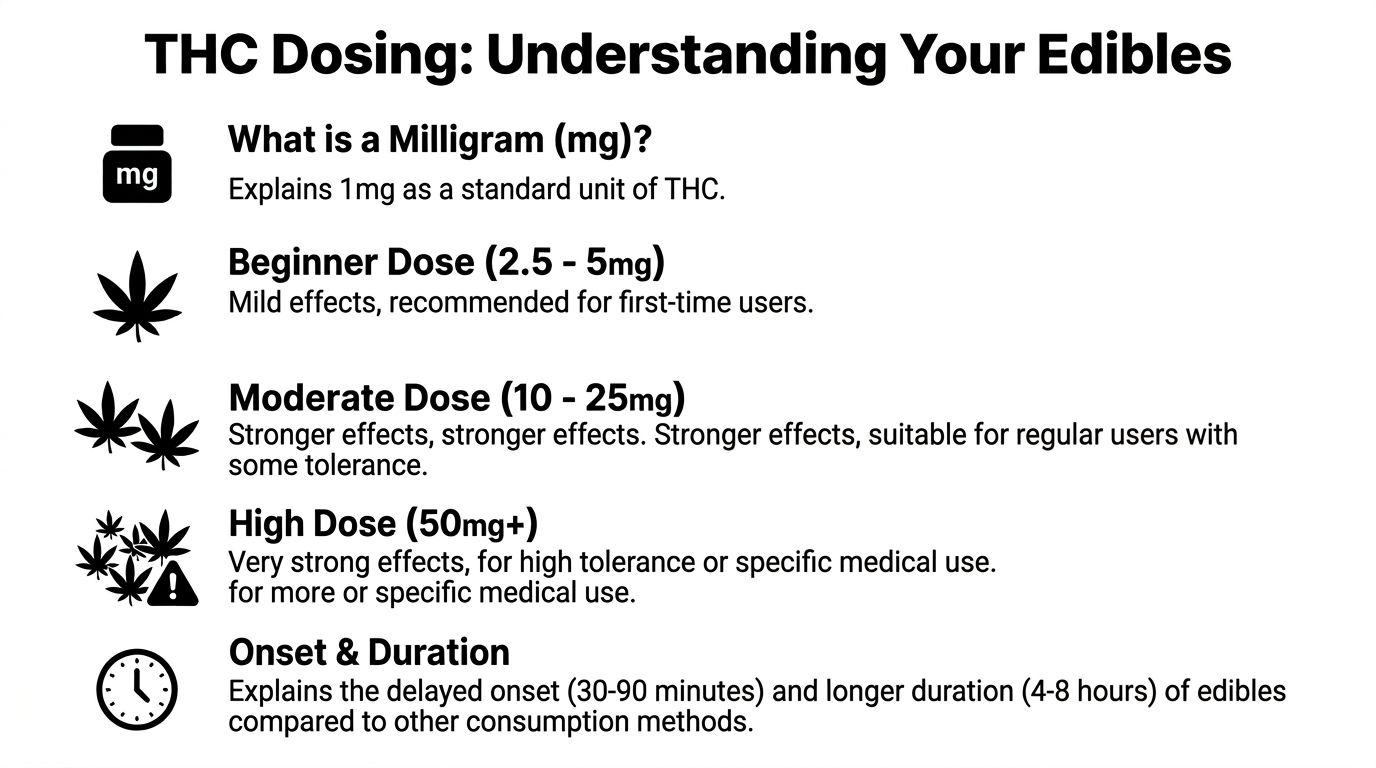
A milligram, written as mg, is the measurement for how much THC is in the edible. Once you read a rope the way you would read a tincture or capsule, the label starts to make more sense. You are measuring dose, not dessert.

A chart explaining cannabis edible THC dosing guidelines ranging from beginner doses to high tolerance levels.

Why potency feels confusing in a rope format

A cannabis rope often combines a long gummy base with a candy coating. That shape creates a false sense of simplicity. People are used to treating rope candy as one snack, but THC turns it into a product that may need to be divided into many separate servings.

Some infused rope products are marketed at very high total potency. According to this explanation of potency control in infused Nerds Rope recipes, consistent dosing depends on careful mixing of THC into the gummy base with a fat-based carrier. If that process is sloppy, one section can feel lighter and another section can hit much harder.

That matters even more in the DC, Virginia, and Maryland market, where packaging quality and product sourcing can vary a lot. A rope that looks professionally wrapped is not automatically evenly infused.

Why edibles build differently than smoking

Smoking and edibles follow different routes through the body. With inhaled cannabis, effects usually show up fast enough that people can gauge their response in real time. With edibles, the response is delayed, and the build can feel stronger once it arrives.

That delay causes trouble.

A person takes a piece, waits half an hour, feels little, then takes another piece. By the time both doses fully arrive, the session has become much heavier than planned. If you want a clearer sense of the timeline, Green Express DC has a useful guide on when edibles kick in.

A simple framework for reading dose ranges

Use the label the same way you would use a measuring cup in a kitchen. It gives you a unit, and the unit helps you avoid guessing.

  • 2.5 to 5mg is often treated as a low introductory range.
  • 10 to 25mg is usually more appropriate for people who already know how edible THC affects them.
  • 50mg and up is a strong dose range that can be overwhelming for beginners.

Those numbers are why a rope should never be judged by appearance alone. A tiny segment from a high-potency edible can still be a full dose, or more than one.

Three potency mistakes people make with cannabis ropes

The full rope gets treated like one serving

The candy format encourages casual eating. That habit works fine with regular sweets and fails badly with THC edibles.

Equal pieces get treated like equal doses

That assumption only holds up if the product was made and tested carefully. In loosely sourced products, matching size does not always mean matching strength.

Early silence gets mistaken for weak potency

With edibles, a quiet start tells you very little. Effects can take time to build, then arrive all at once.

Practical rule: Decide the milligram target before the first bite, then stick to it.

That single habit protects beginners, helps experienced users stay consistent, and makes it much easier to compare products across DC, Virginia, and Maryland where access rules differ but the dosing math stays the same.

A Practical Guide to Safe Consumption and Dosing

If you’re new to edible nerds rope, your job is simple. Start small and wait longer than you think you need to.

That isn’t overcautious. It’s how you avoid the classic edible mistake.

The safest beginner approach

A high-potency rope should be treated as a product you portion carefully, not as a single snack. Some reports warn that a 400mg Nerds Rope can cause significant intoxication, including stumbling and falls, and that the 30+ minute delay can lead people to re-dose too early, as described in this harm-reduction discussion of medicated Nerds Rope risks.

For a cautious session, follow a rhythm like this:

  1. Cut a very small piece first. If you know the total THC and can divide it accurately, aim for a low dose.
  2. Eat it after you’ve had food and water. That tends to make the experience easier to manage.
  3. Wait at least two hours before taking more. Longer is often smarter with edibles.
  4. Stay put. Don’t make your first trial a travel day, workday, or social obligation day.

If you want a deeper primer on timing, Green Express DC has a useful explainer on when edibles kick in.

Set and setting matter

Your environment changes how an edible feels.

  • Choose a calm place: Home is usually better than a party.
  • Keep your schedule clear: Don’t stack cannabis with errands or obligations.
  • Have someone reachable: A sober friend nearby can be reassuring.
  • Put the rest away: Don’t keep nibbling because it tastes like candy.

If you took too much

Most cases feel awful before they become dangerous. Panic makes the experience worse.

Try this first:

  • Sip water
  • Sit or lie somewhere comfortable
  • Lower stimulation
  • Remind yourself it will wear off
  • Avoid alcohol and more THC

Too much edible THC often feels like time distortion, racing thoughts, heavy body sensation, and regret. That alone doesn’t always mean an emergency.

Get medical help if someone can’t stay awake, has repeated falls, seems severely confused, or you’re worried they’re not safe. You don’t need to “tough it out” to prove anything.

Cannabis Legality in DC Virginia and Maryland

The hardest part of buying edibles in the DMV isn’t choosing a product. It’s knowing which rules apply on your side of the border.

A graphic featuring cannabis seeds and leaves with a scale balancing symbol over an outline map.

Washington DC

DC has its own cannabis framework, and many adults first run into terms like “gifting” before they understand what that means in practice. If you’re trying to sort out the basics, this guide on how to buy weed in DC is a helpful starting point.

What matters for edible shoppers is that DC operates differently from Maryland, and differently again from Virginia. So a delivery model that makes sense in DC may not map onto a neighboring jurisdiction.

Virginia

Virginia’s cannabis laws have gone through multiple changes, and that’s where many residents get mixed up. People often hear that possession rules changed and assume that means a normal adult-use retail and delivery environment exists everywhere in the state.

That assumption can lead to bad buying decisions. In practice, Virginia consumers need to pay close attention to what is permitted, what kind of seller they’re dealing with, and whether a product is being marketed in a way that creates false confidence.

A good rule for Virginia buyers

If a seller is vague about where the product comes from, how it’s tested, or what legal framework they’re operating under, that’s a sign to pause.

Maryland

Maryland is easier for many consumers to understand because it has a more established adult-use structure than DC’s gifting model. But easier doesn’t mean foolproof. The same counterfeit concerns can still follow branded candy-style edibles into the market.

That’s especially true when products move through informal channels or get resold without clear sourcing information.

Here’s a quick legal mindset for the region:

Location Consumer takeaway
DC Learn the local purchasing model before ordering
Virginia Don’t assume possession rules equal a broad retail market
Maryland Adult-use access is clearer, but product verification still matters

A short overview can help if you want a visual summary before ordering.

Crossing from DC to Virginia or Maryland doesn’t just change your drive time. It can change the legal context of the product in your bag.

That’s why local knowledge matters so much with edible nerds rope. A product question can quickly become a sourcing question, and then a legality question.

How to Choose Quality Edibles and Avoid Counterfeits

If you remember one thing from this guide, make it this. A flashy candy bag is not a safety standard.

Counterfeit THC-laced “Nerds Rope” products are a documented problem. Federal cease-and-desist letters were issued in 2023 to companies mimicking the candy’s branding, and these unauthorized products in unregulated channels lack the supply chain transparency and lab-testing verification associated with legitimate dispensary systems, according to this report on counterfeit Nerds Rope edibles and authentication concerns.

Two clear plastic bags filled with colorful fruit-flavored gummy candies on a plain white studio background.

What a safer buying process looks like

You don’t need a chemistry degree. You need a short checklist.

Look for product verification

Ask whether the seller can show clear product information and lab testing. If they can’t explain potency, ingredients, or sourcing in plain language, move on.

Watch the packaging style

Counterfeits often lean hard on familiar candy branding. The goal is recognition, not transparency.

Red flags include:

  • Cartoon candy mimicry: Packaging that looks designed to imitate a non-cannabis snack
  • No meaningful label details: Missing cannabinoid info, serving guidance, or ingredient clarity
  • No lab result path: No QR code, no documentation, no explanation
  • Seller deflection: Answers like “everybody loves these” instead of direct product facts

What to ask before you buy

A legitimate conversation should answer questions such as:

  • What cannabinoid is in this edible?
  • How much is in the full package?
  • How should a beginner portion it?
  • Is there a lab result or COA?
  • Is the package from a transparent source or just branded to look familiar?

Buyer check: If the seller spends more time talking about the bag than the batch, don’t buy it.

Why local trusted sourcing matters

In DC, delivery can be convenient, but convenience shouldn’t replace verification. A good service should make product details easier to understand, not harder. That includes age checks, straightforward ordering, and enough product information for you to make a careful choice.

That’s the standard to use whether you’re buying in DC, traveling from Maryland, or comparing options around Northern Virginia.

Ordering Safe Lab-Tested Edibles in DC with Green Express

Once you’ve decided you want an edible, the next step is boring on purpose. You want a process that’s clear, adult-only, and easy to verify.

One local option is Green Express DC cannabis delivery, which serves adults 21+ in Washington, DC and describes same-day delivery, discreet packaging, ID verification at drop-off, cash on delivery, and a $50 minimum order.

A simple way to order carefully

Start by reading the menu like a dosing decision, not like a snack list.

  • Check the cannabinoid type
  • Look at total potency
  • Ask yourself whether you want a low-dose edible or a novelty format
  • Don’t order a high-potency rope unless you already have a clear portioning plan

Before delivery arrives

Set yourself up before the package gets to you.

Have your ID ready

Adult verification is part of the process. Don’t leave that to the last second.

Decide your first serving in advance

This sounds minor, but it matters. If you wait until the edible is open and in front of you, it’s easier to eyeball a dose badly.

Store it away from kids and guests

Candy-style edibles need better storage habits than products that look medicinal. Put them somewhere secure as soon as they arrive.

When the product is in your hands

Check the label. Read the potency. If anything about the product seems unclear, don’t improvise.

A careful edible routine looks like this:

  1. Read the packaging.
  2. Portion before eating.
  3. Wait long enough.
  4. Keep notes if you’re trying a new edible format.

That approach works whether you use a rope edible, a gummy, or a tincture. The goal isn’t to make cannabis complicated. It’s to keep one impulsive bite from turning into an avoidable problem.


If you want a straightforward way to buy adult-use cannabis in Washington, DC, Green Express DC offers a menu of lab-tested products with same-day delivery, discreet packaging, and ID verification for adults 21+.

Posted on Leave a comment

How long do edibles take: A concise guide to onset, dosing, and safety

If you're new to cannabis edibles, the most common question is also the most important one: how long until I feel something? Unlike smoking or vaping, which deliver effects almost instantly, edibles require a bit of patience. You can generally expect to feel the first signs of an edible kicking in within 30 to 90 minutes.

This delay is the single biggest reason people have a bad experience. They get impatient, take another dose too soon, and end up with a much stronger effect than they bargained for.

The Waiting Game: How Long Do Edibles Take to Work?

Think of it like this: smoking or vaping is a direct flight, delivering THC straight into your bloodstream for a rapid takeoff. Edibles are more like a scenic train ride. The journey through your digestive system is slower, but it leads to a powerful destination with a much longer-lasting view.

Understanding this timeline is your best tool for navigating the experience successfully.

A Typical Edible Experience Timeline

Here’s a quick overview of what to expect after consuming a standard THC edible. While everyone is different, this timeline gives you a solid framework for your journey.

Phase Average Time After Consumption
Onset 30–90 minutes
Peak 2–4 hours
Duration 4–8 hours
After-Effects Up to 12+ hours

Remember, this is just a guide. Your own experience will depend on several factors we'll get into later, but this gives you a great starting point.

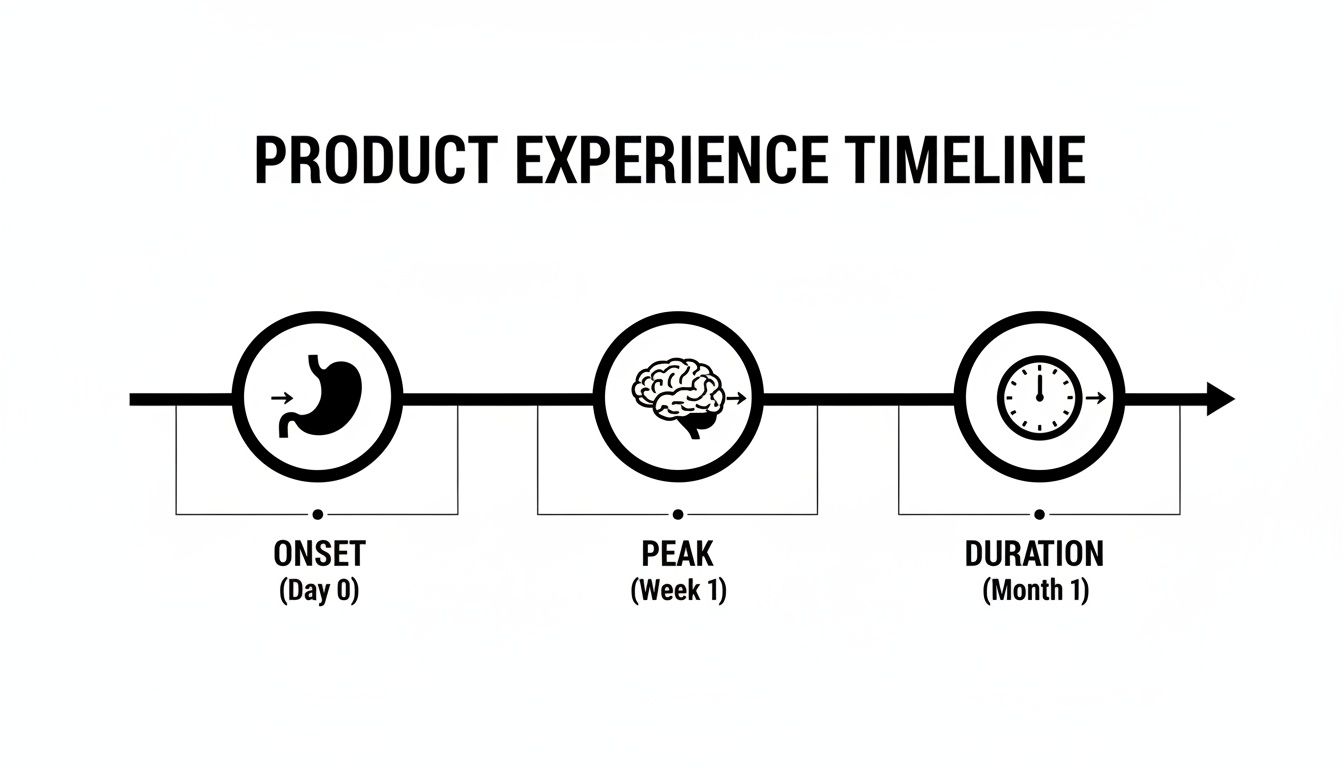
This chart helps visualize the gradual nature of the edible experience—from the initial onset to the long tail of its effects.

Product experience timeline illustrating onset (day 0), peak (week 1), and duration (month 1) stages.

As you can see, the journey is a slow, steady climb. It’s not a race, and the key is to give your body the time it needs to process everything.

Onset, Peak, and Duration

Let's break down those phases a bit more.

  • Onset: This is when you first notice the effects. For most people, this happens between 30 and 90 minutes after they eat their edible. It’s a common mistake to get antsy around the 30-minute mark and think it’s not working. Don't! Give it the full 90 minutes, or even two hours, before ever considering taking more.

  • Peak: This is the point where the effects are at their strongest. With edibles, the peak doesn’t hit you all at once. It builds gradually, typically arriving somewhere between 2 and 4 hours after consumption. This is where edibles really set themselves apart from other methods.

  • Duration: Once the effects start, they stick around for a while. You can expect the main experience to last anywhere from 4 to 8 hours, though some residual effects can linger even longer.

This extended timeline is precisely why "start low and go slow" is the golden rule of edibles. Once the ride begins, you’re on it for the long haul. Understanding each phase helps you prepare for a safe, predictable, and enjoyable experience. For a deeper dive into cannabis topics, feel free to explore our other articles on the Green Express DC blog.

The Science Behind Why Edibles Take Longer

If you’ve ever eaten an edible and thought nothing was happening, only to be hit with powerful effects an hour later, you're not alone. This delay isn't a sign of a weak product; it's the result of a unique journey the THC takes through your body, a process called first-pass metabolism. Understanding this is the key to mastering your edible experience.

When you smoke or vape, THC takes the fast lane, absorbing directly into your bloodstream through the lungs for a near-instant effect. Think of it like getting on a direct flight.

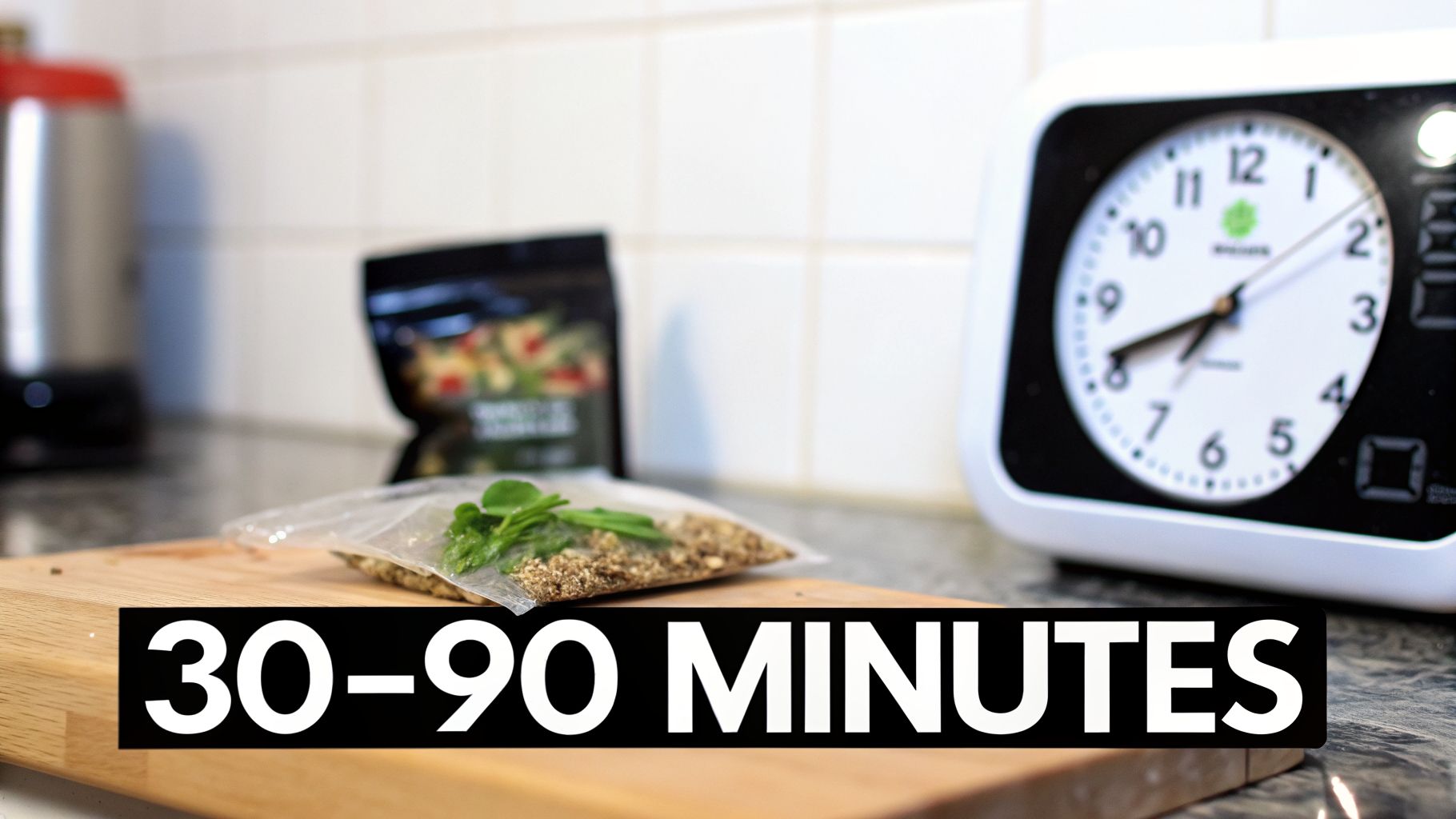
A small clear bag with herbs and greens on a wooden board, with a clock and '30-90 MINUTES' text.

An edible, on the other hand, takes the scenic route. The THC has to pass through your digestive system and make a mandatory pit stop at your liver before it can get to work.

The Journey Through Your Digestive System

When that gummy or brownie lands in your stomach, your body treats it like any other food. It has to be broken down and digested before the active compounds can be absorbed into your system. This initial digestive process is the first reason for the delay.

Once absorbed, the standard THC, known as Delta-9-THC, is shuttled directly to your liver. This is where the real magic happens—and where the journey gets interesting.

First-pass metabolism is just the scientific name for the liver's "processing fee." Before allowing compounds into the main bloodstream, the liver metabolizes them, fundamentally changing their chemical structure. With edibles, this change is everything.

This entire trip through your digestive tract and liver is what causes that typical 30 to 90-minute wait. It’s a crucial detour that completely transforms the nature of the high.

The Liver’s Powerful Conversion

Your liver is a powerful chemical factory. When Delta-9-THC arrives, your liver's enzymes get to work, converting it into an entirely new and much more powerful molecule: 11-hydroxy-THC.

This new compound is the real star of the edible experience. Here’s why that conversion is so critical:

  • Higher Potency: 11-hydroxy-THC is known to be significantly more potent than the Delta-9-THC you get from smoking.
  • VIP Brain Access: It’s far more effective at crossing the blood-brain barrier, which leads to a much more profound and immersive psychoactive effect.
  • Extended Effects: Your body processes 11-hydroxy-THC more slowly, which is why an edible high can last for 4 to 8 hours or even longer.

It’s only after the liver has finished this conversion that 11-hydroxy-THC is released into your bloodstream to interact with your endocannabinoid system. So, that waiting period isn't just dead time; it’s a transformation process. Your body is busy creating a more powerful compound that delivers a deeper, longer-lasting experience.

Factors That Influence Your Edible Experience

So, you're wondering how long it'll take for that edible to kick in. The truth is, there’s no single, one-size-fits-all answer. Your body is a unique chemical powerhouse, and the way it handles THC can be wildly different from someone else's, changing everything from how fast you feel it to how long it lasts.

Think about it like your morning coffee. You can use the exact same beans, but depending on how you grind them, the water temperature, and how long you let them brew, you can end up with a weak, watery cup or a jolt of jet fuel. The same principle applies here. Your personal biology and a few key circumstances are the real drivers behind your edible experience. Once you get a handle on these variables, you can get much better at predicting the journey ahead.

Your Metabolism and Body Composition

The biggest player in this game is your personal metabolic rate. If you're someone who generally processes food and drinks quickly, you'll likely process cannabinoids quickly, too. For people with a fast metabolism, the effects of an edible can start showing up in as little as 30 minutes. Their system gets to work fast, sending that THC straight to the liver to be converted.

On the flip side, someone with a slower metabolism might be waiting 90 minutes or even longer to feel anything. It's not that it isn't working; their body just takes more time to digest the edible and complete that crucial first-pass metabolism—the process that creates the extra-potent 11-hydroxy-THC.

Your body composition matters, as well. THC is lipophilic, meaning it binds to fat. This can influence both the intensity and duration of your high, as THC can be stored in fat cells and released slowly back into your system over time.

What’s in Your Stomach

Tossing back an edible on a totally empty stomach might sound like a good way to speed things up. And while that's often true, it can also send you straight to an intense, sudden peak that can feel overwhelming. With no other food to act as a buffer, your body absorbs everything at once.

Eating an edible right after a huge, heavy meal will do the opposite, almost always leading to a significant delay. Your digestive system is already backlogged with work, so the edible has to wait its turn, slowing down absorption.

The sweet spot is usually somewhere in the middle. Try having your edible with a small snack, especially one that contains some healthy fats. Think a handful of nuts or a little avocado. Fats can act as a carrier for the cannabinoids, potentially boosting their absorption for a smoother, more predictable experience.

Dosage and Product Type

This is the one factor you have the most direct control over: the dose. A 2.5mg microdose will feel worlds apart from a heavy-hitting 20mg dose in both strength and duration. It's so important to know how many milligrams you're taking and always stick to the golden rule: start low and go slow. This is especially true when you're trying a new brand or product for the first time.

The type of edible you choose also makes a big difference in how your body absorbs it.

  • Beverages and Tinctures: Liquids you drink or oils you hold under your tongue often work the fastest. Some of the THC gets absorbed directly into your bloodstream through the soft tissues in your mouth, giving them a head start.
  • Gummies and Hard Candies: As these dissolve in your mouth, they get absorbed pretty quickly, delivering effects that fall somewhere between a tincture and a baked good.
  • Brownies and Cookies: Classic baked goods are dense and often fatty. Your body has to work harder to break them down, which usually means a slower onset but an experience that can last for hours.

Getting to know how your body reacts to these different factors is key to dialing in your perfect experience. For anyone in DC looking to take the guesswork out of the equation, choosing lab-tested products from a reliable source like Green Express DC is a game-changer. When you know the potency is accurate, you’ve already eliminated the biggest variable.

Your Guide to Safe Dosing and a Positive First Experience

We’ve all heard the stories: a friend eats an entire brownie and ends up on a different planet for eight hours. These experiences almost always come down to one simple, avoidable mistake. The key to a fantastic first-time edible journey is all about respecting the process and following one golden rule that every seasoned user lives by: start low and go slow.

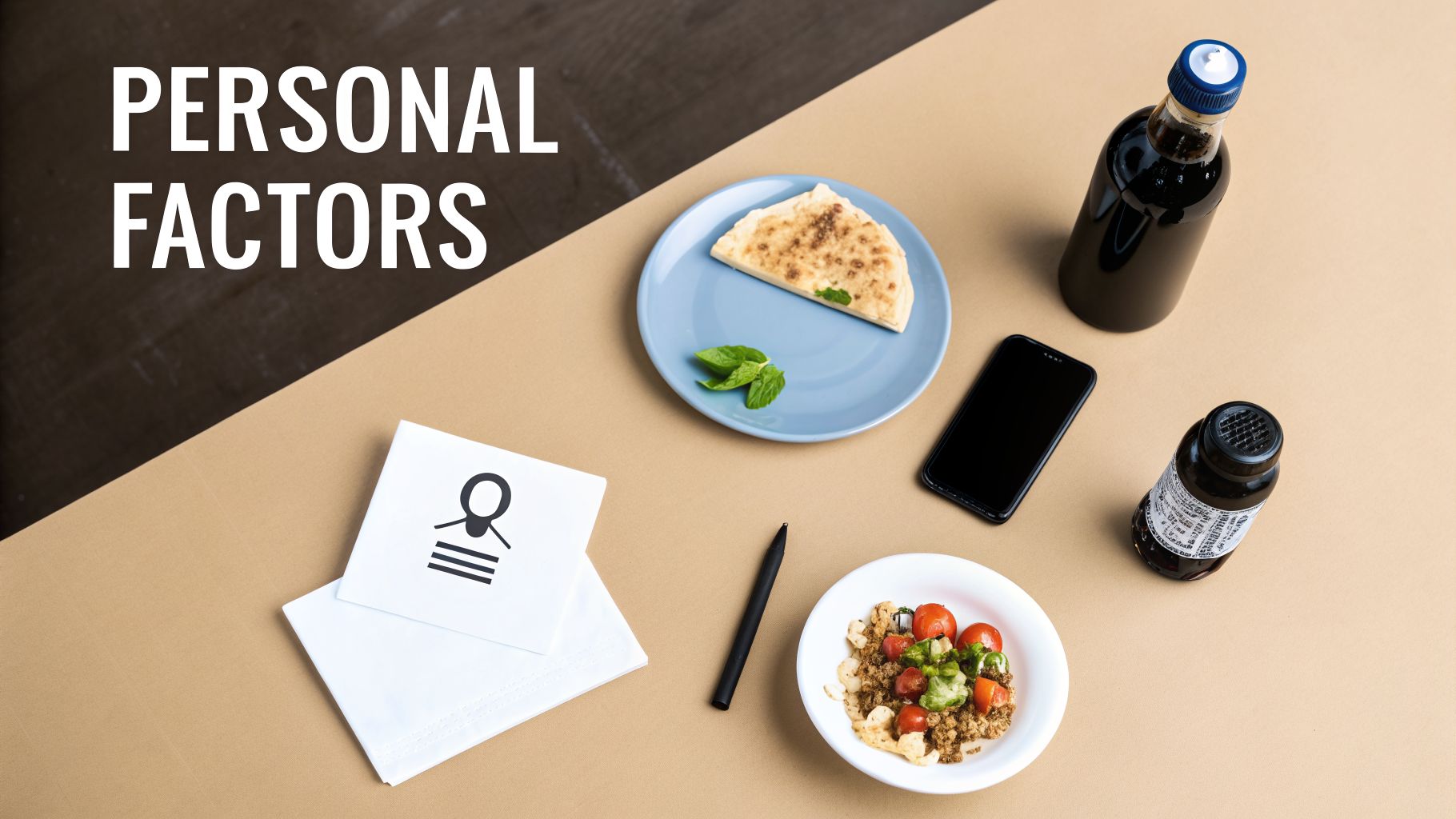
An overhead shot of a table with food, drinks, a smartphone, and "PERSONAL FACTORS" text.

This simple mantra is your best defense against taking too much, too soon. Because the answer to how long do edibles take to kick in varies so much, patience isn't just a virtue—it's your most important tool.

Start Low and Go Slow

So, what does "low" actually mean in the real world? For anyone new to edibles, a true starting dose is between 2.5mg and 5mg of THC. Many professionally made products, like gummies, are scored so you can easily cut them into halves or quarters. Grabbing a low-dose product from a reputable, lab-tested source like Green Express DC is a great move because it takes the guesswork out of dosing.

Once you’ve taken that small piece, the “go slow” part kicks in. Trust us on this: you need to wait at least two full hours before you even consider taking more. This window gives your body the time it needs to fully process the initial dose, preventing you from unknowingly stacking a second dose on top of the first and creating an experience that's way more intense than you bargained for.

The number one pitfall with edibles is impatience. The effects creep up on you, and it’s easy to think, "This isn't working." Giving yourself that full two-hour buffer is non-negotiable for a good first run.

Beginner's Dosing and Timing Guide

To make your first time as smooth as possible, we've put together a simple pre-flight checklist. Following these steps helps build confidence and ensures you’re the one steering the ship.

Step Action Why It's Important
1. Choose Your Product Pick a low-dose edible, 2.5mg to 5mg of THC. Look for products that are easy to cut into smaller, precise pieces. You can always take more later, but you can never take less. Starting small puts you in control.
2. Set the Scene Find a comfortable, safe spot where you can relax, like your own home. Clear your schedule for several hours. Your environment has a huge impact on your experience. A calm setting leads to a calm mindset.
3. Have a Small Snack Eat a small, slightly fatty snack (like a handful of nuts or a piece of cheese) about 15-20 minutes before your dose. A little fat can help your body absorb the THC more efficiently and can lead to a smoother, more gradual onset.
4. Dose and Wait Take your dose and immediately set a timer on your phone for two full hours. Do not redose before that timer goes off. This prevents the most common mistake: taking more before the first dose has fully kicked in.
5. Get Comfortable Have plenty of water and your favorite snacks within arm's reach. Put on some good music or a movie you love. Being hydrated, comfortable, and entertained makes the entire journey much more pleasant and worry-free.

By following this simple routine, you're not just guessing—you're learning how your unique body responds to cannabis in a controlled and positive way. It’s the perfect foundation for many more enjoyable experiences down the road.

Here's the rewritten section, crafted to sound human-written and natural:

What to Do If the Experience Becomes Too Intense

It happens. You followed the rules, waited patiently, and then—whoa. The ride is a little more intense than you bargained for. Even the most seasoned cannabis enthusiast can misjudge an edible now and then.

If you ever find yourself feeling overwhelmed, the most important thing to repeat to yourself is: this is temporary, and it will pass. Seriously. No one has ever suffered a fatal overdose from cannabis. The uncomfortable feelings of anxiety, paranoia, or a racing heart are common signs of overconsumption, not a sign of real danger. Acknowledging that this is just a stronger-than-expected effect is the first step to feeling better.

Grounding Techniques to Find Your Center

When things feel a bit too much, your goal is to create a safe, calm space for yourself. Having a game plan ready can turn a moment of panic into a manageable experience while you wait for the effects to naturally mellow out.

The first move is to change your scenery. If you're in a loud, busy environment, excuse yourself and find a quiet, comfortable spot. A bedroom or a cozy couch is perfect. Dim the lights, turn off the blaring TV, and just give your senses a break.

From there, focus on simple, comforting actions. Think of it as a self-care checklist. Here are a few tried-and-true methods:

  • Hydrate and Have a Snack: Sipping on a glass of cool water can be incredibly grounding. Munching on a simple, non-infused snack can also help, as it gives your body something else to focus on.
  • Try the Black Peppercorn Trick: This might sound like an old wives' tale, but there's real science to it. Just sniffing or chewing on a few whole black peppercorns can help ease the anxiety. Pepper contains a terpene called caryophyllene, which is known to help tame the more intense effects of THC.
  • Bring in the CBD: If you have any CBD-only products handy, like a tincture or vape, now is the perfect time to use them. CBD is non-intoxicating and works to counteract some of THC's anxiety-producing side effects, acting like a gentle brake.
  • Find a Gentle Distraction: Don't just sit there focusing on how you feel. Put on a favorite comfort movie (nothing too intense!), listen to a chill playlist, or even do something simple like doodling. Shifting your focus externally works wonders.

Remember Your Anchor: The most powerful tool you have is your own breath. It sounds simple, but it works. Close your eyes and take slow, deep breaths. A good pattern is to breathe in for four seconds, hold for four, and then breathe out slowly for six. This physical action can calm a racing mind and slow a pounding heart.

Ultimately, riding out an intense edible experience is a game of patience and self-reassurance. The effects will always fade, especially once you're past that 2 to 4-hour peak window. With these strategies in your back pocket, you can handle any unexpected intensity with confidence.

Why Choosing Lab-Tested Edibles in DC Matters

Knowing all the science behind how your body metabolizes THC is great, but it’s only one piece of the puzzle. If you don't know exactly what you're putting into your body, all that knowledge goes out the window. For a safe, predictable, and genuinely enjoyable experience in DC, the single most important decision you can make is choosing lab-tested edibles.

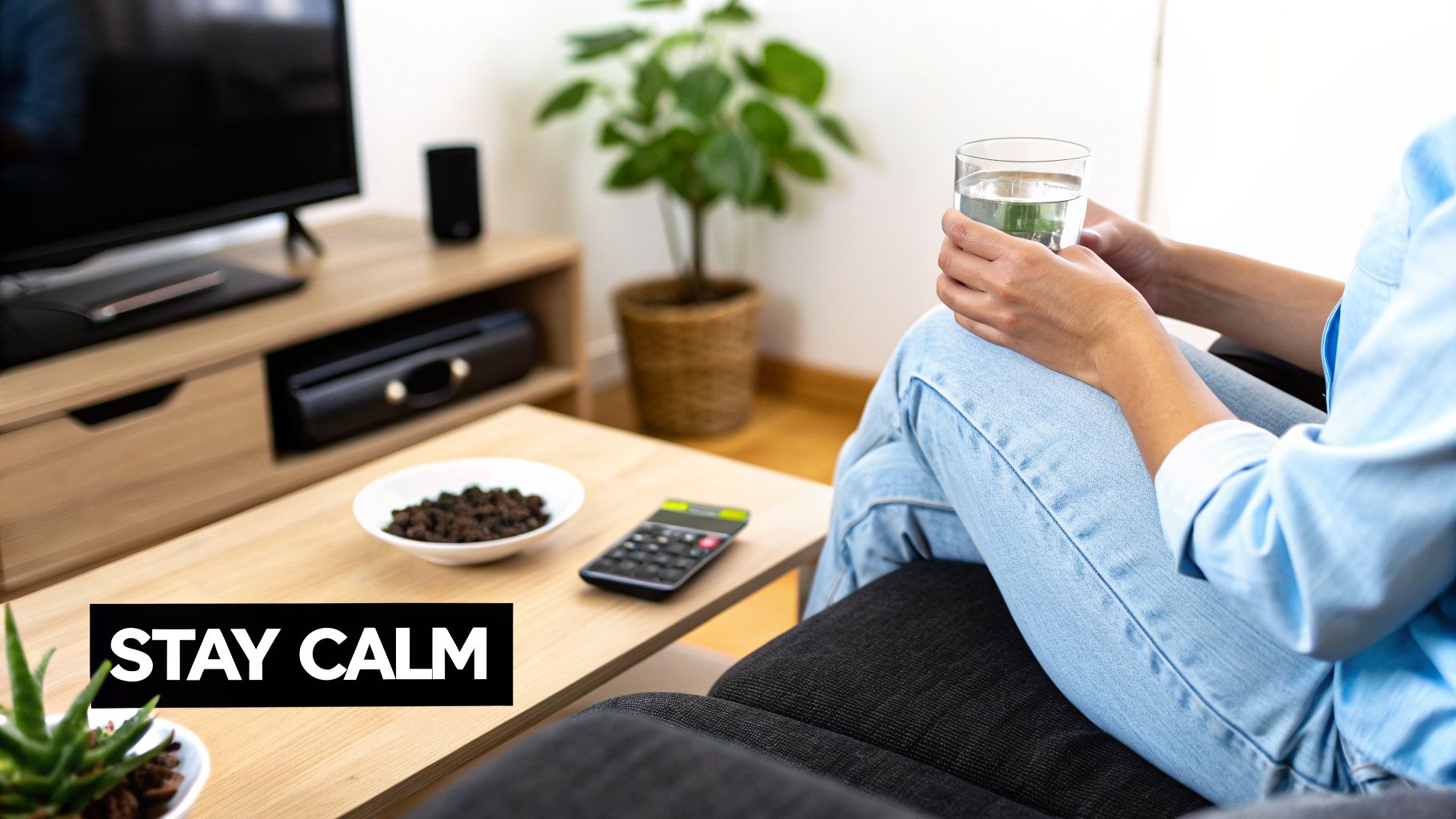
Person on a sofa holding water, with snacks, a calculator, and 'STAY CALM' text on a coffee table.

Think about it: unregulated or homemade treats are a total wildcard. One corner of a brownie might have a massive dose while another has practically none—a classic case of "hot spots." It's a recipe for a bad time, and lab-testing is what takes that dangerous guesswork out of the equation.

The Power of Precision

When an edible has been professionally tested, you get a solid confirmation of its potency and purity. This isn't just a nice-to-have; it's the foundation of responsible dosing.

A lab-tested edible labeled 10mg of THC contains just that—no more, no less. It shifts the experience from a roll of the dice to something you can actually control, empowering you to dial in the exact dose that feels right.

This kind of accuracy is what makes the golden rule—"start low and go slow"—truly effective. You can confidently slice a gummy in half to try a 2.5mg or 5mg dose, because you can trust the number on the label.

With that confidence, finding the right product becomes a whole lot easier. You can comfortably browse a curated selection of lab-tested edibles knowing that each one is accurately dosed for a consistent and reliable journey.

Frequently Asked Questions About Edible Onset

Even after getting the full rundown, it's natural to have a few more questions pop up. Let's tackle some of the most common ones people ask about getting started with edibles.

Can I Make Edibles Kick In Faster?

You can, but it's not always the best idea. Taking an edible on a completely empty stomach might speed things up, potentially bringing the onset to around the 30-minute mark. The catch? This often creates a much more sudden and intense peak, which can feel overwhelming.

For a smoother ride, try having a small snack about 15-20 minutes before your edible. A little bit of fat—think a handful of almonds or a spoonful of peanut butter—can actually help your body absorb the cannabinoids more efficiently, giving you a more predictable and pleasant experience.

Why Do Edibles Feel More Potent Than Smoking?

This one’s all about a bit of body chemistry. When you smoke or vape, THC goes straight to your brain. But when you eat an edible, it first travels to your liver, which converts the standard Delta-9-THC into a powerful compound called 11-hydroxy-THC.

This new molecule is a powerhouse. It crosses the blood-brain barrier far more effectively, creating a profoundly stronger and longer-lasting experience. It's the reason a 10mg edible can feel much more intense than a few puffs from a vape with similar THC content.

How Long Will the Effects of an Edible Last?

Once an edible kicks in, you should plan for the effects to be with you for a while. A typical experience lasts anywhere from 4 to 8 hours, though some people notice subtle, lingering effects for up to 12 hours.

The most intense part of the experience, the "peak," usually happens somewhere between the 2 and 4-hour mark after you first feel it.

Will One Edible Make Me Fail a Drug Test?

Almost certainly, yes. Drug tests aren't looking for the active THC that makes you feel high; they're designed to detect the metabolites your body creates as it processes THC.

Since your liver creates a ton of these metabolites when you consume an edible, even a single dose can be detectable in your system for days or even weeks afterward. It all depends on your personal metabolism and how often you use cannabis. If you have more questions like this, our detailed FAQs page has plenty of answers.


Ready to find a reliable, lab-tested edible that delivers a predictable and enjoyable experience? Green Express DC has a carefully curated menu of premium edibles, all available for convenient delivery.

Check out our full menu and start your journey with confidence.

Posted on Leave a comment

How long do edibles take: A concise guide to onset, dosing, and safety

If you're new to cannabis edibles, the most common question is also the most important one: how long until I feel something? Unlike smoking or vaping, which deliver effects almost instantly, edibles require a bit of patience. You can generally expect to feel the first signs of an edible kicking in within 30 to 90 minutes.

This delay is the single biggest reason people have a bad experience. They get impatient, take another dose too soon, and end up with a much stronger effect than they bargained for.

The Waiting Game: How Long Do Edibles Take to Work?

Think of it like this: smoking or vaping is a direct flight, delivering THC straight into your bloodstream for a rapid takeoff. Edibles are more like a scenic train ride. The journey through your digestive system is slower, but it leads to a powerful destination with a much longer-lasting view.

Understanding this timeline is your best tool for navigating the experience successfully.

A Typical Edible Experience Timeline

Here’s a quick overview of what to expect after consuming a standard THC edible. While everyone is different, this timeline gives you a solid framework for your journey.

Phase Average Time After Consumption
Onset 30–90 minutes
Peak 2–4 hours
Duration 4–8 hours
After-Effects Up to 12+ hours

Remember, this is just a guide. Your own experience will depend on several factors we'll get into later, but this gives you a great starting point.

This chart helps visualize the gradual nature of the edible experience—from the initial onset to the long tail of its effects.

Product experience timeline illustrating onset (day 0), peak (week 1), and duration (month 1) stages.

As you can see, the journey is a slow, steady climb. It’s not a race, and the key is to give your body the time it needs to process everything.

Onset, Peak, and Duration

Let's break down those phases a bit more.

  • Onset: This is when you first notice the effects. For most people, this happens between 30 and 90 minutes after they eat their edible. It’s a common mistake to get antsy around the 30-minute mark and think it’s not working. Don't! Give it the full 90 minutes, or even two hours, before ever considering taking more.

  • Peak: This is the point where the effects are at their strongest. With edibles, the peak doesn’t hit you all at once. It builds gradually, typically arriving somewhere between 2 and 4 hours after consumption. This is where edibles really set themselves apart from other methods.

  • Duration: Once the effects start, they stick around for a while. You can expect the main experience to last anywhere from 4 to 8 hours, though some residual effects can linger even longer.

This extended timeline is precisely why "start low and go slow" is the golden rule of edibles. Once the ride begins, you’re on it for the long haul. Understanding each phase helps you prepare for a safe, predictable, and enjoyable experience. For a deeper dive into cannabis topics, feel free to explore our other articles on the Green Express DC blog.

The Science Behind Why Edibles Take Longer

If you’ve ever eaten an edible and thought nothing was happening, only to be hit with powerful effects an hour later, you're not alone. This delay isn't a sign of a weak product; it's the result of a unique journey the THC takes through your body, a process called first-pass metabolism. Understanding this is the key to mastering your edible experience.

When you smoke or vape, THC takes the fast lane, absorbing directly into your bloodstream through the lungs for a near-instant effect. Think of it like getting on a direct flight.

A small clear bag with herbs and greens on a wooden board, with a clock and '30-90 MINUTES' text.

An edible, on the other hand, takes the scenic route. The THC has to pass through your digestive system and make a mandatory pit stop at your liver before it can get to work.

The Journey Through Your Digestive System

When that gummy or brownie lands in your stomach, your body treats it like any other food. It has to be broken down and digested before the active compounds can be absorbed into your system. This initial digestive process is the first reason for the delay.

Once absorbed, the standard THC, known as Delta-9-THC, is shuttled directly to your liver. This is where the real magic happens—and where the journey gets interesting.

First-pass metabolism is just the scientific name for the liver's "processing fee." Before allowing compounds into the main bloodstream, the liver metabolizes them, fundamentally changing their chemical structure. With edibles, this change is everything.

This entire trip through your digestive tract and liver is what causes that typical 30 to 90-minute wait. It’s a crucial detour that completely transforms the nature of the high.

The Liver’s Powerful Conversion

Your liver is a powerful chemical factory. When Delta-9-THC arrives, your liver's enzymes get to work, converting it into an entirely new and much more powerful molecule: 11-hydroxy-THC.

This new compound is the real star of the edible experience. Here’s why that conversion is so critical:

  • Higher Potency: 11-hydroxy-THC is known to be significantly more potent than the Delta-9-THC you get from smoking.
  • VIP Brain Access: It’s far more effective at crossing the blood-brain barrier, which leads to a much more profound and immersive psychoactive effect.
  • Extended Effects: Your body processes 11-hydroxy-THC more slowly, which is why an edible high can last for 4 to 8 hours or even longer.

It’s only after the liver has finished this conversion that 11-hydroxy-THC is released into your bloodstream to interact with your endocannabinoid system. So, that waiting period isn't just dead time; it’s a transformation process. Your body is busy creating a more powerful compound that delivers a deeper, longer-lasting experience.

Factors That Influence Your Edible Experience

So, you're wondering how long it'll take for that edible to kick in. The truth is, there’s no single, one-size-fits-all answer. Your body is a unique chemical powerhouse, and the way it handles THC can be wildly different from someone else's, changing everything from how fast you feel it to how long it lasts.

Think about it like your morning coffee. You can use the exact same beans, but depending on how you grind them, the water temperature, and how long you let them brew, you can end up with a weak, watery cup or a jolt of jet fuel. The same principle applies here. Your personal biology and a few key circumstances are the real drivers behind your edible experience. Once you get a handle on these variables, you can get much better at predicting the journey ahead.

Your Metabolism and Body Composition

The biggest player in this game is your personal metabolic rate. If you're someone who generally processes food and drinks quickly, you'll likely process cannabinoids quickly, too. For people with a fast metabolism, the effects of an edible can start showing up in as little as 30 minutes. Their system gets to work fast, sending that THC straight to the liver to be converted.

On the flip side, someone with a slower metabolism might be waiting 90 minutes or even longer to feel anything. It's not that it isn't working; their body just takes more time to digest the edible and complete that crucial first-pass metabolism—the process that creates the extra-potent 11-hydroxy-THC.

Your body composition matters, as well. THC is lipophilic, meaning it binds to fat. This can influence both the intensity and duration of your high, as THC can be stored in fat cells and released slowly back into your system over time.

What’s in Your Stomach

Tossing back an edible on a totally empty stomach might sound like a good way to speed things up. And while that's often true, it can also send you straight to an intense, sudden peak that can feel overwhelming. With no other food to act as a buffer, your body absorbs everything at once.

Eating an edible right after a huge, heavy meal will do the opposite, almost always leading to a significant delay. Your digestive system is already backlogged with work, so the edible has to wait its turn, slowing down absorption.

The sweet spot is usually somewhere in the middle. Try having your edible with a small snack, especially one that contains some healthy fats. Think a handful of nuts or a little avocado. Fats can act as a carrier for the cannabinoids, potentially boosting their absorption for a smoother, more predictable experience.

Dosage and Product Type

This is the one factor you have the most direct control over: the dose. A 2.5mg microdose will feel worlds apart from a heavy-hitting 20mg dose in both strength and duration. It's so important to know how many milligrams you're taking and always stick to the golden rule: start low and go slow. This is especially true when you're trying a new brand or product for the first time.

The type of edible you choose also makes a big difference in how your body absorbs it.

  • Beverages and Tinctures: Liquids you drink or oils you hold under your tongue often work the fastest. Some of the THC gets absorbed directly into your bloodstream through the soft tissues in your mouth, giving them a head start.
  • Gummies and Hard Candies: As these dissolve in your mouth, they get absorbed pretty quickly, delivering effects that fall somewhere between a tincture and a baked good.
  • Brownies and Cookies: Classic baked goods are dense and often fatty. Your body has to work harder to break them down, which usually means a slower onset but an experience that can last for hours.

Getting to know how your body reacts to these different factors is key to dialing in your perfect experience. For anyone in DC looking to take the guesswork out of the equation, choosing lab-tested products from a reliable source like Green Express DC is a game-changer. When you know the potency is accurate, you’ve already eliminated the biggest variable.

Your Guide to Safe Dosing and a Positive First Experience

We’ve all heard the stories: a friend eats an entire brownie and ends up on a different planet for eight hours. These experiences almost always come down to one simple, avoidable mistake. The key to a fantastic first-time edible journey is all about respecting the process and following one golden rule that every seasoned user lives by: start low and go slow.

An overhead shot of a table with food, drinks, a smartphone, and "PERSONAL FACTORS" text.

This simple mantra is your best defense against taking too much, too soon. Because the answer to how long do edibles take to kick in varies so much, patience isn't just a virtue—it's your most important tool.

Start Low and Go Slow

So, what does "low" actually mean in the real world? For anyone new to edibles, a true starting dose is between 2.5mg and 5mg of THC. Many professionally made products, like gummies, are scored so you can easily cut them into halves or quarters. Grabbing a low-dose product from a reputable, lab-tested source like Green Express DC is a great move because it takes the guesswork out of dosing.

Once you’ve taken that small piece, the “go slow” part kicks in. Trust us on this: you need to wait at least two full hours before you even consider taking more. This window gives your body the time it needs to fully process the initial dose, preventing you from unknowingly stacking a second dose on top of the first and creating an experience that's way more intense than you bargained for.

The number one pitfall with edibles is impatience. The effects creep up on you, and it’s easy to think, "This isn't working." Giving yourself that full two-hour buffer is non-negotiable for a good first run.

Beginner's Dosing and Timing Guide

To make your first time as smooth as possible, we've put together a simple pre-flight checklist. Following these steps helps build confidence and ensures you’re the one steering the ship.

Step Action Why It's Important
1. Choose Your Product Pick a low-dose edible, 2.5mg to 5mg of THC. Look for products that are easy to cut into smaller, precise pieces. You can always take more later, but you can never take less. Starting small puts you in control.
2. Set the Scene Find a comfortable, safe spot where you can relax, like your own home. Clear your schedule for several hours. Your environment has a huge impact on your experience. A calm setting leads to a calm mindset.
3. Have a Small Snack Eat a small, slightly fatty snack (like a handful of nuts or a piece of cheese) about 15-20 minutes before your dose. A little fat can help your body absorb the THC more efficiently and can lead to a smoother, more gradual onset.
4. Dose and Wait Take your dose and immediately set a timer on your phone for two full hours. Do not redose before that timer goes off. This prevents the most common mistake: taking more before the first dose has fully kicked in.
5. Get Comfortable Have plenty of water and your favorite snacks within arm's reach. Put on some good music or a movie you love. Being hydrated, comfortable, and entertained makes the entire journey much more pleasant and worry-free.

By following this simple routine, you're not just guessing—you're learning how your unique body responds to cannabis in a controlled and positive way. It’s the perfect foundation for many more enjoyable experiences down the road.

Here's the rewritten section, crafted to sound human-written and natural:

What to Do If the Experience Becomes Too Intense

It happens. You followed the rules, waited patiently, and then—whoa. The ride is a little more intense than you bargained for. Even the most seasoned cannabis enthusiast can misjudge an edible now and then.

If you ever find yourself feeling overwhelmed, the most important thing to repeat to yourself is: this is temporary, and it will pass. Seriously. No one has ever suffered a fatal overdose from cannabis. The uncomfortable feelings of anxiety, paranoia, or a racing heart are common signs of overconsumption, not a sign of real danger. Acknowledging that this is just a stronger-than-expected effect is the first step to feeling better.

Grounding Techniques to Find Your Center

When things feel a bit too much, your goal is to create a safe, calm space for yourself. Having a game plan ready can turn a moment of panic into a manageable experience while you wait for the effects to naturally mellow out.

The first move is to change your scenery. If you're in a loud, busy environment, excuse yourself and find a quiet, comfortable spot. A bedroom or a cozy couch is perfect. Dim the lights, turn off the blaring TV, and just give your senses a break.

From there, focus on simple, comforting actions. Think of it as a self-care checklist. Here are a few tried-and-true methods:

  • Hydrate and Have a Snack: Sipping on a glass of cool water can be incredibly grounding. Munching on a simple, non-infused snack can also help, as it gives your body something else to focus on.
  • Try the Black Peppercorn Trick: This might sound like an old wives' tale, but there's real science to it. Just sniffing or chewing on a few whole black peppercorns can help ease the anxiety. Pepper contains a terpene called caryophyllene, which is known to help tame the more intense effects of THC.
  • Bring in the CBD: If you have any CBD-only products handy, like a tincture or vape, now is the perfect time to use them. CBD is non-intoxicating and works to counteract some of THC's anxiety-producing side effects, acting like a gentle brake.
  • Find a Gentle Distraction: Don't just sit there focusing on how you feel. Put on a favorite comfort movie (nothing too intense!), listen to a chill playlist, or even do something simple like doodling. Shifting your focus externally works wonders.

Remember Your Anchor: The most powerful tool you have is your own breath. It sounds simple, but it works. Close your eyes and take slow, deep breaths. A good pattern is to breathe in for four seconds, hold for four, and then breathe out slowly for six. This physical action can calm a racing mind and slow a pounding heart.

Ultimately, riding out an intense edible experience is a game of patience and self-reassurance. The effects will always fade, especially once you're past that 2 to 4-hour peak window. With these strategies in your back pocket, you can handle any unexpected intensity with confidence.

Why Choosing Lab-Tested Edibles in DC Matters

Knowing all the science behind how your body metabolizes THC is great, but it’s only one piece of the puzzle. If you don't know exactly what you're putting into your body, all that knowledge goes out the window. For a safe, predictable, and genuinely enjoyable experience in DC, the single most important decision you can make is choosing lab-tested edibles.

Person on a sofa holding water, with snacks, a calculator, and 'STAY CALM' text on a coffee table.

Think about it: unregulated or homemade treats are a total wildcard. One corner of a brownie might have a massive dose while another has practically none—a classic case of "hot spots." It's a recipe for a bad time, and lab-testing is what takes that dangerous guesswork out of the equation.

The Power of Precision

When an edible has been professionally tested, you get a solid confirmation of its potency and purity. This isn't just a nice-to-have; it's the foundation of responsible dosing.

A lab-tested edible labeled 10mg of THC contains just that—no more, no less. It shifts the experience from a roll of the dice to something you can actually control, empowering you to dial in the exact dose that feels right.

This kind of accuracy is what makes the golden rule—"start low and go slow"—truly effective. You can confidently slice a gummy in half to try a 2.5mg or 5mg dose, because you can trust the number on the label.

With that confidence, finding the right product becomes a whole lot easier. You can comfortably browse a curated selection of lab-tested edibles knowing that each one is accurately dosed for a consistent and reliable journey.

Frequently Asked Questions About Edible Onset

Even after getting the full rundown, it's natural to have a few more questions pop up. Let's tackle some of the most common ones people ask about getting started with edibles.

Can I Make Edibles Kick In Faster?

You can, but it's not always the best idea. Taking an edible on a completely empty stomach might speed things up, potentially bringing the onset to around the 30-minute mark. The catch? This often creates a much more sudden and intense peak, which can feel overwhelming.

For a smoother ride, try having a small snack about 15-20 minutes before your edible. A little bit of fat—think a handful of almonds or a spoonful of peanut butter—can actually help your body absorb the cannabinoids more efficiently, giving you a more predictable and pleasant experience.

Why Do Edibles Feel More Potent Than Smoking?

This one’s all about a bit of body chemistry. When you smoke or vape, THC goes straight to your brain. But when you eat an edible, it first travels to your liver, which converts the standard Delta-9-THC into a powerful compound called 11-hydroxy-THC.

This new molecule is a powerhouse. It crosses the blood-brain barrier far more effectively, creating a profoundly stronger and longer-lasting experience. It's the reason a 10mg edible can feel much more intense than a few puffs from a vape with similar THC content.

How Long Will the Effects of an Edible Last?

Once an edible kicks in, you should plan for the effects to be with you for a while. A typical experience lasts anywhere from 4 to 8 hours, though some people notice subtle, lingering effects for up to 12 hours.

The most intense part of the experience, the "peak," usually happens somewhere between the 2 and 4-hour mark after you first feel it.

Will One Edible Make Me Fail a Drug Test?

Almost certainly, yes. Drug tests aren't looking for the active THC that makes you feel high; they're designed to detect the metabolites your body creates as it processes THC.

Since your liver creates a ton of these metabolites when you consume an edible, even a single dose can be detectable in your system for days or even weeks afterward. It all depends on your personal metabolism and how often you use cannabis. If you have more questions like this, our detailed FAQs page has plenty of answers.


Ready to find a reliable, lab-tested edible that delivers a predictable and enjoyable experience? Green Express DC has a carefully curated menu of premium edibles, all available for convenient delivery.

Check out our full menu and start your journey with confidence.

Posted on Leave a comment

How long do edibles take: A concise guide to onset, dosing, and safety

If you're new to cannabis edibles, the most common question is also the most important one: how long until I feel something? Unlike smoking or vaping, which deliver effects almost instantly, edibles require a bit of patience. You can generally expect to feel the first signs of an edible kicking in within 30 to 90 minutes.

This delay is the single biggest reason people have a bad experience. They get impatient, take another dose too soon, and end up with a much stronger effect than they bargained for.

The Waiting Game: How Long Do Edibles Take to Work?

Think of it like this: smoking or vaping is a direct flight, delivering THC straight into your bloodstream for a rapid takeoff. Edibles are more like a scenic train ride. The journey through your digestive system is slower, but it leads to a powerful destination with a much longer-lasting view.

Understanding this timeline is your best tool for navigating the experience successfully.

A Typical Edible Experience Timeline

Here’s a quick overview of what to expect after consuming a standard THC edible. While everyone is different, this timeline gives you a solid framework for your journey.

Phase Average Time After Consumption
Onset 30–90 minutes
Peak 2–4 hours
Duration 4–8 hours
After-Effects Up to 12+ hours

Remember, this is just a guide. Your own experience will depend on several factors we'll get into later, but this gives you a great starting point.

This chart helps visualize the gradual nature of the edible experience—from the initial onset to the long tail of its effects.

Product experience timeline illustrating onset (day 0), peak (week 1), and duration (month 1) stages.

As you can see, the journey is a slow, steady climb. It’s not a race, and the key is to give your body the time it needs to process everything.

Onset, Peak, and Duration

Let's break down those phases a bit more.

  • Onset: This is when you first notice the effects. For most people, this happens between 30 and 90 minutes after they eat their edible. It’s a common mistake to get antsy around the 30-minute mark and think it’s not working. Don't! Give it the full 90 minutes, or even two hours, before ever considering taking more.

  • Peak: This is the point where the effects are at their strongest. With edibles, the peak doesn’t hit you all at once. It builds gradually, typically arriving somewhere between 2 and 4 hours after consumption. This is where edibles really set themselves apart from other methods.

  • Duration: Once the effects start, they stick around for a while. You can expect the main experience to last anywhere from 4 to 8 hours, though some residual effects can linger even longer.

This extended timeline is precisely why "start low and go slow" is the golden rule of edibles. Once the ride begins, you’re on it for the long haul. Understanding each phase helps you prepare for a safe, predictable, and enjoyable experience. For a deeper dive into cannabis topics, feel free to explore our other articles on the Green Express DC blog.

The Science Behind Why Edibles Take Longer

If you’ve ever eaten an edible and thought nothing was happening, only to be hit with powerful effects an hour later, you're not alone. This delay isn't a sign of a weak product; it's the result of a unique journey the THC takes through your body, a process called first-pass metabolism. Understanding this is the key to mastering your edible experience.

When you smoke or vape, THC takes the fast lane, absorbing directly into your bloodstream through the lungs for a near-instant effect. Think of it like getting on a direct flight.

A small clear bag with herbs and greens on a wooden board, with a clock and '30-90 MINUTES' text.

An edible, on the other hand, takes the scenic route. The THC has to pass through your digestive system and make a mandatory pit stop at your liver before it can get to work.

The Journey Through Your Digestive System

When that gummy or brownie lands in your stomach, your body treats it like any other food. It has to be broken down and digested before the active compounds can be absorbed into your system. This initial digestive process is the first reason for the delay.

Once absorbed, the standard THC, known as Delta-9-THC, is shuttled directly to your liver. This is where the real magic happens—and where the journey gets interesting.

First-pass metabolism is just the scientific name for the liver's "processing fee." Before allowing compounds into the main bloodstream, the liver metabolizes them, fundamentally changing their chemical structure. With edibles, this change is everything.

This entire trip through your digestive tract and liver is what causes that typical 30 to 90-minute wait. It’s a crucial detour that completely transforms the nature of the high.

The Liver’s Powerful Conversion

Your liver is a powerful chemical factory. When Delta-9-THC arrives, your liver's enzymes get to work, converting it into an entirely new and much more powerful molecule: 11-hydroxy-THC.

This new compound is the real star of the edible experience. Here’s why that conversion is so critical:

  • Higher Potency: 11-hydroxy-THC is known to be significantly more potent than the Delta-9-THC you get from smoking.
  • VIP Brain Access: It’s far more effective at crossing the blood-brain barrier, which leads to a much more profound and immersive psychoactive effect.
  • Extended Effects: Your body processes 11-hydroxy-THC more slowly, which is why an edible high can last for 4 to 8 hours or even longer.

It’s only after the liver has finished this conversion that 11-hydroxy-THC is released into your bloodstream to interact with your endocannabinoid system. So, that waiting period isn't just dead time; it’s a transformation process. Your body is busy creating a more powerful compound that delivers a deeper, longer-lasting experience.

Factors That Influence Your Edible Experience

So, you're wondering how long it'll take for that edible to kick in. The truth is, there’s no single, one-size-fits-all answer. Your body is a unique chemical powerhouse, and the way it handles THC can be wildly different from someone else's, changing everything from how fast you feel it to how long it lasts.

Think about it like your morning coffee. You can use the exact same beans, but depending on how you grind them, the water temperature, and how long you let them brew, you can end up with a weak, watery cup or a jolt of jet fuel. The same principle applies here. Your personal biology and a few key circumstances are the real drivers behind your edible experience. Once you get a handle on these variables, you can get much better at predicting the journey ahead.

Your Metabolism and Body Composition

The biggest player in this game is your personal metabolic rate. If you're someone who generally processes food and drinks quickly, you'll likely process cannabinoids quickly, too. For people with a fast metabolism, the effects of an edible can start showing up in as little as 30 minutes. Their system gets to work fast, sending that THC straight to the liver to be converted.

On the flip side, someone with a slower metabolism might be waiting 90 minutes or even longer to feel anything. It's not that it isn't working; their body just takes more time to digest the edible and complete that crucial first-pass metabolism—the process that creates the extra-potent 11-hydroxy-THC.

Your body composition matters, as well. THC is lipophilic, meaning it binds to fat. This can influence both the intensity and duration of your high, as THC can be stored in fat cells and released slowly back into your system over time.

What’s in Your Stomach

Tossing back an edible on a totally empty stomach might sound like a good way to speed things up. And while that's often true, it can also send you straight to an intense, sudden peak that can feel overwhelming. With no other food to act as a buffer, your body absorbs everything at once.

Eating an edible right after a huge, heavy meal will do the opposite, almost always leading to a significant delay. Your digestive system is already backlogged with work, so the edible has to wait its turn, slowing down absorption.

The sweet spot is usually somewhere in the middle. Try having your edible with a small snack, especially one that contains some healthy fats. Think a handful of nuts or a little avocado. Fats can act as a carrier for the cannabinoids, potentially boosting their absorption for a smoother, more predictable experience.

Dosage and Product Type

This is the one factor you have the most direct control over: the dose. A 2.5mg microdose will feel worlds apart from a heavy-hitting 20mg dose in both strength and duration. It's so important to know how many milligrams you're taking and always stick to the golden rule: start low and go slow. This is especially true when you're trying a new brand or product for the first time.

The type of edible you choose also makes a big difference in how your body absorbs it.

  • Beverages and Tinctures: Liquids you drink or oils you hold under your tongue often work the fastest. Some of the THC gets absorbed directly into your bloodstream through the soft tissues in your mouth, giving them a head start.
  • Gummies and Hard Candies: As these dissolve in your mouth, they get absorbed pretty quickly, delivering effects that fall somewhere between a tincture and a baked good.
  • Brownies and Cookies: Classic baked goods are dense and often fatty. Your body has to work harder to break them down, which usually means a slower onset but an experience that can last for hours.

Getting to know how your body reacts to these different factors is key to dialing in your perfect experience. For anyone in DC looking to take the guesswork out of the equation, choosing lab-tested products from a reliable source like Green Express DC is a game-changer. When you know the potency is accurate, you’ve already eliminated the biggest variable.

Your Guide to Safe Dosing and a Positive First Experience

We’ve all heard the stories: a friend eats an entire brownie and ends up on a different planet for eight hours. These experiences almost always come down to one simple, avoidable mistake. The key to a fantastic first-time edible journey is all about respecting the process and following one golden rule that every seasoned user lives by: start low and go slow.

An overhead shot of a table with food, drinks, a smartphone, and "PERSONAL FACTORS" text.

This simple mantra is your best defense against taking too much, too soon. Because the answer to how long do edibles take to kick in varies so much, patience isn't just a virtue—it's your most important tool.

Start Low and Go Slow

So, what does "low" actually mean in the real world? For anyone new to edibles, a true starting dose is between 2.5mg and 5mg of THC. Many professionally made products, like gummies, are scored so you can easily cut them into halves or quarters. Grabbing a low-dose product from a reputable, lab-tested source like Green Express DC is a great move because it takes the guesswork out of dosing.

Once you’ve taken that small piece, the “go slow” part kicks in. Trust us on this: you need to wait at least two full hours before you even consider taking more. This window gives your body the time it needs to fully process the initial dose, preventing you from unknowingly stacking a second dose on top of the first and creating an experience that's way more intense than you bargained for.

The number one pitfall with edibles is impatience. The effects creep up on you, and it’s easy to think, "This isn't working." Giving yourself that full two-hour buffer is non-negotiable for a good first run.

Beginner's Dosing and Timing Guide

To make your first time as smooth as possible, we've put together a simple pre-flight checklist. Following these steps helps build confidence and ensures you’re the one steering the ship.

Step Action Why It's Important
1. Choose Your Product Pick a low-dose edible, 2.5mg to 5mg of THC. Look for products that are easy to cut into smaller, precise pieces. You can always take more later, but you can never take less. Starting small puts you in control.
2. Set the Scene Find a comfortable, safe spot where you can relax, like your own home. Clear your schedule for several hours. Your environment has a huge impact on your experience. A calm setting leads to a calm mindset.
3. Have a Small Snack Eat a small, slightly fatty snack (like a handful of nuts or a piece of cheese) about 15-20 minutes before your dose. A little fat can help your body absorb the THC more efficiently and can lead to a smoother, more gradual onset.
4. Dose and Wait Take your dose and immediately set a timer on your phone for two full hours. Do not redose before that timer goes off. This prevents the most common mistake: taking more before the first dose has fully kicked in.
5. Get Comfortable Have plenty of water and your favorite snacks within arm's reach. Put on some good music or a movie you love. Being hydrated, comfortable, and entertained makes the entire journey much more pleasant and worry-free.

By following this simple routine, you're not just guessing—you're learning how your unique body responds to cannabis in a controlled and positive way. It’s the perfect foundation for many more enjoyable experiences down the road.

Here's the rewritten section, crafted to sound human-written and natural:

What to Do If the Experience Becomes Too Intense

It happens. You followed the rules, waited patiently, and then—whoa. The ride is a little more intense than you bargained for. Even the most seasoned cannabis enthusiast can misjudge an edible now and then.

If you ever find yourself feeling overwhelmed, the most important thing to repeat to yourself is: this is temporary, and it will pass. Seriously. No one has ever suffered a fatal overdose from cannabis. The uncomfortable feelings of anxiety, paranoia, or a racing heart are common signs of overconsumption, not a sign of real danger. Acknowledging that this is just a stronger-than-expected effect is the first step to feeling better.

Grounding Techniques to Find Your Center

When things feel a bit too much, your goal is to create a safe, calm space for yourself. Having a game plan ready can turn a moment of panic into a manageable experience while you wait for the effects to naturally mellow out.

The first move is to change your scenery. If you're in a loud, busy environment, excuse yourself and find a quiet, comfortable spot. A bedroom or a cozy couch is perfect. Dim the lights, turn off the blaring TV, and just give your senses a break.

From there, focus on simple, comforting actions. Think of it as a self-care checklist. Here are a few tried-and-true methods:

  • Hydrate and Have a Snack: Sipping on a glass of cool water can be incredibly grounding. Munching on a simple, non-infused snack can also help, as it gives your body something else to focus on.
  • Try the Black Peppercorn Trick: This might sound like an old wives' tale, but there's real science to it. Just sniffing or chewing on a few whole black peppercorns can help ease the anxiety. Pepper contains a terpene called caryophyllene, which is known to help tame the more intense effects of THC.
  • Bring in the CBD: If you have any CBD-only products handy, like a tincture or vape, now is the perfect time to use them. CBD is non-intoxicating and works to counteract some of THC's anxiety-producing side effects, acting like a gentle brake.
  • Find a Gentle Distraction: Don't just sit there focusing on how you feel. Put on a favorite comfort movie (nothing too intense!), listen to a chill playlist, or even do something simple like doodling. Shifting your focus externally works wonders.

Remember Your Anchor: The most powerful tool you have is your own breath. It sounds simple, but it works. Close your eyes and take slow, deep breaths. A good pattern is to breathe in for four seconds, hold for four, and then breathe out slowly for six. This physical action can calm a racing mind and slow a pounding heart.

Ultimately, riding out an intense edible experience is a game of patience and self-reassurance. The effects will always fade, especially once you're past that 2 to 4-hour peak window. With these strategies in your back pocket, you can handle any unexpected intensity with confidence.

Why Choosing Lab-Tested Edibles in DC Matters

Knowing all the science behind how your body metabolizes THC is great, but it’s only one piece of the puzzle. If you don't know exactly what you're putting into your body, all that knowledge goes out the window. For a safe, predictable, and genuinely enjoyable experience in DC, the single most important decision you can make is choosing lab-tested edibles.

Person on a sofa holding water, with snacks, a calculator, and 'STAY CALM' text on a coffee table.

Think about it: unregulated or homemade treats are a total wildcard. One corner of a brownie might have a massive dose while another has practically none—a classic case of "hot spots." It's a recipe for a bad time, and lab-testing is what takes that dangerous guesswork out of the equation.

The Power of Precision

When an edible has been professionally tested, you get a solid confirmation of its potency and purity. This isn't just a nice-to-have; it's the foundation of responsible dosing.

A lab-tested edible labeled 10mg of THC contains just that—no more, no less. It shifts the experience from a roll of the dice to something you can actually control, empowering you to dial in the exact dose that feels right.

This kind of accuracy is what makes the golden rule—"start low and go slow"—truly effective. You can confidently slice a gummy in half to try a 2.5mg or 5mg dose, because you can trust the number on the label.

With that confidence, finding the right product becomes a whole lot easier. You can comfortably browse a curated selection of lab-tested edibles knowing that each one is accurately dosed for a consistent and reliable journey.

Frequently Asked Questions About Edible Onset

Even after getting the full rundown, it's natural to have a few more questions pop up. Let's tackle some of the most common ones people ask about getting started with edibles.

Can I Make Edibles Kick In Faster?

You can, but it's not always the best idea. Taking an edible on a completely empty stomach might speed things up, potentially bringing the onset to around the 30-minute mark. The catch? This often creates a much more sudden and intense peak, which can feel overwhelming.

For a smoother ride, try having a small snack about 15-20 minutes before your edible. A little bit of fat—think a handful of almonds or a spoonful of peanut butter—can actually help your body absorb the cannabinoids more efficiently, giving you a more predictable and pleasant experience.

Why Do Edibles Feel More Potent Than Smoking?

This one’s all about a bit of body chemistry. When you smoke or vape, THC goes straight to your brain. But when you eat an edible, it first travels to your liver, which converts the standard Delta-9-THC into a powerful compound called 11-hydroxy-THC.

This new molecule is a powerhouse. It crosses the blood-brain barrier far more effectively, creating a profoundly stronger and longer-lasting experience. It's the reason a 10mg edible can feel much more intense than a few puffs from a vape with similar THC content.

How Long Will the Effects of an Edible Last?

Once an edible kicks in, you should plan for the effects to be with you for a while. A typical experience lasts anywhere from 4 to 8 hours, though some people notice subtle, lingering effects for up to 12 hours.

The most intense part of the experience, the "peak," usually happens somewhere between the 2 and 4-hour mark after you first feel it.

Will One Edible Make Me Fail a Drug Test?

Almost certainly, yes. Drug tests aren't looking for the active THC that makes you feel high; they're designed to detect the metabolites your body creates as it processes THC.

Since your liver creates a ton of these metabolites when you consume an edible, even a single dose can be detectable in your system for days or even weeks afterward. It all depends on your personal metabolism and how often you use cannabis. If you have more questions like this, our detailed FAQs page has plenty of answers.


Ready to find a reliable, lab-tested edible that delivers a predictable and enjoyable experience? Green Express DC has a carefully curated menu of premium edibles, all available for convenient delivery.

Check out our full menu and start your journey with confidence.