You're in DC, you need cannabis, and you don't want to guess wrong at the door or end up on the wrong side of the rules. That's the problem for many people searching for a medical dispensary Washington DC guide, not whether the city has options. It's figuring out who can legally buy, how delivery works, and which services are operating inside the legal system instead of around it.
DC's market has grown into a real citywide network, not a handful of storefronts tucked away in one neighborhood. If you want the cleanest path, start with the medical rules, then choose between in-store pickup and licensed delivery based on your schedule, mobility, and how much friction you're willing to tolerate.
The State of Medical Cannabis in Washington DC
A person looking for a medical dispensary Washington DC options usually runs into the same confusion fast, the city has medical access, general cannabis rules, storefront dispensaries, and delivery services all operating with different expectations. The market no longer feels like a small neighborhood program. You can live in one ward, work in another, and still find licensed access spread across the city instead of clustered in one corner.
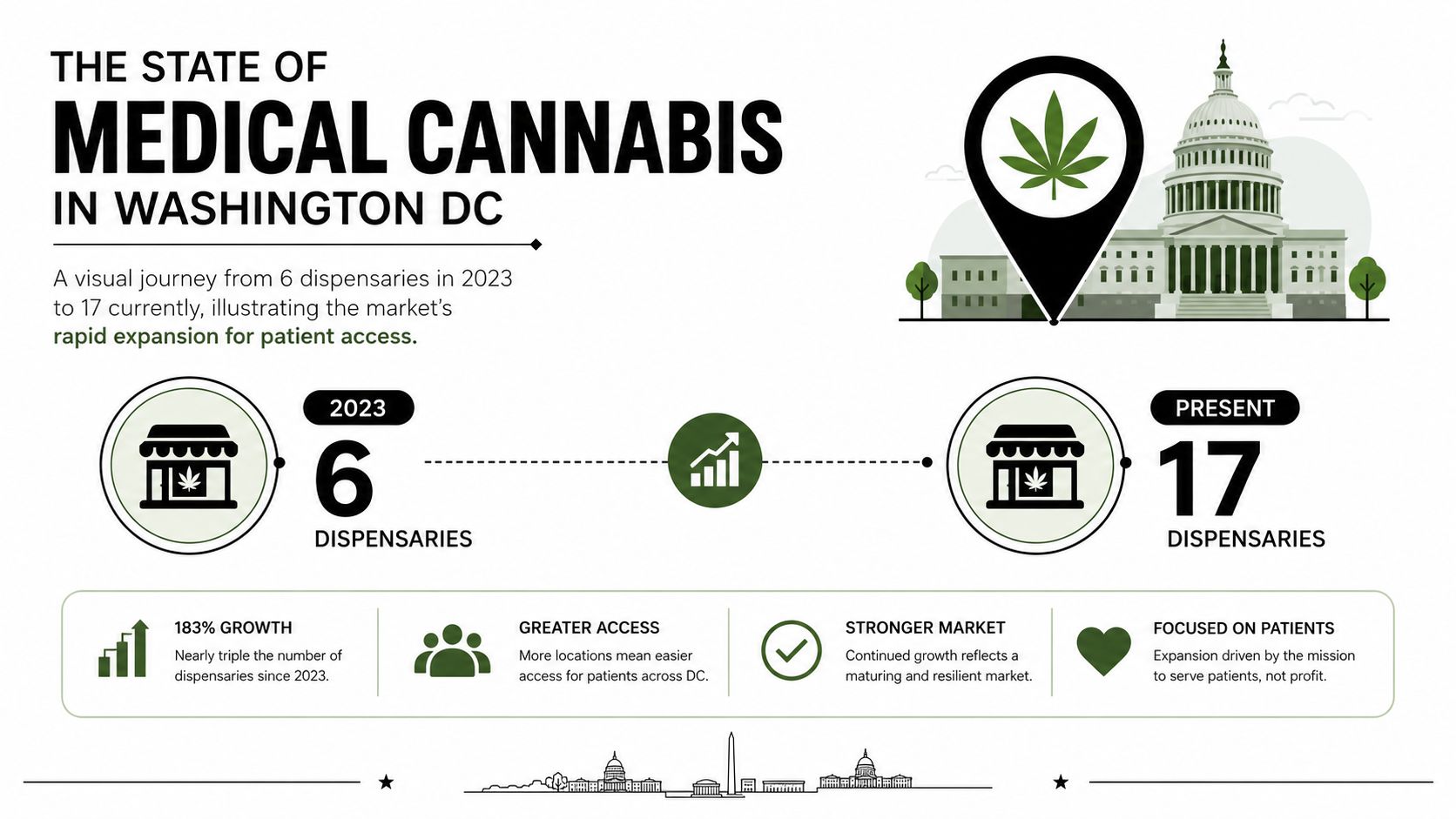
That spread is real. ABCA's retailer directory shows operational dispensaries across Wards 2, 4, 5, 6, 7, and 8, including Capital City, Metropolitan Wellness, Takoma Wellness, Herbal Alternatives, National Healing Center, Anacostia Organics, and DC Wellness Center. ABCA's market update.pdf) also shows how far the system has expanded, with DC moving from a small group of medical dispensaries in 2023 to a much larger network by early 2025, alongside a sharp rise in patient registrations. DC is no longer a niche market.
What that growth means in practical terms
More locations change how patients use the system. People do not have to plan a full day around one dispensary across town, and licensed delivery operators can cover more neighborhoods without building every stop around one part of the city.
ABCA-linked reporting shows the market is carrying real volume, not just occasional traffic. In January 2026, medical cannabis sales reached $8,741,275, and dispensaries accounted for $5,715,068 of that total in the same reporting tied to ABCA data. The market reporting tied to ABCA data also shows the city's long base, with legal cannabis sales around $31 million in 2020, above $35 million in 2021, $36 million in 2022, and nearly $38 million in 2023.
The practical takeaway is simple, DC cannabis access is citywide, regulated, and busy enough that planning matters.
For patients, the choice is not whether legal access exists. It is which legal source fits the day. Some people want the lowest-friction delivery option. Others want to see flower, compare labels, and leave with product in hand the same day. Both fit within the current DC medical system, but they serve different needs, and the unregulated options outside it do not offer the same protections.
How to Register as a Medical Cannabis Patient
DC registration is built for speed if you prepare correctly. Adults 21+ can self-certify online without hunting for a doctor's recommendation, and non-residents can do the same, which is why visitors and business travelers should pay attention to the rules before they land. One DC legal explainer says registrations issued after March 2, 2025 are valid for two years. DC's medical marijuana guidance and the consumer guidance on Washington medical card registration are the fastest references for the mechanics.
What to bring and what to expect
Start with the basics, because dispensaries don't improvise around identity checks. DC materials require a valid registration card issued by the Department and a valid government-issued photo ID showing proof of age before a sale or delivery can happen. If either document is missing, the transaction stops there.
The process itself is straightforward:
- Complete self-certification online if you're eligible.
- Use your real ID information exactly as it appears on your government-issued photo ID.
- Keep the registration accessible on your phone and save a copy if you travel often.
- Carry the same ID every time you buy or accept delivery.
That's not bureaucracy for its own sake. It's the gatekeeping that keeps the system medical and lets dispensaries verify the purchase legally.
Practical rule: don't show up expecting a tourist-friendly walk-in model. In DC, access still runs through registration.
If you're a visitor, that registration step is what makes the difference between legal purchase and wasted time. A lot of people think DC works like a recreational market because the city is cannabis-friendly, but the actual access path is still registration-based. That's the detail that matters when you're standing at a counter or answering the door.
What Products You Can Buy at DC Dispensaries
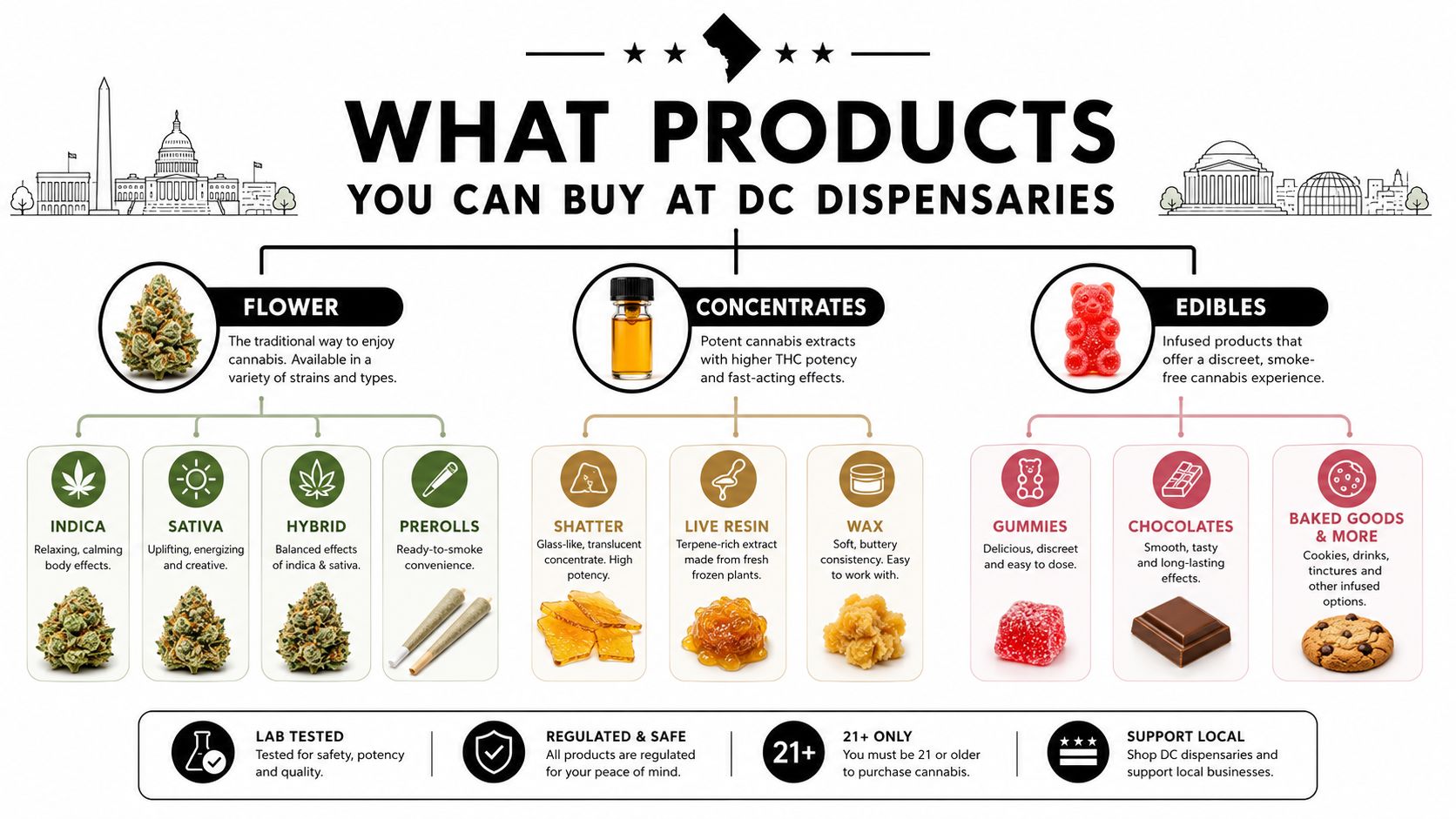
A DC dispensary menu looks broader than people expect, but the buying rules stay medical. Patients usually see flower first, then concentrates, vapes, edibles, and tinctures, and the category mix reflects what registered buyers use.
Flower still drives the market. Reporting on DC's medical cannabis sales recovery showed flower leading April 2025 sales, with vape cartridges close behind. That pattern is easy to understand once you know how patients shop, flower gives you the most choice, while vapes and other formats fill narrower needs.
The categories that matter
The practical product map looks like this:
- Flower: indica, sativa, hybrid, and prerolls. This is still the anchor category for most patients.
- Concentrates: shatter, live resin, wax, and rosin. These suit buyers who already know their potency tolerance.
- Vapes: disposable devices and cartridges. They are portable and easy to use discreetly.
- Edibles: a slower, longer-lasting option for patients who do not want to inhale.
- THC tinctures: a measured format that gives more control over dosing.
DC purchase limits are generous for medical patients, and you should know them before you order. Patients 21+ may purchase up to 8 ounces of flower, 240 grams of concentrates, or products containing a combined total of 600,000 mg of THC in a 30-day period, while patients 18 to 20 have a lower concentrate cap. Weedmaps' District of Columbia law summary lays out the limits clearly.
That limit structure tells you a lot about the market. DC dispensaries are set up for patients with real demand, not casual browsers. If you buy regularly, pay attention to potency, batch labels, and how flower and concentrates fit into the same monthly allowance. Lab testing and COAs matter here, especially if you mix formats and want a clean record of what you brought home.
Storefront Dispensaries Versus Delivery Services
Some patients want the counter, the menu board, and the chance to ask questions face to face. Others want the product at the door, the interaction kept short, and no errand added to the day. In DC, both paths sit inside the medical system, but they suit different kinds of buyers.
Licensed medical dispensaries can operate, sell, and deliver on any day except between 9:00 p.m. and 7:00 a.m. That time window shapes the whole experience, including dispatch timing and end-of-day compliance checks. DC's medical cannabis rules make it clear that storefronts and delivery are tied to the same legal framework.
Picking the right format
If you buy in person, you get the advantage of immediate inspection. You can compare flower, ask about potency, and walk out with your order right away. That still matters for people who care about aroma, trim quality, or specific product formats.
Delivery wins on convenience and discretion. It's a better fit if you have mobility issues, a packed schedule, or you just don't want to move around the city carrying cannabis. One option in the market is Green Express DC, which lists same-day delivery and uses discreet packaging with ID verification at drop-off.
A short video can help if you're comparing the practical trade-offs.
If you care most about privacy, delivery usually beats storefront shopping. If you care most about seeing the product before you buy, go in person.
The decision is friction versus control. Delivery cuts out travel and waiting rooms. Storefront shopping gives you direct product comparison and staff interaction. Neither is universally better, but one will fit your routine better than the other.
How to Order Cannabis Delivery Safely and Discreetly
Good delivery in DC should feel boring in the best possible way. You browse, place the order, verify your identity, and get your product without drama. If the process feels confusing, the service is either poorly run or trying to do too much outside the rules.
The cleanest order flow is simple. Browse the menu online or call, choose what you want, and keep the legal side in mind before you submit anything. Green Express DC states a $50 minimum and cash on delivery, so have the right payment ready before the courier arrives. Its delivery page also notes 24/7 availability for browsing and order placement, even though deliveries still have to stay inside the legal hours covered earlier.
What happens at the door
The courier should not hand over product casually. Expect ID verification, a check of your registration card, and discreet packaging that doesn't advertise what's inside. That's the point of a compliant service, the transaction stays private without skipping the paperwork.
If you like deals, watch for rotating specials instead of assuming every menu is priced the same way every day. Green Express DC describes offers like $150 for 10g of shatter or crumble, multi-gram disposable bundles, and seasonal 420 deals on its menu and promo pages. Those kinds of specials matter if you buy concentrates or vapes regularly and want to stretch a budget without dropping to low-quality product.
A few habits make delivery smoother:
- Order early enough that you're not racing the legal cutoff.
- Have your ID ready before the driver arrives.
- Keep cash on hand if the service uses cash on delivery.
- Choose a safe handoff spot with a clear address and working phone number.
- Check the package before the courier leaves so any issue gets caught immediately.
The best delivery services are predictable. They confirm the order, show up on time, verify the right documents, and leave you with exactly what you expected. If a service can't explain its payment method, ID check, or delivery hours clearly, skip it.
Common Misconceptions About DC Cannabis Laws
The biggest mistake people make in DC is assuming the city has a general adult-use dispensary model just because cannabis is visible everywhere. It doesn't. DC's retail system is structured as a medical-only system, and licensed medical dispensaries are the lawful point of sale under the rules already covered.
That distinction trips up visitors the most. Adults 21+ can self-certify, including non-residents, but self-certification is still not the same thing as walking into a recreational store and buying on impulse. You still need registration, and you still need to present the right ID and card at the time of purchase or delivery.
DC is not Virginia or Maryland
Don't assume the rules in nearby states work the same way. DC's system is built around licensed medical cannabis retailers, internet retailers, and couriers, while Virginia and Maryland follow different legal structures and should be checked separately before anyone plans a purchase across the border. The safest move is to treat DC as its own system and verify each nearby jurisdiction on its own terms.
Another common misunderstanding is tourist access. Visitors do have a path through self-certification, but that does not erase the need for medical registration or the ID checks that dispensaries and couriers are required to perform. If you show up thinking the city operates like an informal retail zone, you're setting yourself up for rejection at the counter or the door.
The rule that matters most is the one that applies when payment is collected. If the service can't verify your registration and ID, the sale doesn't happen.
That's why so much online content misses the mark. It lists shops, but it doesn't clearly separate who can buy, what documents are required, and how delivery fits into the legal framework. Once you separate those pieces, DC gets easier to understand.
Your First-Time Patient Checklist
The first order goes smoother when you verify the pieces in the right order. In DC, the mistakes usually happen before checkout, not after, so do the prep work before you browse menus.
Use this checklist before you place an order
- Confirm your registration status before you start shopping, especially if you recently self-certified or renewed.
- Keep your government-issued photo ID nearby and make sure the name matches your patient record.
- Choose a licensed service only and verify the business type before you trust the menu.
- Check whether the service is set up for pickup or delivery so you do not waste time on the wrong option.
- Review the service's ordering window before you expect same-day fulfillment.
- Look over the menu before you commit, especially if you want a specific product form and do not want substitutions.
- Decide your first order size in advance so you can test the service without overbuying.
- Have payment ready in the form the service accepts so checkout is not delayed.
- Read the product details carefully if you are new to a format, especially stronger edibles or concentrates.
- Keep your registration details accessible in case the service asks you to confirm them again.
A smart first order is small, confirmed, and boring. That is what you want. Pick one licensed option, verify the menu matches what you want, and avoid services that are vague about where they operate or how they verify patients.
If you are choosing between a licensed service like Green Express DC and an unregulated option, the decision is simple. Use the licensed one if you want a real record of who is handling your order, what products are offered, and how the service checks patients before release.
Start with your registration status, then look at the menu only after you know the service is licensed. That order saves time and keeps you out of the usual DC patient mistakes.