
You’re probably looking at a menu on your phone right now, seeing terms like distillate, live resin, full spectrum, ceramic coil, 510 thread, and wondering which of these is important. That’s normal. THC carts look simple from the outside, but a lot of people in DC, Virginia, and Maryland end up buying the wrong one for their needs because the labels don’t explain enough.
I get why carts are appealing. If you live in the DC metro area, you may want something discreet after work, something easy to carry while visiting the city, or something cleaner and less messy than flower. A thc cartridge can fit that role well, but only if you understand what you’re buying, how to use it, and how to tell a safe product from a risky one.
A lot of customer confusion comes from three places. First, potency. Carts are concentrated, so they can hit much harder than people expect. Second, hardware. A good oil in the wrong cart can still taste bad or clog. Third, trust. In the DMV area, where people cross between DC, Maryland, and Virginia all the time, buyers want to know what’s legal, what’s tested, and what’s worth the money.
That’s where a little education goes a long way. If you know how a cart works, how to read the label, and what warning signs to watch for, your experience gets much smoother from the first puff to the last.
Your Guide to THC Cartridges in the DC Metro Area
A common DC-area scenario goes like this. Someone has tried flower before, liked it, but doesn’t want the smell in an apartment building, hotel, or shared house. Or they’re visiting from Maryland or Virginia, want something portable, and don’t want to mess with grinders, papers, and a lighter. So they start looking at carts.
That choice makes sense. THC cartridges became mainstream for practical reasons. They’re compact, easy to use, and much more discreet than smoking. Their rise wasn’t small either. Vape products grew from less than 5% of dispensary sales before 2012 to more than 50% by 2019 in many markets, according to this history of vape cartridge adoption.
Still, convenience can make people rush. They buy the highest THC number, pair it with a random battery, then wonder why the flavor is harsh or the effect feels stronger than expected. Others open a new cart, think it looks half full, and assume they got shorted. Both problems are common, and both are fixable when you understand the basics.
A good cart experience depends on three things working together: the oil, the hardware, and your own dosing.
In the DC, VA, and MD area, the smartest shoppers tend to ask practical questions. What type of oil is this. Is it lab-tested. Will it work with my battery. How strong is it compared with flower. Those are the right questions, especially if you’re cautious or returning to cannabis after a long break.
What Is a THC Cartridge The Anatomy of Modern Vaping
A thc cartridge is the small chamber that holds cannabis oil and attaches to a battery. When people say “vape pen,” they often mean the full setup, but there are really two parts: the cartridge and the battery.
Its components can be compared to a car's. The battery is the power source. The heating element inside the cart is the engine. The oil is the fuel. When the battery sends power to the heating element, the oil gets vaporized into an inhalable mist. That’s different from smoking, where plant material burns and creates smoke.
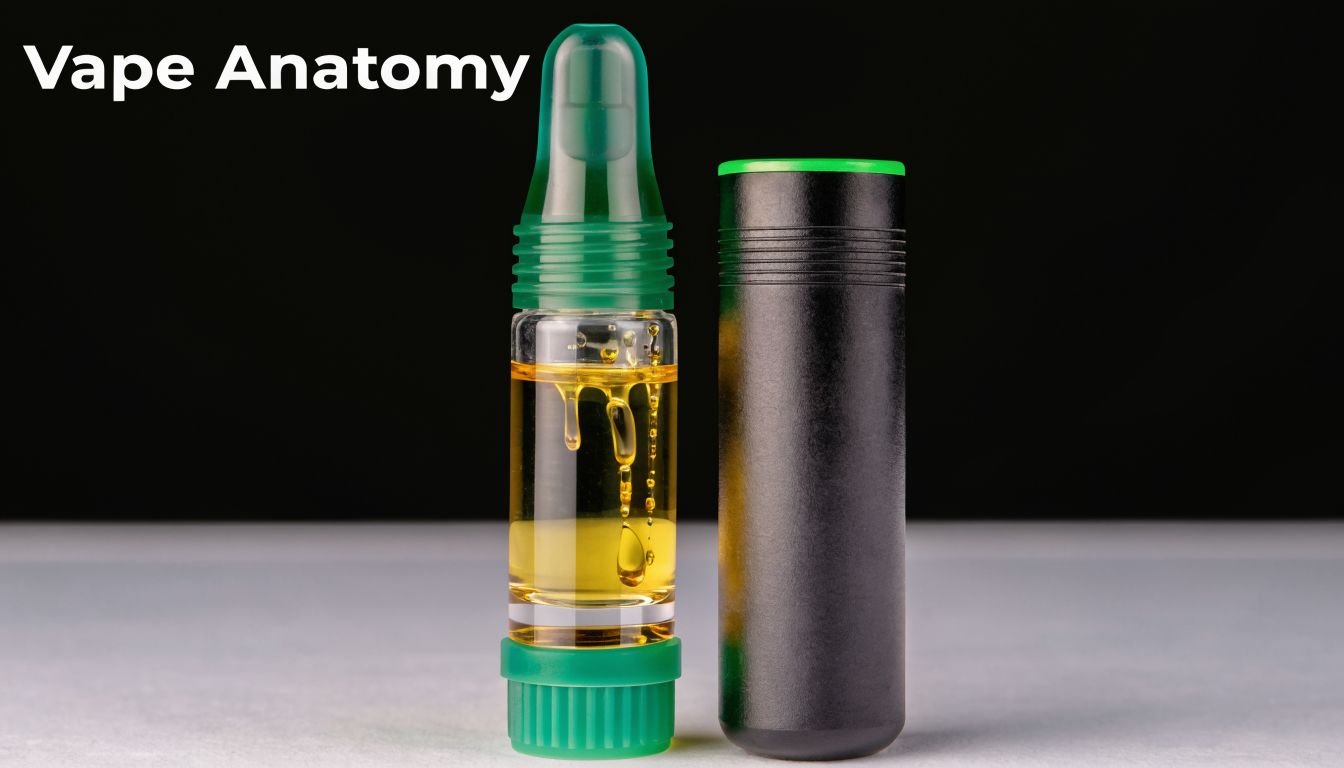
The basic parts
Most carts you’ll see around DC use the 510-thread format. That’s the common screw-on connection that lets many cartridges and batteries work together. If you’ve ever heard someone ask, “Will this fit my pen?” they’re usually asking whether both pieces use that standard thread.
Inside the cartridge, you usually have:
- Oil chamber where the cannabis extract sits
- Mouthpiece where you inhale
- Heating element that warms the oil
- Wick or intake system that brings oil toward the heater
- Threaded base that connects to the battery
The battery does one job. It supplies power. Some batteries are simple draw-activated models. Others let you change voltage. Adjustable voltage matters because thick oil and thin oil don’t behave the same way.
Why coil resistance matters
Many buyers often misunderstand this. Not all carts heat the same. The heating elements in cartridges typically run between 1.0 and 2.0 ohms, and that resistance changes how hot the cart gets, according to Kurvana’s guide to vape cartridge hardware.
Lower resistance coils run hotter. They’re better for thicker oils like live resin. Higher resistance coils run cooler. They tend to suit thinner oils like distillate better.
If you mismatch them, you can run into problems fast:
- Too cool for thick oil and the cart may not vaporize well
- Too hot for delicate oil and the flavor can taste scorched
- Poor match overall and you waste oil, mute terpenes, or get harsh hits
Practical rule: Match the cart hardware to the oil type, not just the brand name on the package.
Vapor, not smoke
The point of a cart is controlled vaporization. That distinction matters. You’re heating oil enough to turn active compounds into vapor, but not burning flower. For many adults, that cleaner, lower-odor format is the main appeal.
If you understand those moving parts, shopping gets much easier. You stop seeing “thc cartridge” as one generic product and start seeing it as a combination of oil, heater, and battery that has to work together.
Decoding the Menu A Guide to Cartridge Types
Once you know how the hardware works, the next question is what’s inside the cart. When considering contents, menus get crowded. You’ll see distillate, CO2 oil, live resin, and newer labels like liquid diamonds. Those names aren’t just marketing. They usually point to real differences in flavor, feel, and overall value.
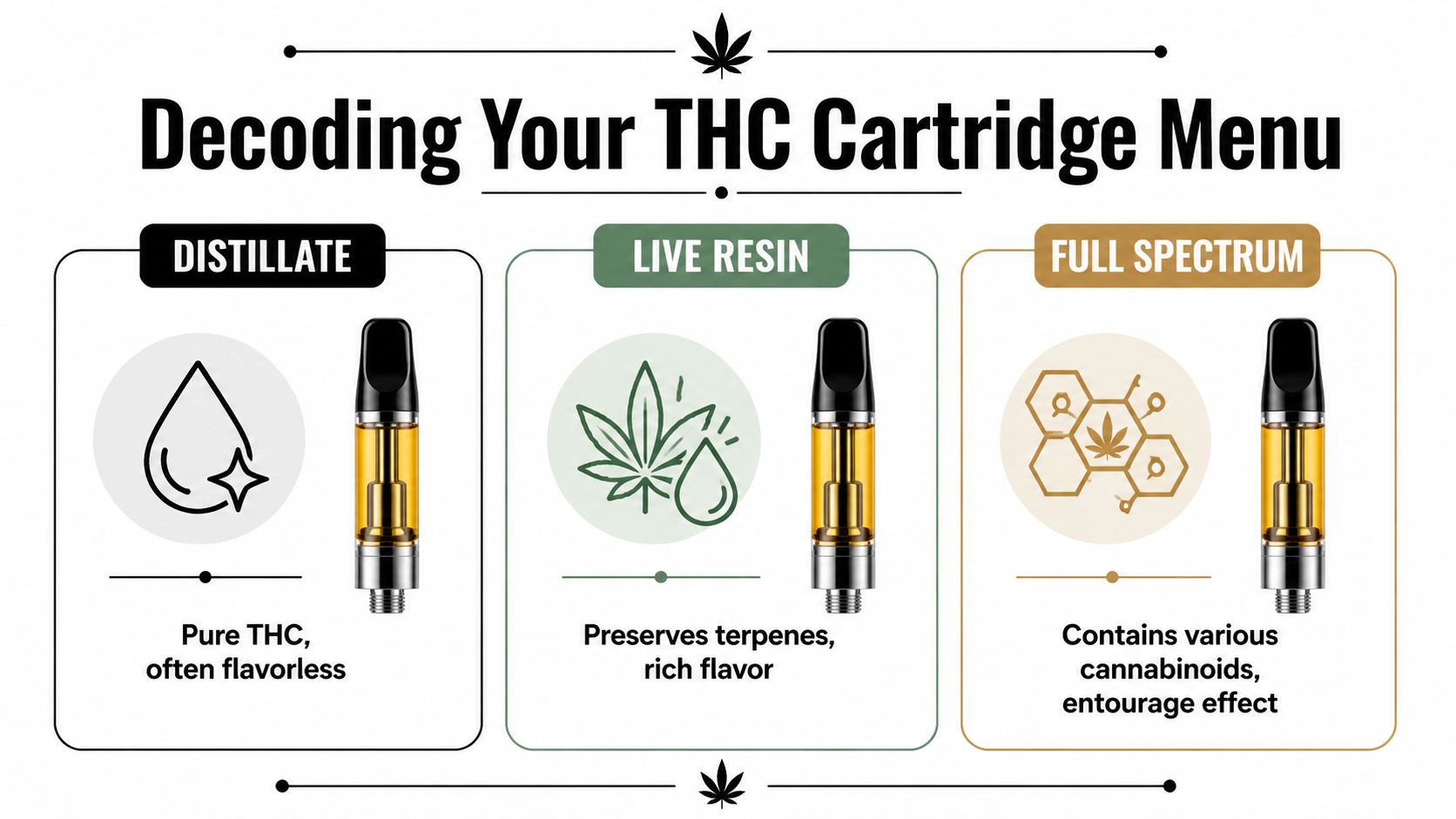
Distillate, CO2 oil, live resin, and liquid diamonds
A simple way to read the menu is to decide what matters most to you. Some people want raw THC strength. Some want flavor and aroma. Others want a profile that feels closer to the original plant.
Here’s a quick side-by-side view.
| THC Cartridge Oil Comparison | Key Feature | Typical THC% | Flavor Profile |
|---|---|---|---|
| Distillate | Purified THC-focused oil, often paired with added terpenes | 60-95% | Can range from mild to pronounced depending on terpene content |
| CO2 Oil | Mild, balanced extract experience | 70-85% | Mild flavor |
| Live Resin | Terpene-rich profile with fuller plant character | Qualitative only | Rich flavor |
| Liquid Diamonds | High-potency extract with intense terpene expression | 75-90% | Intense terpene profile |
The exact choice of oil matters. CO2 oil offers a mild flavor at 70-85% THC, while liquid diamonds can reach 75-90% THC with intense terpene profiles, as noted in Leafly’s discussion of vape oil quality and additives.
How each one tends to feel
Distillate is the clean, straightforward option. It’s often the easiest for beginners to understand because the effect can feel direct and potency-forward. If someone tells me they want a simple after-work cart and don’t care much about nuanced flavor, distillate is often where they start.
CO2 oil usually appeals to buyers who want a middle ground. The flavor tends to be milder, and the experience can feel less one-note than basic distillate.
Live resin attracts flavor chasers. It’s known for preserving more of the aromatic compounds that shape taste and feel. If you’ve ever had a cart that tasted more like the flower it came from, that was likely the point.
Liquid diamonds are for shoppers who want high potency and strong terpene expression in the same package. These carts often sound intimidating, but the problem isn’t the label. It’s whether your tolerance and battery settings fit the oil.
Higher THC doesn’t automatically mean a better cart. Extraction style often shapes flavor and overall experience more than the headline potency number.
A practical menu-reading shortcut
When you look at a menu, ask yourself these questions:
- Do I want flavor first If yes, lean toward live resin or other terpene-rich options.
- Do I want a milder profile CO2 oil often makes sense.
- Do I want simplicity Distillate is usually the most familiar lane.
- Do I already know I have high tolerance Then liquid diamonds may be worth considering, but only with careful dosing.
If you want a deeper side-by-side breakdown, this guide on the difference between distillate and live resin is useful for comparing two of the most common menu choices.
What new buyers often miss
Many first-time or occasional users shop by strain name alone. That can be misleading. The extraction method changes the experience enough that two carts with similar strain branding can still feel very different.
A better way to buy is to combine three filters:
- Oil type
- Your tolerance
- Your preferred flavor and effect
That’s the approach that usually leads to fewer regrets and a more predictable session.
Potency Dosing and Finding Your Perfect High
Potency is where caution matters most. A lot of adults who are comfortable with flower get surprised by carts because the numbers on the label represent a much more concentrated product.
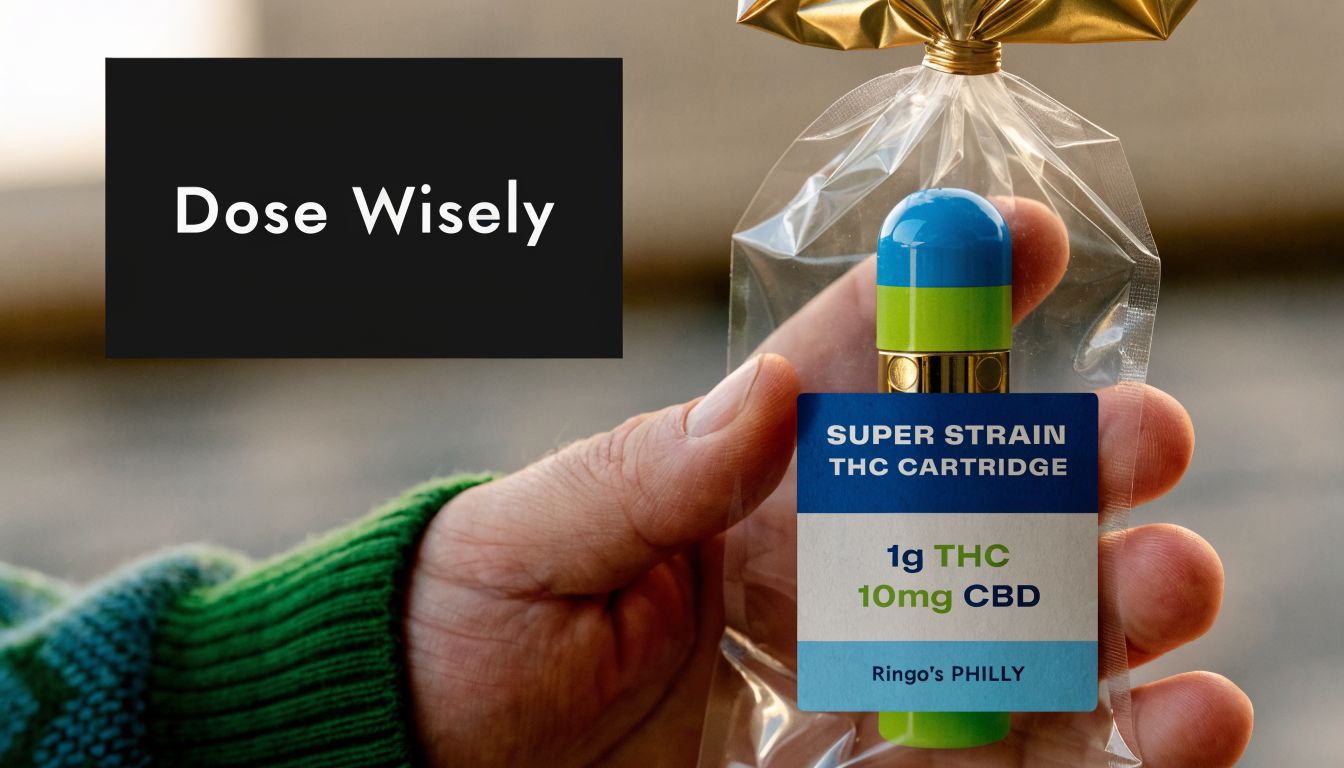
A good label gives you enough information to understand the strength in the cart. One useful example is this: a 1-gram cartridge labeled “750 mg Total THC” is 75% THC by weight. Compared with typical flower at 17-18% THC, cartridges offer a 4-5x potency multiplier, according to Due North Cannabis’s explanation of vape potency labels.
How to read the label
The two big numbers to notice are:
- Total milligrams of THC
- Percentage of THC by weight
Those two figures are related. If the cartridge weighs 1 gram, that means it contains 1000 milligrams total. So 750 milligrams of THC equals 75%.
That sounds technical, but the takeaway is simple. Carts are concentrated. A small puff can deliver more than many people expect, especially if they’re used to flower.
How to dose without overdoing it
The safest advice is still the best advice. Start low and go slow.
Here’s the method I give cautious customers:
- Take one small puff
- Wait and pay attention
- Decide whether you want more
Don’t treat a cart like a nicotine vape. Short, controlled draws work better. Big repeated pulls often lead to that familiar sentence: “I thought it wasn’t hitting, then it all hit at once.”
If you’re new to carts, your goal isn’t to feel the maximum effect fast. Your goal is to find the smallest amount that gives you the experience you want.
A short visual explainer can help if you’re more of a watch-and-learn person:
Why higher THC isn’t always the smart pick
A stronger number doesn’t guarantee a better session. Some carts feel flat even with a high THC percentage. Others feel fuller and more satisfying because the oil has a better balance of cannabinoids and terpenes.
That’s why experienced shoppers often care about more than potency. They look at oil type, strain profile, and how they want to feel. If your goal is a comfortable evening, a cart with a more balanced profile may suit you better than just grabbing the highest number on the menu.
The Quality Check Ensuring Your Cartridge is Safe and Pure
A premium-looking cart can still be a bad product. That’s why safety has to come before branding, packaging, or strain names.
The market has grown fast. The global vape cartridge market was valued at USD 1.81 billion in 2024 and is projected to reach USD 6.0 billion by 2030, with a projected 22.2% CAGR from 2025 to 2030, according to Grand View Research’s vape cartridge market analysis. That growth has gone hand in hand with stronger demand for regulated, lab-tested products.
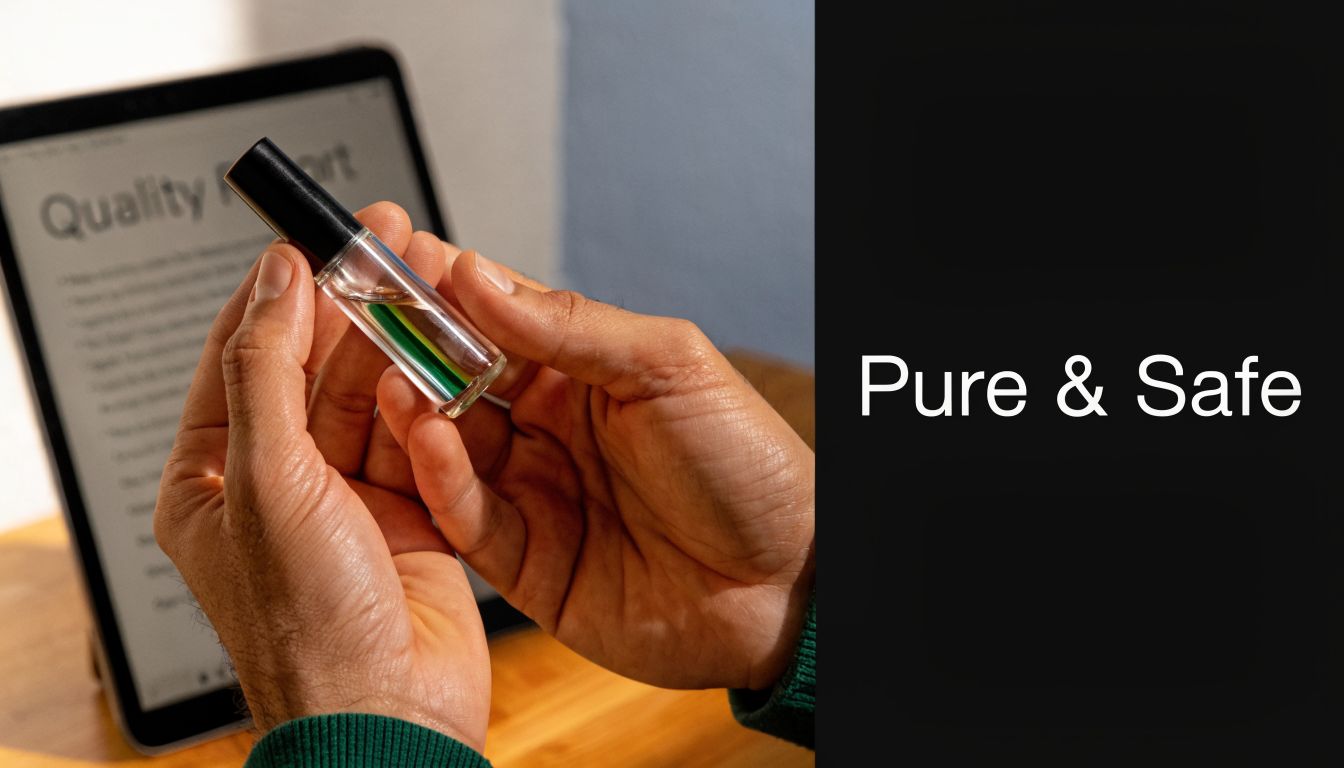
Why lab testing matters
The 2019 vaping crisis changed how many buyers think about carts. The issue was tied to black-market THC cartridges adulterated with substances including vitamin E acetate. Since then, a lot more cautious consumers have started looking for products that come through legal, test-driven channels rather than mystery hardware from informal sellers.
That’s where a Certificate of Analysis, or COA, comes in. A COA is the lab document that shows what was tested in the product. If you’re buying a cart from a legitimate source, you want evidence that someone checked the oil rather than just trusting the label.
Look for testing that covers:
- Potency so the THC and other cannabinoid content matches the package
- Pesticides because concentrated oil can also concentrate contaminants
- Heavy metals since hardware and extraction both matter
- Residual solvents if the oil was made with solvent-based extraction
Red flags and green flags
A careful buyer learns to spot warning signs quickly.
Red flags
- Suspicious packaging with sloppy printing or no clear product details
- Oil that looks unusually runny or otherwise inconsistent with what you’d expect from cannabis oil
- No clear testing information and no way to verify it
- Strange color or smell that feels artificial or off
Green flags
- Clear labeling with cannabinoid information
- Verified testing through a COA
- Consistent hardware with clean threading and a solid mouthpiece
- A seller that can explain what the oil is
Buy carts the way you’d buy food supplements or medicine. If the seller can’t tell you what’s in it and can’t show testing, walk away.
If you’re comparing verified options, Pure One carts are one example of the kind of product page where buyers look for clear details about a cart category before ordering.
What “pure” should mean to you
For most shoppers in DC, VA, and MD, “pure” shouldn’t just mean “strong.” It should mean the oil is what it claims to be, the cart is built for the oil inside it, and the product came through a channel that takes testing seriously.
That matters even more with high-terpene products and newer extract styles. Richer oil profiles can deliver a better experience, but they also demand better hardware and more trustworthy sourcing. If the product information is vague, that’s a problem, not a small detail.
Your Cartridge Care and Troubleshooting Guide
Most cart problems aren’t complicated. They’re just annoying. The usual complaints are that a new cart looks underfilled, a cart clogs, the flavor turns burnt, or the battery seems dead.
Why a new cart can look underfilled
This one causes a lot of unnecessary stress. A new cartridge may appear underfilled because some of the oil has moved into the internal wicking material through capillary action, as explained in Bloom Marijuana’s guide to carts that appear underfilled.
That means the visible oil line doesn’t always tell the whole story. The oil may already be where it needs to be for proper vaporization.
The important part is what you do next. If you open a new cart and hit it immediately without letting the oil settle, you risk a dry hit. That can burn the coil and create harsh, unpleasant vapor.
Simple fixes that actually help
If your cart is new, clogged, or tasting off, try these steps:
- Let it sit upright for a few minutes before first use so oil can settle toward the heating area.
- Take a gentle first pull instead of a long hard drag.
- Warm the cart with your hands if the oil seems too thick from being cold.
- Clean the battery contact if the cart isn’t firing. A little residue can interrupt connection.
- Store it upright whenever possible to reduce leaks and help the oil stay where it belongs.
Don’t try to “force” a cart to work with repeated hard pulls. That usually makes clogging and burnt flavor worse.
When the problem is the battery
Sometimes the cart is fine and the battery is the issue. If the battery won’t fire, check the basics:
- Is it charged
- Is the cart screwed on too tightly or too loosely
- Are the contact points clean
- Is the voltage too high or too low for the oil
A lot of troubleshooting comes down to being gentle. Gentle heat. Gentle pulls. Gentle handling. Carts are small pieces of hardware, and rough use usually creates the exact problems people are trying to solve.
Navigating Cannabis Delivery in DC Virginia and Maryland
Buying a thc cartridge in the DC area isn’t just about product knowledge. It’s also about knowing where the transaction happens and what rules apply.
Washington, DC has its own cannabis framework under Initiative 71, and that makes the local market different from what many Maryland or Virginia shoppers expect. In practical terms, adults often encounter cannabis through DC’s gifting model rather than through the exact same retail structure used elsewhere. That’s why people visiting the District from nearby states should pay attention to where they’re ordering and where delivery takes place.
What shoppers from DC, VA, and MD need to keep straight
If you live in DC, the process is usually straightforward. You browse a menu, choose your product, place the order, and complete age verification at delivery with a valid government ID.
If you live in Virginia or Maryland, the main thing to remember is location. People move around the DMV constantly, but the relevant issue is where the order is being fulfilled inside DC’s framework. That’s the practical detail that matters more than where you slept the night before.
This local delivery model exists because carts became a major part of consumer demand over time. As noted earlier, vape products grew from a niche category into a major one, which helped create the kind of menu-and-delivery convenience many DC shoppers now expect.
What a normal delivery experience looks like
For adults ordering in the District, the process is generally simple:
- Browse carefully and confirm whether you want distillate, live resin, or another extract type
- Check compatibility if you’re ordering a cartridge instead of a disposable
- Have your ID ready because age verification matters at drop-off
- Store the cart upright after delivery especially if weather or travel affected the oil
One local option for adults ordering within the District is Green Express DC weed delivery, which operates as a cannabis delivery service for DC customers and verifies government ID at drop-off.
Why local knowledge matters
A generic internet guide won’t help much when you’re standing in a DC hotel, a Maryland apartment, or a Virginia suburb trying to sort out what applies to you. In this region, practical cannabis shopping means pairing product knowledge with local compliance awareness.
That’s especially important for carts because they’re easy to transport, easy to misunderstand, and easy to buy poorly if you rush. A little local caution saves a lot of frustration.
Frequently Asked Questions About THC Carts and DC Delivery
A few practical questions come up over and over, especially from first-time cart buyers in the DMV area.
| FAQs on DC THC Cartridge Delivery | Answer |
|---|---|
| Is a thc cartridge stronger than flower | Usually, yes. Cartridge oil is concentrated, so small puffs can feel much stronger than many people expect from flower. |
| Why does my new cart look like it isn’t full | The oil may have absorbed into the internal wick through capillary action, so the visible level can look lower even when the cart was properly filled. |
| What’s the easiest cart type for beginners | Many beginners start with distillate because it’s straightforward, but the best choice depends on your tolerance and whether you care more about flavor or a simpler effect. |
| Do I need a special battery | Most cartridges use 510-thread batteries, but compatibility and voltage still matter. Thick oils often perform differently than thinner oils. |
| What should I check before taking the first hit | Let the cart rest upright, make sure the battery connection is clean, and start with a small puff instead of a long draw. |
| Can visitors from Virginia or Maryland order in DC | Adults need to follow DC’s local framework and complete valid ID verification at delivery in the District. |
A good cart should feel simple to use, but buying one well takes a bit of judgment. If you stay focused on oil type, hardware compatibility, labeling, and tested sourcing, you’ll avoid most of the common mistakes.
If you want a simpler way to shop lab-tested carts and other cannabis products in the District, Green Express DC offers a DC delivery menu with ID verification at drop-off, plus a range of carts, disposables, flower, concentrates, and edibles for adults 21+.