

You're outside a DC building with a sealed bag in hand, the customer isn't answering on the first ring, and the lobby desk is asking for a name that doesn't match what's on the call sheet. In that moment, delivery instructions stop being a convenience field and become the difference between a smooth handoff and a second trip across the city.
That's especially true in DC, Maryland, and Virginia cannabis delivery, where the driver has to balance timing, access, discretion, and ID checks at the door. A short note can work if the building is simple and the customer is ready, but the wrong note, or no note at all, can turn a clean route into a stalled one.
Why Delivery Instructions Matter More Than You Think
A courier standing outside a locked high-rise is already working against the clock. The driver has the order, the package is sealed, and the customer still has to be reached, verified, and met at the right entrance before the handoff can happen. In local cannabis delivery, that is the job, not a minor detail.
The broader parcel world shows why this field matters. 8 to 20% of parcels fail on the first delivery attempt (SmartRoutes), and common failure reasons include the recipient not being home, incorrect addresses, and timing issues tied to signature requirements. Cannabis delivery has the same last-mile pressure, plus a stricter handoff because ID has to be checked in person and the delivery has to stay within the licensed service area.
Practical rule: If the driver has to guess the entrance, call twice, or hunt for a buzzer, the note was not specific enough.
Good notes do three things at once. They help the courier find the right door, help the customer stay reachable, and help the order move through the route without wasted time. Weak notes sound polite but unusable. Risky notes ask the driver to break the process. The rest of this guide is about writing the kind of note that gets the bag to the right hand.
The Five Building Blocks of Every Strong Delivery Note
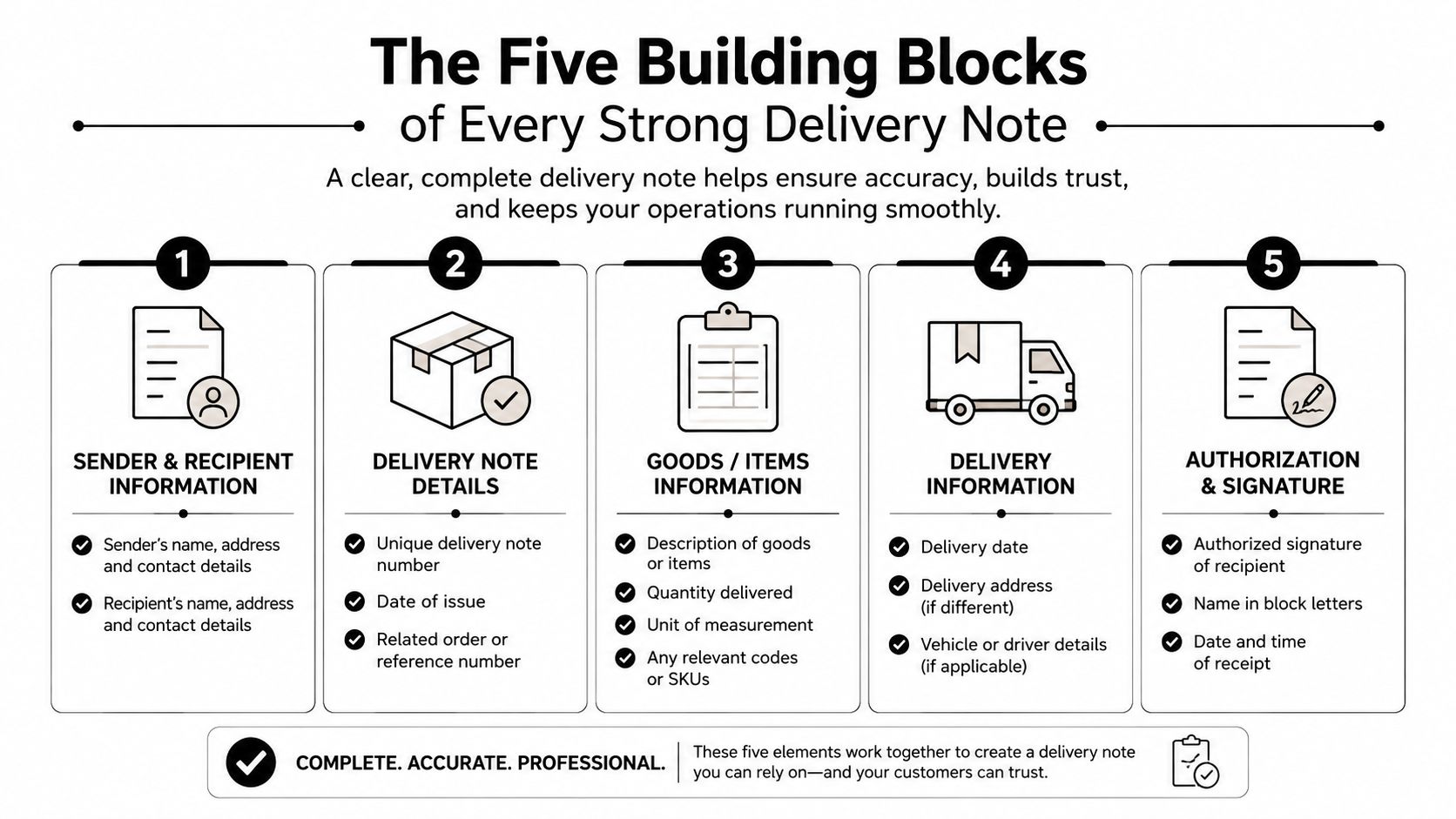
A usable note starts with the basics: who, how to reach them, when to arrive, how to get in, and what to do if there's a snag. That sounds simple, but those five pieces map directly to how dispatch and the courier work the route. Industry guidance also recommends keeping timestamps consistent and using a clear delivery window, with a 2 to 4 hour default slot often used as a practical benchmark because shorter windows are easier for customers to plan around (DocShipper).
1. Full name on the order
The name in the note should match the order and the ID the customer will show. That matters because the driver needs a clean, quick confirmation at the door, not a debate in a lobby or stairwell. If a spouse, roommate, or guest is the one receiving the package, the note should say so clearly and directly.
2. Working phone or email
The contact method needs to be real and checked. A phone number helps the courier send a discreet text before arrival, which is often better than a loud call in an apartment hallway. Green Express DC's ordering flow also asks for a phone number and a delivery address within DC so the team can confirm the route before dispatch.
3. Preferred delivery window
If the customer is in a meeting, on the metro, or walking a dog, the driver needs that timing detail up front. A window keeps the route moving and cuts down on repeated attempts. For cannabis delivery, timing matters even more because a customer who isn't ready at the door can slow the whole run.
4. Access details
Gate code, buzzer number, floor, building name, unit, loading dock, or security desk. Use the detail the driver can act on immediately. In Green Express DC's workflow, this is the sort of information that belongs in the dispatch note, not buried in a vague “please be careful” line.
5. Fallback plan
This is the one people skip most often, and it causes a lot of failed drop-offs. If nobody answers, should the driver text, wait at the lobby, call a second number, or move to the next stop? A clear fallback keeps the route from stalling.
A strong note sounds like this, “Taylor Jordan, text on arrival at this number, deliver between 5 and 7 p.m., enter through the side lobby on 14th Street, use the 2B buzzer, if no answer text once and wait at the desk.” That one sentence gives dispatch the name, contact, timing, access, and backup path in a form a courier can use immediately.
ID Verification and Legal Compliance Reminders
Cannabis delivery is different from ordinary e-commerce because the handoff isn't finished until the driver sees a valid government-issued photo ID in person. DC's ABCA says licensed retailers may deliver cannabis to consumers in the District when the retailer is licensed and follows the delivery rules, and the delivery has to come from a valid retail sale and stay within the District (ABCA guidance). That's the legal lane, and the note field can't rewrite it.
The right wording helps the driver move faster because it removes uncertainty. The wrong wording, especially anything like “leave at door” or “just ring and go,” creates a compliance problem because the courier still has to verify age at handoff. The customer should have the ID ready, not uploaded into a note field, and not buried in a message thread where the driver can't use it.
A clean compliance note keeps it simple:
- Have your government-issued photo ID ready.
- Make sure the name on the order matches the ID.
- Stay reachable when the driver is close.
- Don't ask for a no-contact drop, because the ID check happens at handoff.
Sensitive ID numbers don't belong in delivery instructions. The driver doesn't need them, and the note field isn't a secure document vault. If a customer is coordinating for a multi-person household, the note should identify who will be present and what name that person will show at the door.
The fastest compliant deliveries are the ones where the customer is already standing by with ID in hand.
For readers dealing with policy questions, this legal compliance reference from Green Express DC is the kind of internal resource that belongs in the same mental bucket as ID readiness, not in the notes field itself.
Building Access and Parking Scenarios Solved
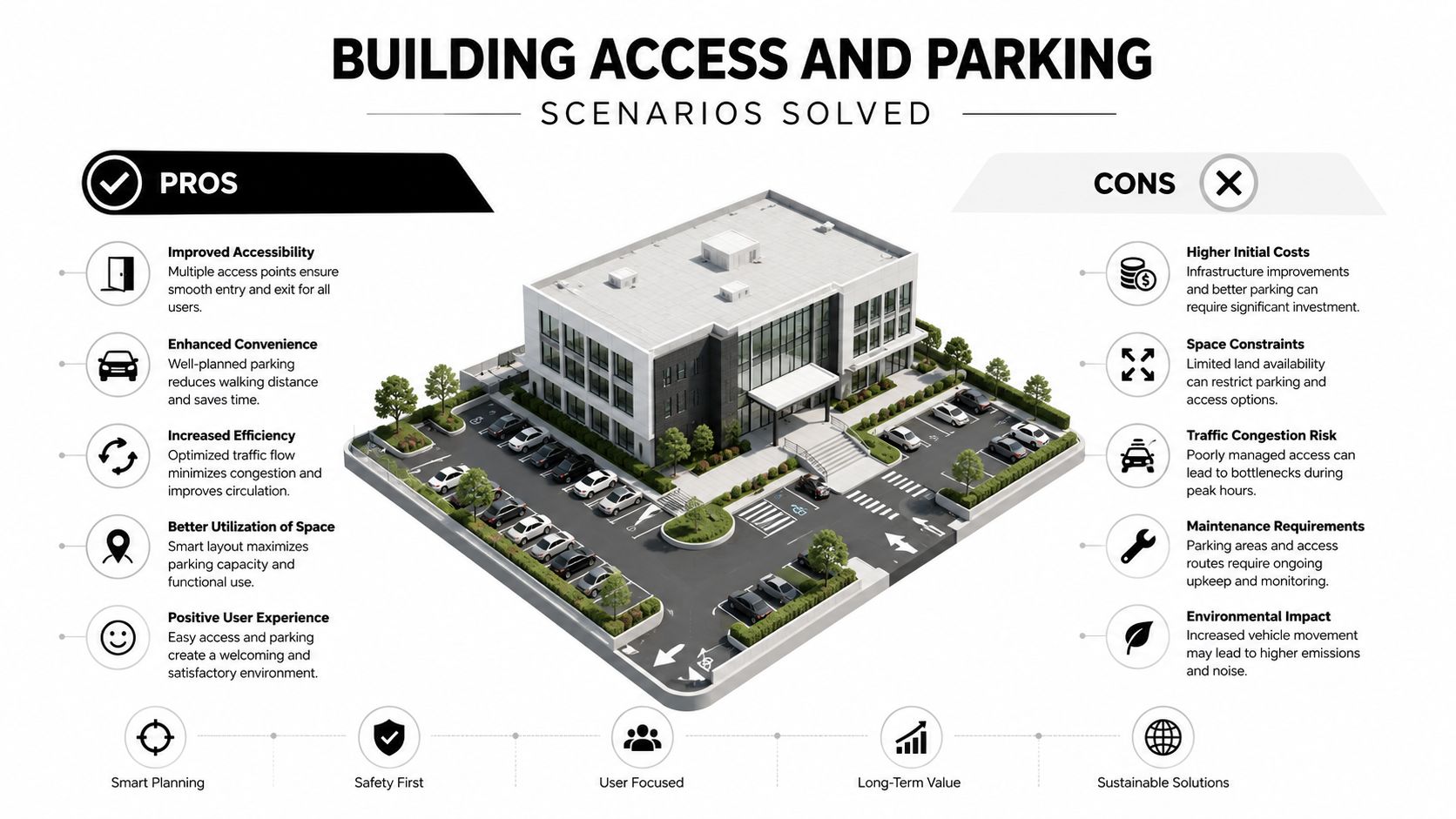
Apartment lobbies and buzzer systems
In a DC high-rise or a Maryland apartment, the driver often gets stuck at the lobby desk or the call box. The useful note gives the exact entry point and the exact buzz-in path.
Copy-ready version, “Enter through the front lobby, buzz unit 4C, customer will meet you at the desk with ID.”
Gated condos and townhouse communities
Gate codes and security desks are where a good delivery can slow down fast. If the community has a visitor lane, a side gate, or a staffed entrance, say which one to use and who will open it.
Copy-ready version, “Use the guest gate on the east side, code 2419 if needed, customer will meet at the clubhouse entrance with ID.”
Suburban homes with side or back entries
In parts of Maryland and northern Virginia, the front door isn't always the easiest access point. Side doors, porch lights, and backyard fences matter more than people think, especially when the house number is hard to spot at night.
Copy-ready version, “Please use the side driveway and ring the bell by the kitchen door, house number is posted there, customer will come out with ID.”
High-security buildings and loading docks
Some buildings only allow deliveries through a loading dock, freight elevator, or service corridor. That's not a place for a vague note. The driver needs the exact entrance and the person who will meet them there.
Copy-ready version, “Deliver to the loading dock on the west side, security will call up on arrival, meet at the service desk with ID.”
Parking notes save time too. A line like “use the alley off P Street” can stop a courier from circling the block with a sealed package in the car. That's not about convenience alone, it keeps the route moving and lowers the chance that the driver misses the customer while hunting for a space.
If you're meeting the courier somewhere other than the exact address, be specific. “Meet around the corner at the coffee shop on the first floor” is useful. So is “I'll step outside when you text.” The ID still has to be ready at the handoff, even at an alternate spot.
Privacy and Discretion Without Overthinking It
Good discretion is quiet, not cryptic. Licensed services already use discreet packaging, so the customer's job is to keep the note clean and easy to scan. That means leaving out strain names, product names, and casual labels like “weed” or “cannabis” in the instruction field, because the driver already knows what's in the bag.
The bigger privacy issue is the setting. A shared lobby, a front desk with neighbors nearby, or a crowded mailroom can all expose more than the customer wants. The better move is to tell the driver exactly how to contact you, then choose the least awkward handoff point that still works with the building.
A short text instruction usually works better than a noisy call. “Text on arrival, I'll come down” is cleaner than a long note full of explanations. On some apps, the notes field is buried behind other checkout steps, so the driver may only glance at it for a second. That makes clear, compact wording more valuable than clever wording.
The platform side matters too. Drivers often have to jump between maps, order details, and dispatch screens, which is why hidden notes can get missed or read late. The order tracking workflow Green Express DC uses depends on the customer staying reachable, but the note still has to be written in a way that survives a quick glance.
Practical rule: Short is good only when it still says everything the courier needs.
One common mistake is writing “leave at door, do not knock” and calling that discreet. For cannabis, that doesn't work because the handoff still requires ID verification in person. A better note protects privacy without breaking the process: “Text when you arrive, I'll meet you at the lobby with ID.”
Three Real Examples You Can Copy and Adjust
The easiest way to fix a weak note is to compare it against a version that helps the driver. These examples stay close to the kinds of addresses I see every week in Adams Morgan, Silver Spring, and Capitol Hill.
| Address Type | Original Note | Improved Note |
|---|---|---|
| Adams Morgan apartment | “Call me when you're here.” | “Text on arrival, deliver to the front desk, buzz 12A, customer will meet you in the lobby with ID.” |
| Silver Spring townhouse | “Leave outside if I'm not home.” | “Use the side door by the driveway, ring the bell once, if no answer text first and wait two minutes, I'll come out with ID.” |
| Capitol Hill rowhome | “Delivery to back.” | “Use the alley entrance behind the rowhouse, parking is easier there, text before arrival, customer will come to the back gate with ID.” |
The original versions are vague because they leave out the entrance, the timing, and the backup plan. The revised notes work because they tell the courier where to go, how to contact the customer, and what happens if the first attempt doesn't land.
A quick platform note matters here too. On some apps, the delivery instructions field is tucked below more visible checkout elements, so the note has to be readable in two seconds. That means no clutter, no extra story, and no words the driver has to decode while standing on a sidewalk.
Your Delivery Instruction Checklist Before You Check Out
A bad note usually causes the same scene, a driver circling an apartment, a front desk that will not confirm access, or a customer answering the phone five minutes late. Before you hit submit, check these items once and save yourself a follow-up call:
- Name matches the ID.
- Working phone number or email is in the order.
- Preferred delivery window is clear.
- Gate code, buzzer, floor, or desk access is included.
- Parking or building quirks are spelled out.
- Fallback instructions are listed if nobody answers.
- A discreet handoff signal is set, usually text instead of a call.
That last part matters because cannabis delivery is not standard parcel delivery. The order has to be verified, the ID has to be present, and the handoff has to fit the rules of the district or jurisdiction. In DC apartments, Maryland suburbs, and Virginia condos, the note saves time only if it tells the driver exactly how to complete the drop without guessing at the curb, in the lobby, or outside a security desk.
Write the note the way a driver needs to use it, direct, specific, and complete. The courier wants to finish the handoff, and you want the order at the right door, so the notes field should make both of those things easy.
If you want one more prep check before checkout, use this delivery preparation guide and make sure the details in your order match the instructions you typed.