
You just opened a delivery order, checked the menu, and now you're waiting for it to arrive at your door in DC, Virginia, or Maryland. That handoff feels simple, but contamination prevention is what makes the product you receive safer, cleaner, and easier to trust. In cannabis, the same logic that keeps a kitchen sanitary and a clinic controlled also protects flower, concentrates, vapes, and edibles from avoidable problems.
The big idea is straightforward. Contamination can enter at multiple points, from the grow room to the courier's vehicle to your own pantry. The World Health Organization estimates 866 million people worldwide, about 1 in 9, fall ill each year after eating contaminated food, leading to 1.52 million deaths annually (WHO burden estimate), and that scale is why prevention is treated as a systems issue, not a single wipe-down. Cannabis is not food, but the safety logic is similar, because materials, handling, storage, and monitoring all matter.
Why Contamination Prevention Matters When Cannabis Shows Up at Your Door
A DC delivery order seems routine until you think about how many hands and surfaces can touch a product before it reaches you. A courier may carry sealed packages, but the product itself has already moved through cultivation, processing, packaging, and transport. Each step creates a chance for contamination prevention to succeed, or fail.
The reason this matters is not abstract. The CDC estimates at least 1.1 million people in the United States get sick every year from germs in drinking water, about 1 in every 300 people (CDC drinking water facts). That number is about water, not cannabis, but it shows a useful lesson, contamination risk can persist even in regulated systems when infrastructure, handling, and maintenance slip. In cannabis delivery, the same principle applies, the safest product on paper can still be mishandled on the way to your door.
For adult consumers in DC, Virginia, and Maryland, the practical takeaway is simple. Don't think of contamination as one dramatic failure like visible mold. Think of it as a chain of small decisions, clean tools, sealed packaging, verified identity, and proper storage. A strong delivery service reduces risk, but your own handling habits still matter once the product is in your home, especially if you keep cannabis near food, medicine, or shared household items.
Green Express DC cannabis delivery is one example of how a delivery experience can be organized around discretion, verification, and product handling. The reason that matters is that contamination prevention starts long before you open the package.
Practical rule: if a product arrives with broken seals, damaged packaging, or a strong off odor that doesn't fit the item, stop using it and inspect everything before you store it.
What Contamination Prevention Actually Means
Contamination prevention means keeping unwanted material out of the product and out of the workflow. In a clean kitchen, you wouldn't chop raw chicken on the same board you use for salad without washing and separating tools first. Cannabis safety uses the same mental model. You're trying to stop germs, chemicals, and stray physical debris from moving where they don't belong.
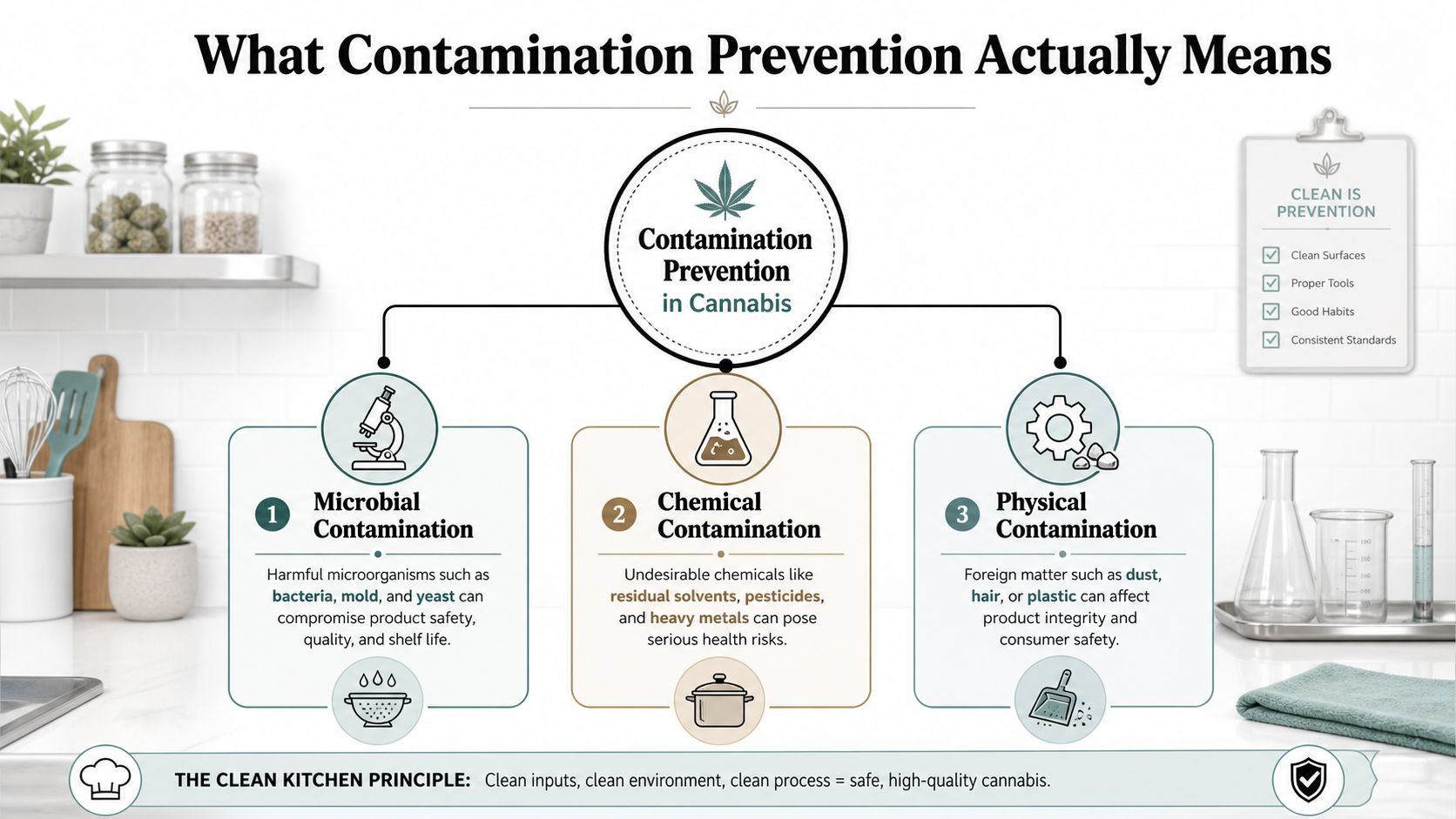
The three contamination types to keep in mind
Microbial contamination is the one many picture first. It can involve bacteria, mold, or yeast, and it tends to show up when moisture, poor sanitation, or weak drying and storage practices create the right environment. In cannabis, that can mean flower that's handled badly, stored too wet, or exposed to dirty surfaces.
Chemical contamination is harder to see, which makes it more confusing for consumers. It can include residual solvents, pesticides, lubricants, or other unwanted residues left behind by equipment, cleaning products, or processing mistakes. In concentrates and vape products, this category deserves special attention because the consumer may not notice a problem just by looking.
Physical contamination means foreign matter, dust, hair, plastic, fragments, or other debris. It doesn't need to be large to matter. A tiny piece of packaging material or a loose particle in a container can point to weak process control somewhere upstream.
Contamination prevention works best when people treat cannabis like any other sensitive product, not like a casual household item.
The useful habit is to ask one question at every stage. What could enter the product here, and what stops it from entering? That question helps you evaluate everything from sealed jars to courier bags to the shelf where you store your edibles. It also prepares you to read lab results with a more informed eye later, because a product can only be as clean as the system that produced and protected it.
Where Contamination Enters the Cannabis Supply Chain
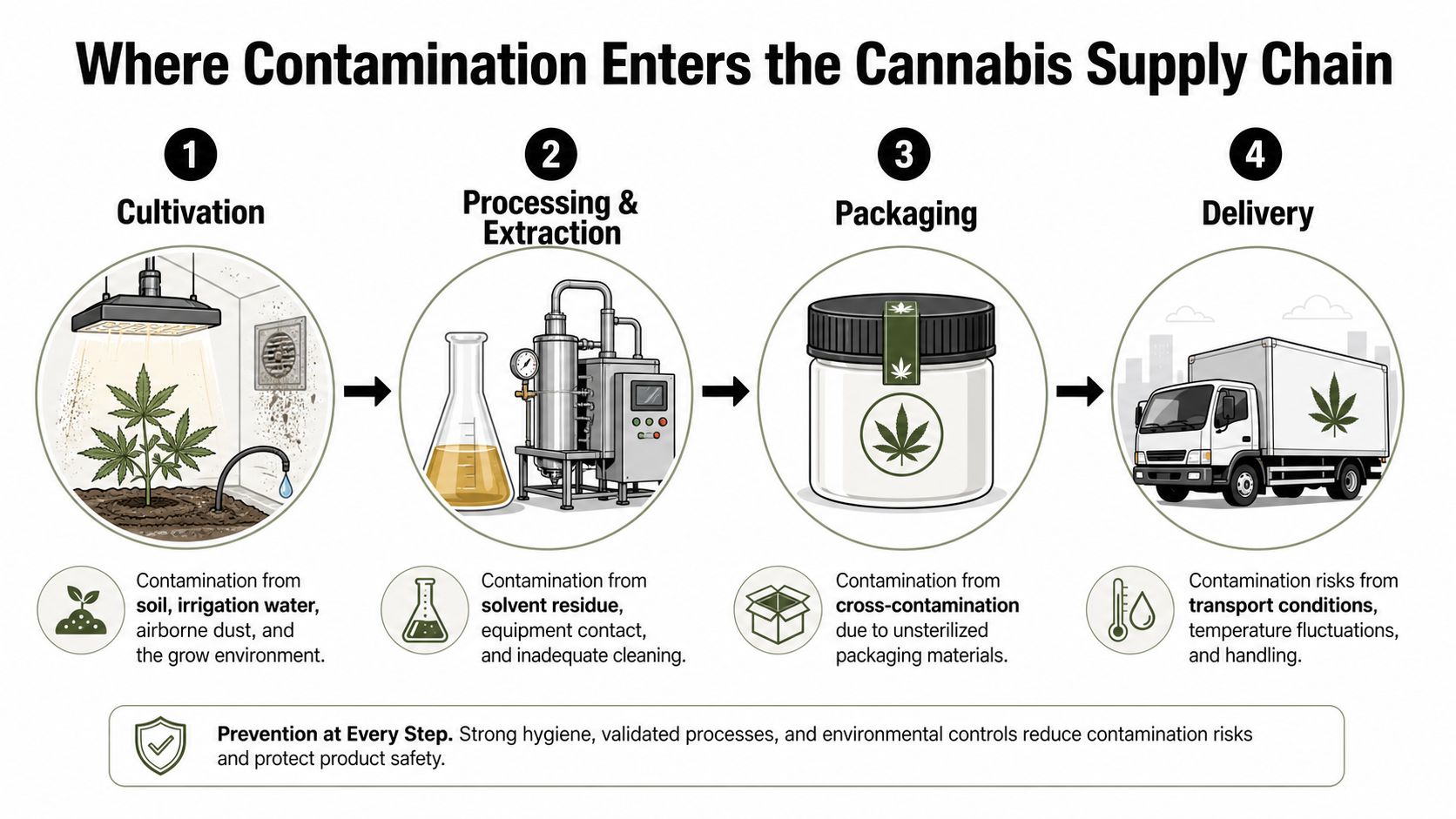
Cannabis contamination usually doesn't come from one dramatic mistake. It comes from small failures stacked across the supply chain. That's why a dusty cultivation room, a rushed extraction line, and a careless delivery handoff can all matter even if each one looks minor on its own.
Cultivation and processing
In cultivation, contamination can start with soil, irrigation water, pests, or poor airflow. If the room is dusty or sanitation is inconsistent, that material can travel onto the plant and then into the finished product. In processing and extraction, the risks shift to equipment contact, shared containers, and leftover solvents if cleanup is weak.
A point many consumers miss is that a product can look polished and still carry a process problem underneath. A clean package doesn't prove a clean workflow. It only tells you the final presentation was controlled well enough to reach the shelf.
Packaging and delivery
Packaging can create another gap if materials aren't clean, intact, or stored properly before use. Shared trays, reused containers, or poor seal integrity can allow cross-contamination. Delivery adds its own conditions, temperature swings, vehicle cleanliness, and how carefully the product is handled during transport.
The delivery handoff matters because that's when a regulated product enters a less controlled environment. A courier can preserve a lot by keeping sealed items separate, protecting them from heat and dirt, and avoiding rough handling. A consumer can help by checking seals, keeping the package away from household chemicals, and storing the product right away after receipt.
The lesson is simple. Contamination prevention is chain management. If one link is weak, the whole product becomes less reliable. That's why the safest brands and services focus on process design, not just final inspection.
The Risk-Based Framework That Keeps Products Clean
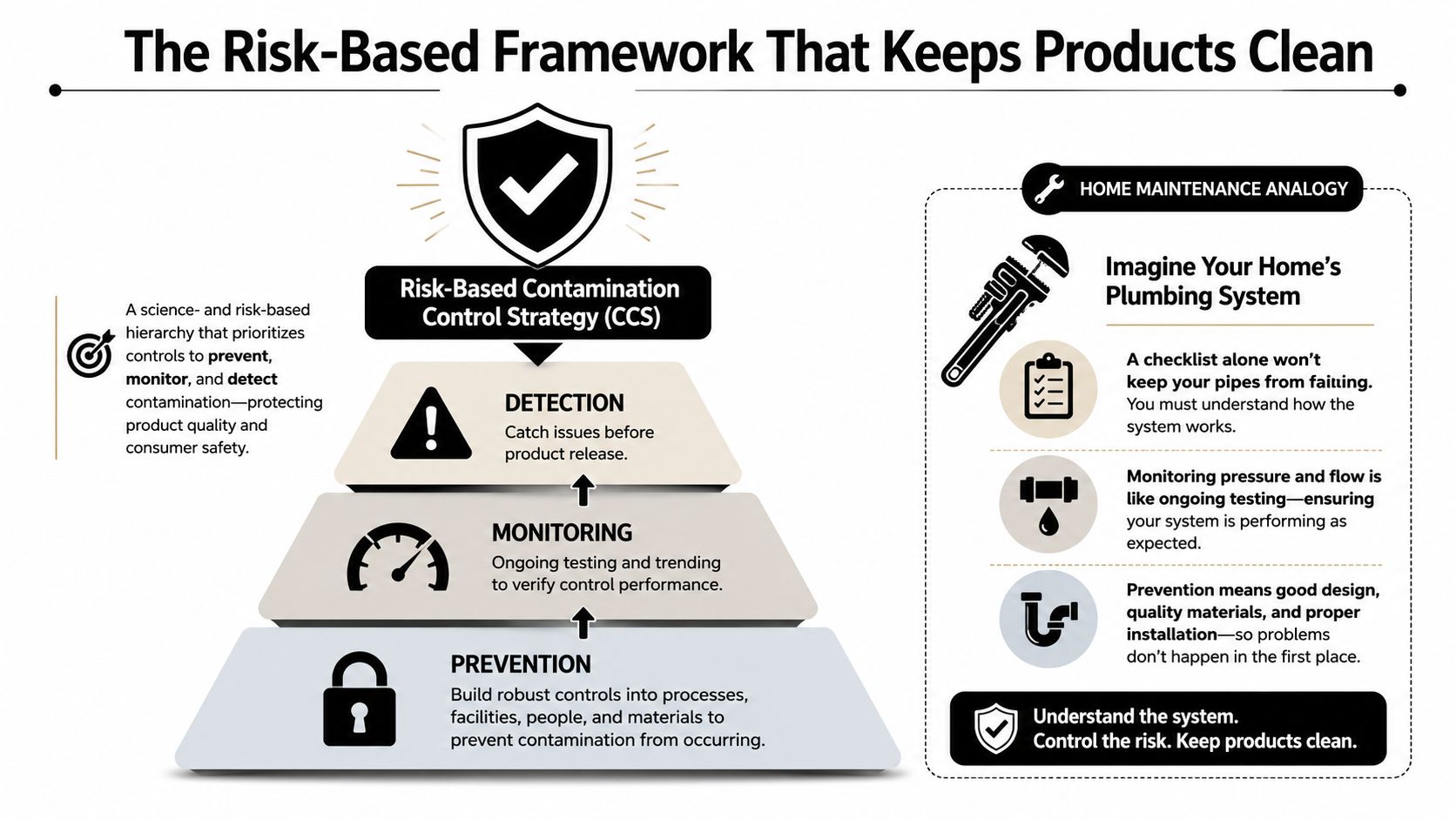
A checklist can help, but it can't replace a real control system. The better model is a risk-based contamination control strategy, or CCS, which identifies both viable and non-viable contamination sources, justifies controls through risk assessment, and keeps reviewing monitoring data so the plan stays effective over time (risk-based CCS overview). That matters in cannabis because contamination risk changes with the product, the process, and the environment.
Why prevention has to come before detection
If a company waits until the end to look for problems, it's already too late to fix the process that created them. A CCS flips that logic. It starts with prevention, then adds monitoring, then uses detection to confirm the controls are working. That's why a clean result in one test doesn't mean the system is healthy forever.
A good home analogy is plumbing. You don't wait for a pipe to burst before checking whether the joints, valves, and seals are sound. You look for wear, leaks, and weak points before the damage spreads. Cannabis safety works the same way, because cleaning once and hoping for the best isn't a strategy.
What a consumer can infer from a real CCS
You won't build the manufacturer's control system at home, but you can recognize the signs of one. Clean packaging, consistent labeling, clear storage guidance, and transparent testing all suggest the producer has thought through contamination prevention instead of treating it like a box to check. If the product arrives with sloppy labeling or damaged seals, that's a cue to slow down and inspect more closely.
A strong CCS is a living system. It doesn't just prove a product was clean once, it keeps asking whether the controls still work.
This is also why lab testing alone isn't enough. Testing finds problems after production. A CCS reduces the chance that problems appear in the first place, which is the more valuable protection for consumers who rely on safe delivery.
How DC, Virginia, and Maryland Regulate Cannabis Delivery Safety
The consumer experience at the door depends on the jurisdiction, and that's where confusion often starts. In the District, Virginia, and Maryland, the details differ, but the safety logic is similar, the delivery should be tied to lawful access, verified identity, traceability, and controlled handoff. For a practical compliance overview, see legal compliance issues for cannabis delivery.
| Jurisdiction | Buyer Verification | Testing Requirements | Delivery Logistics |
|---|---|---|---|
| DC | Adult delivery should involve identity checks at handoff and a verified order process. | Consumers should look for products backed by lab testing and clear labeling. | Delivery should preserve package integrity, discretion, and chain-of-custody handling. |
| Virginia | Consumers should expect lawful, age-gated access and careful product handling where delivery is available under state rules. | Product quality depends on the seller's testing and labeling practices. | Safe delivery relies on traceable handoff procedures and clean transport conditions. |
| Maryland | Medical cannabis delivery is permitted under a state-regulated framework for qualifying patients and caregivers, with registration and purchase-limit verification at point of sale. | Delivery exists within a regulated medical framework that emphasizes compliant product oversight. | Maryland also regulates delivery logistics such as vehicle storage and manifest or recordkeeping requirements for transported products. |
What matters at the doorstep
The key point for consumers is not memorizing every legal clause. It's understanding what good compliance looks like in practice. The courier should know who can receive the product, the package should stay intact, and the handoff should happen in a way that protects both the product and the customer.
Maryland is especially clear about delivery mechanics in its medical program, because the system requires verification, limits, and records that track the product in transit. That doesn't just protect the seller. It also helps the buyer know the item they're receiving followed a controlled path.
In DC and Virginia, the same basic expectation applies, even if the local rules differ. Ask yourself whether the service seems organized, age-gated, and transparent. If it looks improvised, treat that as a warning sign, because poor logistics are often the first clue that contamination prevention and compliance are weak too.
How to Read a Cannabis Lab Report Without the Jargon
A lab report, or certificate of analysis, should answer one question first, is this product clean enough to trust? Treat it as a nutrition label for cannabis, except the details matter more than the marketing language. You don't need to decode every line. You do need to know which lines deserve your attention.
Four values that matter most
Total yeast and mold tells you whether the product shows signs of microbial contamination pressure. If that number is called out, you want it to make sense for the product type and to be reported clearly, not buried in vague wording. A clean-looking flower sample can still be a concern if the microbial profile looks off.
Total aerobic count gives another picture of general microbial load. It doesn't tell the whole story by itself, but it helps you see whether the sample looks controlled or sloppy. If the report is incomplete, hard to read, or missing this kind of detail, that's not reassuring.
Residual solvents matter most for extracts and concentrates. These values help show whether chemicals used during extraction were adequately removed. A report that avoids clear solvent data on a concentrate deserves more skepticism than one that spells it out.
Cannabinoids versus label claim is the consumer's reality check. If the report says one thing and the package claims something very different, the product may not have been labeled carefully. That doesn't prove contamination, but it does raise a quality-control question.
What to do when the report is unclear
If the lab report is missing a test you expected, or the formatting is hard to follow, slow down before you use the product. A report should make the product easier to trust, not more confusing. You're looking for consistency, clarity, and enough detail to show the producer didn't skip the boring parts that protect safety.
Quick filter: if the report reads like marketing copy instead of a test summary, you probably don't have enough information.
The safest habit is to compare the package, the report, and the product itself. Those three should tell a consistent story. When they don't, contamination prevention is no longer a theoretical idea, it becomes a reason to pause.
Storage and Handling Habits That Prevent Contamination at Home
Once the product is in your home, your habits decide whether the protection holds up. Heat, moisture, light, and cross-contact with household items can all create avoidable problems. Good storage is less about being fancy and more about being consistent.
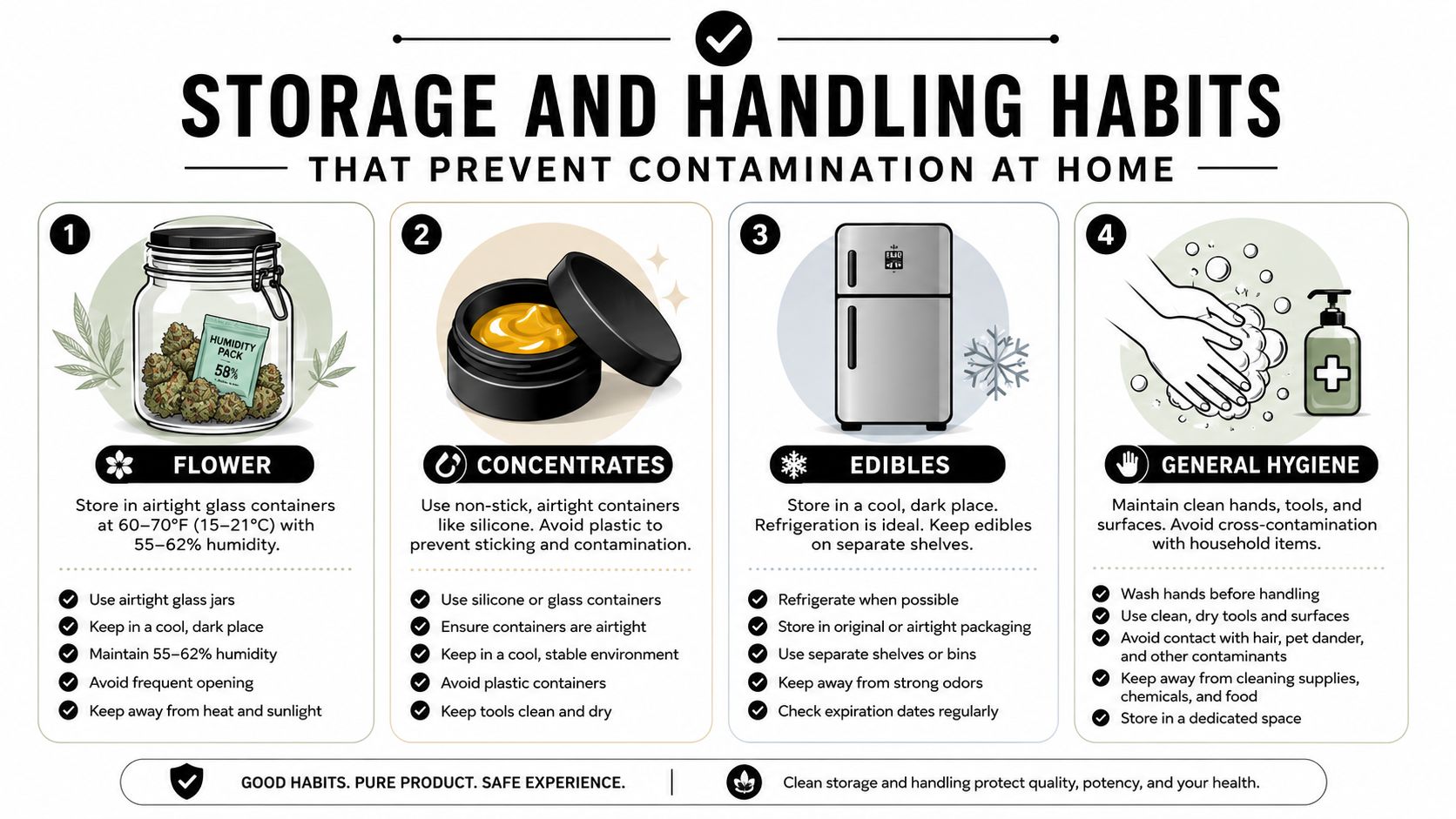
Keep each product in its own lane
Flower does best in an airtight glass jar, kept in a cool, dark place with stable humidity. Concentrates should stay in non-stick, airtight containers, not loose plastic that can trap residue or pick up debris. Edibles should stay sealed and separated from food prep areas, especially if your kitchen is busy.
Don't store cannabis next to cleaning supplies, medicine bottles, or loose household tools. That's how cross-contamination happens in real life, not through dramatic accidents, but through ordinary clutter. Clean hands and clean tools matter just as much as the container.
| Product Type | Ideal Storage | Key Risk to Avoid |
|---|---|---|
| Flower | Airtight glass, cool, dark storage, stable humidity | Moisture damage and contact with dirty surfaces |
| Concentrates | Non-stick, airtight container | Residue transfer and plastic contamination |
| Edibles | Sealed, cool, dark cabinet or refrigerator space if the label allows it | Mixing with food and accidental exposure |
| Tinctures | Upright storage in a clean, dry place | Leaks and cap contamination |
Make handling part of the routine
Wash your hands before opening anything. Use clean scissors, dab tools, or grinders, and don't set them down on counters that also hold food prep items. If you're opening multiple cannabis products at once, keep lids and containers separate so you're not mixing residue from one item into another.
The best home rule is boring but effective. Open one thing, close it, store it, then move to the next. That simple sequence lowers the chance that dust, spills, or fingerprints become part of the product environment.
For readers keeping track of freshness or shelf life, expiration date tracking is worth building into the same routine. If a product is old, poorly stored, or hard to identify, caution is smarter than guessing.
Green Express DC Safeguards and Your Quick Reference Checklist
A good delivery experience should make contamination prevention easier, not harder. Green Express DC's approach centers on lab-tested products, discreet packaging, delivery verification, and a transparent menu, which fits the basic safety logic described above. Those details matter because the safest handoff is the one that keeps product identity, cleanliness, and compliance clear from order to door.
- Check the seal before you open anything.
- Verify the label matches the item you ordered.
- Inspect the packaging for damage, leaks, or unusual odor.
- Store it immediately in a clean, separate place.
- Keep tools and hands clean every time you handle it.
If you want a delivery experience that respects both compliance and product care, visit Green Express DC to see how a professional DC cannabis service handles ordering, verification, and delivery with contamination prevention in mind.