
You find an old vape cart in a drawer, or a half-forgotten edible bag in the back of the pantry, and the first question is always the same, is this still good, or am I about to waste money on something that's already gone flat? In cannabis, expiration date tracking isn't just about avoiding a stale product. It's about protecting potency, reducing waste, and keeping your inventory honest whether you're buying for personal use or moving product through a delivery workflow in the DMV.
Businesses managing perishable goods, including cannabis, can lose an estimated 2% to 5% of inventory value each year because products expire before they're sold or used, which is why tracking is a real financial control, not a housekeeping chore Zenventory. In a market where some operators are juggling flower, concentrates, vapes, edibles, and tinctures, a bad date doesn't just mean a weaker experience. It means stock that should've been rotated, discounted, returned, or removed got left sitting until it became dead weight.
Why Tracking Cannabis Expiration Dates Matters
A product that's been sitting around too long usually doesn't announce itself. Flower dries out, concentrates lose their texture, vape oil can drift in quality, and edibles can become less appealing long before anyone throws the package away. For consumers, that means disappointment and inconsistent effects. For operators, it means a quiet leak in margin that shows up as spoilage, missed rotation, and avoidable write-offs.
The real cost is bigger than freshness
The point of expiration date tracking is not to obsess over a label for its own sake. It's to build a routine that catches aging product early enough to do something about it. That matters even more in cannabis delivery, where inventory may sit in a back room, travel between locations, or move through multiple hands before it reaches a customer.
Practical rule: if a product is close enough to worry you at home, it's close enough to need a decision at the business level.
For individual users, that decision is simple. Use the older item first, store it properly, or toss it if it's clearly degraded. For operators, the decision has compliance, customer experience, and cash-flow consequences. A delivery service can't afford to discover too late that a batch should've been pulled from active stock weeks ago.
What a tracking mindset changes
Good tracking shifts the habit from guessing to knowing. You stop asking whether a jar or carton is “probably fine,” and start recording what it is, when it arrived, where it's stored, and how close it is to the end of its useful life. That's the difference between a stash and a system.
A complete worksheet should include the product name or SKU, batch or lot number, manufacturing date, expiration date, quantity, location, and status LaceUp Solutions. That same logic works for a home shelf, just on a smaller scale. The details matter because the date alone doesn't tell you enough. The batch, location, and status tell you whether the product is still usable, needs rotation, or should be removed.
Understanding Cannabis Product Shelf Life
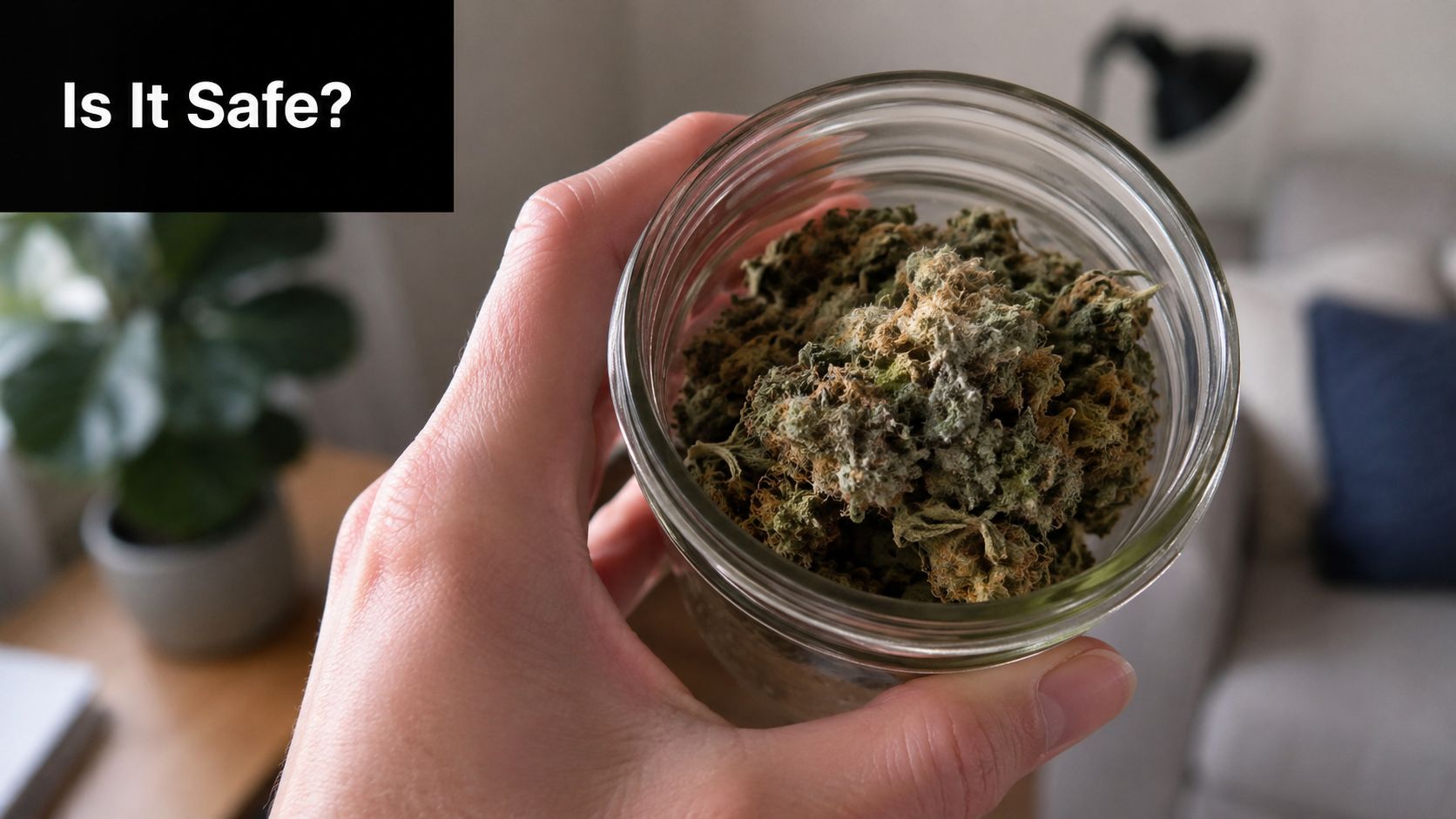
Shelf life is not a single clock for every product, and that is where casual tracking breaks down. Flower, concentrates, vape cartridges, edibles, and tinctures each fail in different ways because air, heat, light, moisture, and handling affect them differently. Treat everything as if it ages on the same schedule, and you will either toss usable product too early or keep weak product in rotation too long.
What changes shelf life by product type
Flower usually loses quality through air exposure, light exposure, and moisture swings that leave it too dry or make mold more likely. Concentrates are less fragile in one sense, but they still suffer when heat is high or the container does not seal tightly. Vape cartridges are especially sensitive to heat and oxidation, and the oil can separate or darken as time passes.
Edibles and tinctures depend more on packaging integrity and steady storage. If they stay sealed and sit in stable conditions, they often hold up better than people expect. If they end up in hot cars, near windows, or in a kitchen drawer that warms up and cools down all day, they age faster than the label suggests.
Storage rule: the best date on earth will not save a product that has been stored badly.
Cannabis Product Estimated Shelf Life
| Product Type | Estimated Shelf Life | Key Storage Factors |
|---|---|---|
| Flower | Shorter when exposed to light, air, and humidity swings | Airtight container, cool space, dark storage |
| Concentrates | Can hold well if sealed and kept away from heat | Tight seal, low heat, limited air exposure |
| Vape Cartridges | Sensitive to heat and oxidation | Upright storage, moderate temperature, sealed packaging |
| Edibles | Depends on the formula and packaging | Original packaging, cool storage, moisture control |
| Tinctures | Often more stable when sealed properly | Dark bottle, cool area, cap kept tight |
That table is a working reference, not a guarantee. It helps set expectations so you do not treat every item as if it follows the same aging curve.
The intake log only works if the first entry is accurate. Log the product name, lot or batch, manufacturing date, expiration date, quantity, location, and status as soon as the product arrives, the same way a delivery team in the DMV would document incoming stock for compliance and rotation control. Sloppy data on day one creates cleanup work later, and no spreadsheet fixes that after the fact.
For a product-specific reference on edibles, use this guide on how long weed edibles last to compare your own storage expectations with the item in front of you.
A Simple Tracking System for Home Use
Home tracking doesn't need software that feels built for a warehouse. A small stash can stay organized with a label, a reminder, and a note app if you're disciplined about using them. The trick is to make the process so easy that you'll keep doing it after the first week.
The setup I'd use for a personal stash
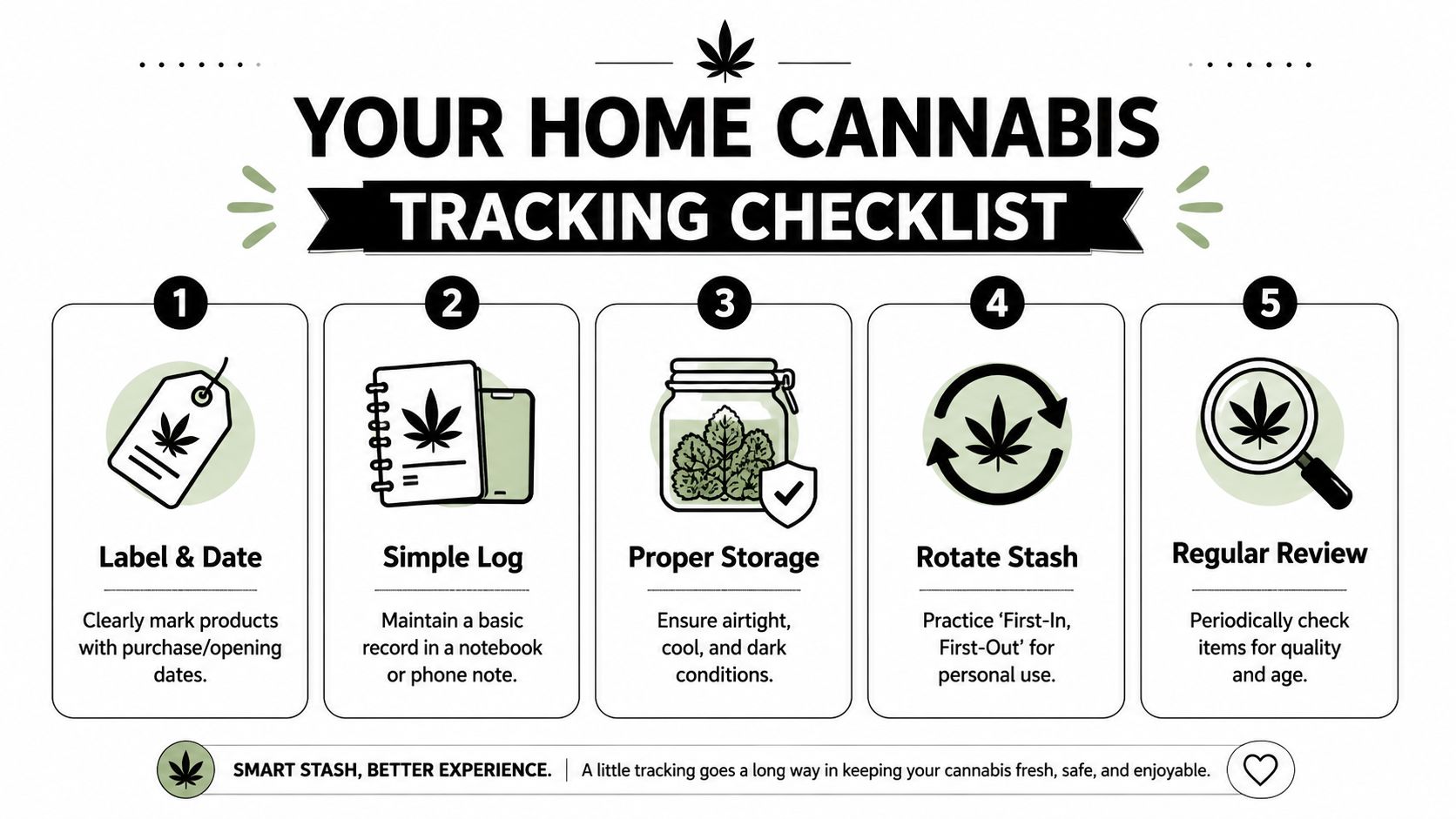
Start with a simple label convention. Put the purchase date, or the opening date if that's more useful for you, on the package with a small sticker or marker dot. If you keep several types of product together, color-coding helps too, one color for flower, one for edibles, one for concentrates, so you can spot older items fast.
Then build a basic log in your phone notes app or a spreadsheet. You don't need fancy fields. Product name, date bought, estimated use window, and storage location are enough for home use. The goal is to know what you own and what should be used first.
Here's a simple habit that works:
- Label every new item immediately. Don't wait until later, because “later” is when the receipt disappears.
- Put older product in front. That's personal FIFO, and it keeps you from always reaching for the newest jar.
- Set a calendar reminder. A recurring monthly check keeps old items from hiding in the back.
- Note anything that changes quality. Dryness, smell, separation, or packaging damage are worth logging.
- Review before restocking. Don't buy more until you know what's already sitting there.
What a good home routine catches
A simple system helps you notice what would otherwise get ignored. If an eighth of flower has been open for a while, you'll use it before the fresher jar. If a multi-pack of edibles is already old, you'll stop shoving it behind the new stuff. That's not complicated, but it prevents waste.
A practical tracking system should use a staged alert model, with an early-warning alert, a critical warning to trigger removal, and routine audits to make sure expired items don't stay in stock Resgrid. At home, that can be as low-tech as a phone reminder and a monthly drawer check. The principle is the same whether you keep three items or thirty.
The rule that matters most is consistency. If you label one product and forget the next five, the system falls apart. If you check your stash regularly, you'll always know what's getting old before it becomes useless.
Inventory Control for Delivery and Retail Operators
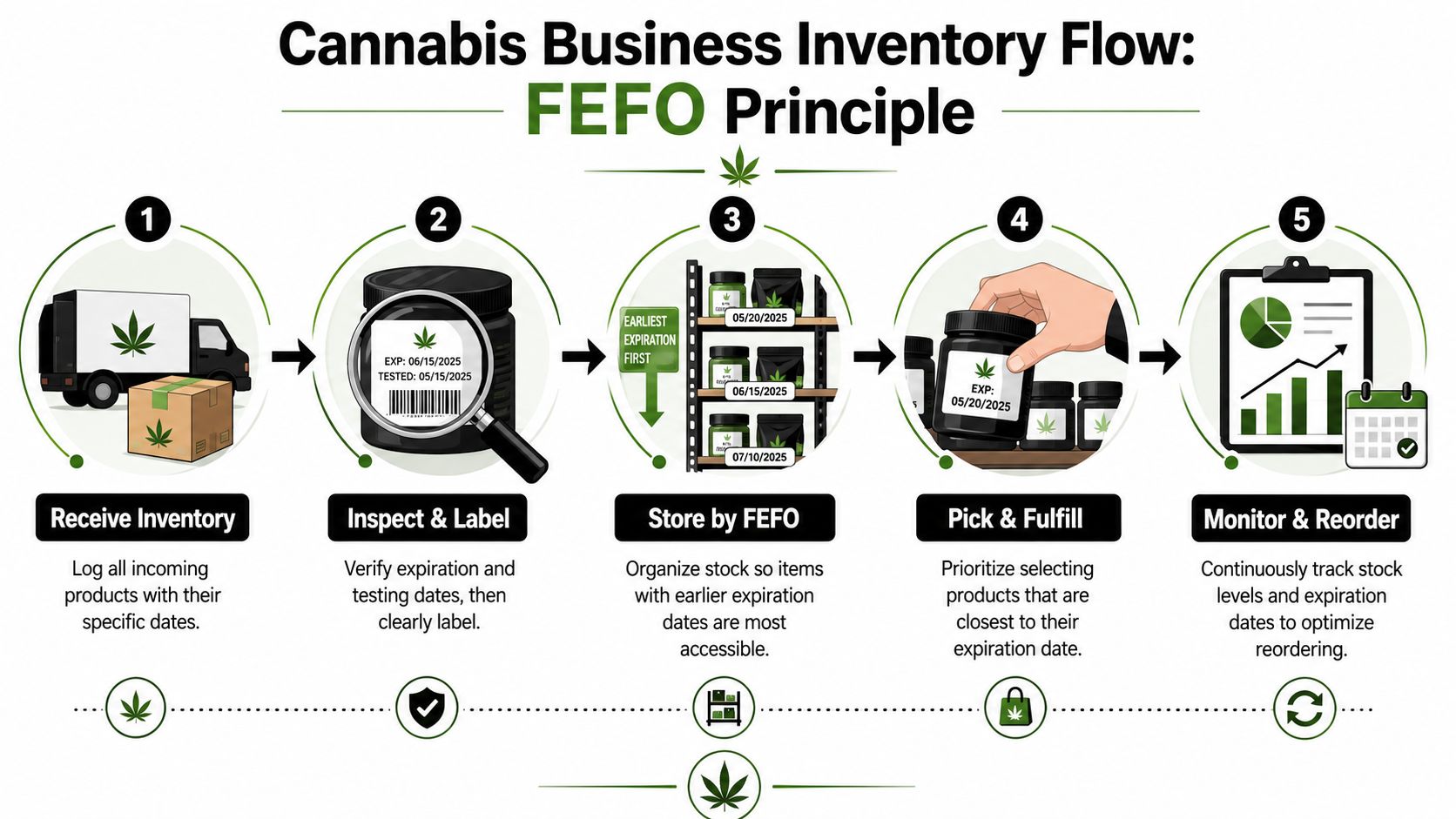
A delivery operation cannot run on memory. Once you are handling multiple SKUs, multiple batches, and multiple customer orders, FEFO, First-Expired, First-Out, has to replace guesswork. The oldest-dated stock moves first, even if the newest inventory is easier to reach on the shelf.
Build the workflow at receiving
The process starts at intake. Every item should be logged with its batch or lot number, expiration date, and storage location the moment it arrives. Skip that step, and everything downstream gets harder because you are trying to manage stock without reliable identity data.
For real expiry risk, batch-level tracking is the standard. Expert guidance recommends FEFO picking, tiered 30, 60, and 90-day alerts, and a weekly review of near-expiry stock StockPilot. In practice, that means the team checks the oldest-dated items first, watches the warning windows, and uses weekly review time to decide what needs promotion, movement, or removal.
Operational truth: if the picker cannot see the date clearly, the system is already failing.
Keep the data aligned with the shelf
Inventory control only works when the digital record matches the physical product. Barcode scanning, clear shelf labels, and routine exception checks keep that alignment from drifting. If the batch says one thing and the shelf says another, the record needs correction before the order goes out.
A useful worksheet for operators should include product name or SKU, batch or lot number, manufacturing date, expiration date, quantity, location, and status. That gives the delivery team enough visibility to fulfill correctly and enough proof to spot problems before they become waste. It also creates a clean trail for audits and internal reviews.
For operators who already use order tracking systems, expiration control fits into the same workflow. Once an order is matched to the right item, batch integrity matters all the way through packing and handoff.
What actually prevents loss
The biggest mistake is relying on SKU-only pick lists. That is how a fresh batch gets shipped while an older one sits untouched. Another mistake is not training staff to put new stock behind older stock. That sounds small, but it is where a lot of avoidable shrink starts.
Use a staggered alert structure, then tie the alerts to action. Early warnings should trigger review, critical warnings should trigger removal or transfer, and weekly audits should confirm the retired items are verified as gone. That rhythm keeps inventory moving instead of aging in place.
Navigating DMV Cannabis Regulations
DC, Maryland, and Virginia don't behave like one market, even when the customer lives only a few miles apart. That's why expiration tracking has to follow the actual operating environment, not a generic cannabis playbook. What counts as enough control in one place may be too loose, or not even relevant, in another.
Why DC needs stricter self-discipline
Washington, DC's adult-use cannabis market runs under a unique gifting model legalized by Initiative 71, and it doesn't have the same retail licensing structure used in neighboring states DIVA portal. That makes internal controls especially important, because operators can't lean on a standard dispensary framework to organize inventory for them. Date logging, batch control, and rotation discipline become part of the brand's credibility.
For delivery services working in this environment, tracking isn't a back-office bonus. It's part of how product quality stays consistent when the legal structure is less formal than a fully licensed retail market. A sloppy intake process in DC doesn't just risk waste. It risks reputation.
Maryland and Virginia require different thinking
Maryland's adult-use market is fully regulated, with licensed retail and cultivation structures and seed-to-sale tracking built into the system. That means batch identification and product traceability sit inside a formal compliance environment. For an operator serving Maryland consumers, expiration tracking has to fit into that more structured workflow.
Virginia is different again. Adults 21 and over can possess and privately grow cannabis, but the state still lacks a fully functioning legal recreational retail market for standard adult-use sales. That means delivery operators there can't assume the same retail model exists, so inventory handling has to stay aligned with whatever legal sourcing pathway is in use.
The result is simple, even if the rules aren't. DC delivery, Maryland retail, and Virginia-adjacent logistics each demand a different level of control, and expiration tracking has to match that reality.
For operators sorting through the legal edge cases, the internal page on legal compliance issues fits the broader compliance picture. Once legality gets complicated, date control becomes one of the few parts of the process you can tighten immediately.
What one-size-fits-all misses
A flat spreadsheet might work in a tiny stash, but not across a mixed DMV operation. In DC, the key is internal discipline. In Maryland, the key is systemized traceability. In Virginia, the key is making sure the product flow itself matches the legal structure before you worry about the shelf-life logic.
That's why the same date field can mean different things in different places. In one market, it's a rotation trigger. In another, it's a compliance checkpoint. In all three, though, it's the difference between a product that gets used on time and one that turns into a loss.
Proper Storage and Disposal Practices
Tracking only pays off if storage supports it. A product can have a clean date in the system and still go bad early because it was left in the wrong environment. Good storage doesn't make cannabis immortal, but it does help it stay closer to its intended condition for longer.
Store each format the right way
Flower should stay in an airtight container, out of direct light, and away from heat swings. Concentrates do better when sealed tightly and kept cool, because excess heat and air exposure change their consistency and quality. Edibles and tinctures need stable, dark, and dry conditions, preferably in their original packaging until use.
Humidity control matters for flower, but so does consistency. A shelf that's always cool is better than one that swings from warm to cold every day. The same goes for cabinets near ovens, windows, or places where the air conditioner blasts directly onto the product.
Keep the product where you'd want a fragile item stored, cool, dark, and out of the way of daily temperature swings.
Dispose of expired product safely
Once a product is clearly expired or badly degraded, don't keep negotiating with it. For personal users, the safest move is to make it unusable before disposal, then follow local disposal rules for household waste. For operators, expired stock should be removed from active inventory immediately, documented, and handled through the company's waste process so it doesn't drift back into circulation.
Don't mix expired product back into sellable stock, even if the package still looks fine. Don't rely on smell alone. Don't assume a sealed package is automatically safe forever. The whole point of tracking is to remove doubt before the product becomes a problem.
If you want fresher product, fewer surprises, and less waste in the DMV, make expiration date tracking part of your weekly routine instead of something you only think about after you find an old jar. Check what you own, label it the day it arrives, and rotate it before it turns into a loss. For reliable same-day delivery in Washington, DC, shop with Green Express DC and build your stash around product you can use on time.