
You've got good flower in front of you, the wrap is on the table, and the only thing missing is the roll that doesn't split halfway through the session. If you're in DC, Maryland, or Virginia and you just got a delivery or picked up for the night, learning how to roll up a blunt is one of those skills that turns a decent stash into a smooth, even smoke.
The trick isn't just getting it closed. It's getting the fill right, keeping the wrap flexible, and fixing the small mistakes before they turn into a canoe, a tear, or a tight draw that ruins the whole thing.
Your First Step to Rolling the Perfect Blunt
The first time trying this, you're staring at great flower and a wrap that feels a little too delicate for comfort. That's normal. A blunt is a simple setup, but it rewards patience, especially if you want the smoke to burn evenly instead of racing down one side.
A lot of beginners treat the roll like a race. That usually leads to overpacking, a weak seam, or a blunt that looks fine until the first light. The better move is to slow down and treat the wrap like a clean workspace, then build the shape before you seal anything. That's the part people skip, and it's usually where the trouble starts.
If you're also figuring out where to buy and what kind of product makes sense in DC, the buying side matters too. A solid starting point is this DC buying guide, because the roll is only as good as the flower you put into it.
Practical rule: a good blunt starts before the tuck. If the flower is uneven or the wrap is dry, the finished smoke usually shows it.
The goal here is simple. Keep the process calm, keep the fill even, and make the wrap work with you instead of fighting you.
Gathering Your Supplies in the DMV
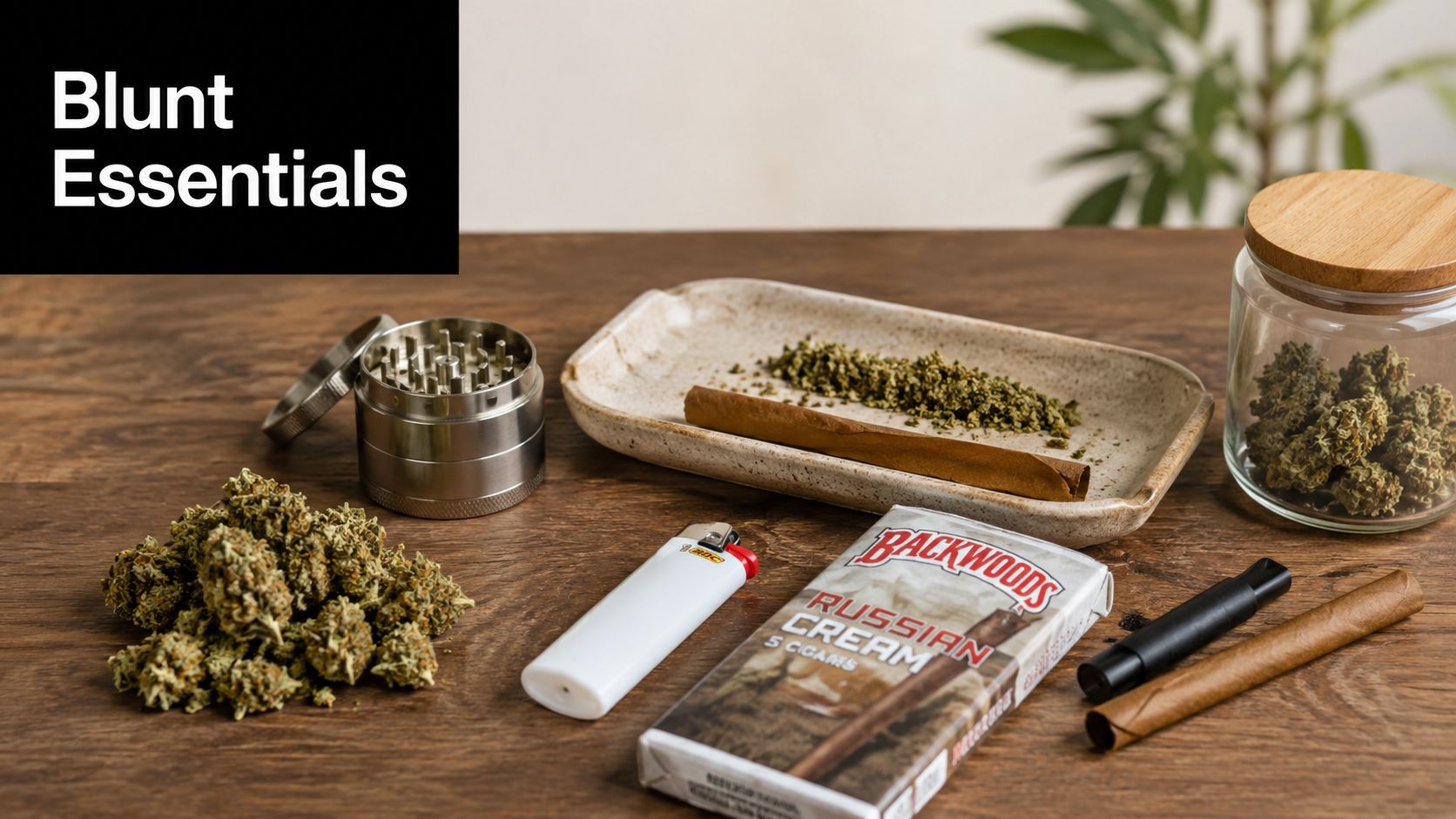
You don't need a giant setup to roll a blunt well. You need the right basics, and each one has a job. The flower gives you the body of the smoke, the grinder gives you consistency, and the wrap decides how easy the seal will be.
A medium, fluffy grind is often considered the sweet spot. Step-by-step blunt guides recommend loading about 1 to 2 grams of flower, spreading it evenly, and leaving room at both ends so the wrap can close cleanly, while also warning against packing it too tightly because airflow gets choked off and the draw turns difficult. That benchmark shows up in beginner-friendly instructions from Doobie Nights, and it lines up with what works in practice.
The wrap choice matters just as much. Classic cigarillos and dedicated blunt wraps both work, but they don't feel the same in your hands. Cigarillo shells can be a little fussier because you're dealing with a tobacco leaf that can crack if it's too dry, while dedicated wraps are usually easier for a first-time roller to manage.
If you're deciding what to use, a quick comparison helps.
- Cigarillo shell: Familiar, traditional, but more likely to tear if you rush the prep.
- Dedicated blunt wrap: Usually easier to handle, especially for beginners who want a cleaner seam.
- Grinder: Keeps the flower consistent, which helps the roll stay even from end to end.
- Lighter: Useful later for sealing, not for rushing the entire process.
For a more focused breakdown of wrap options, this blunt wrap guide is a useful place to compare your choices before you start. The best setup is the one that keeps the flower evenly distributed and the wrap flexible enough to work with.
Prepping Your Flower and Wrap for Success
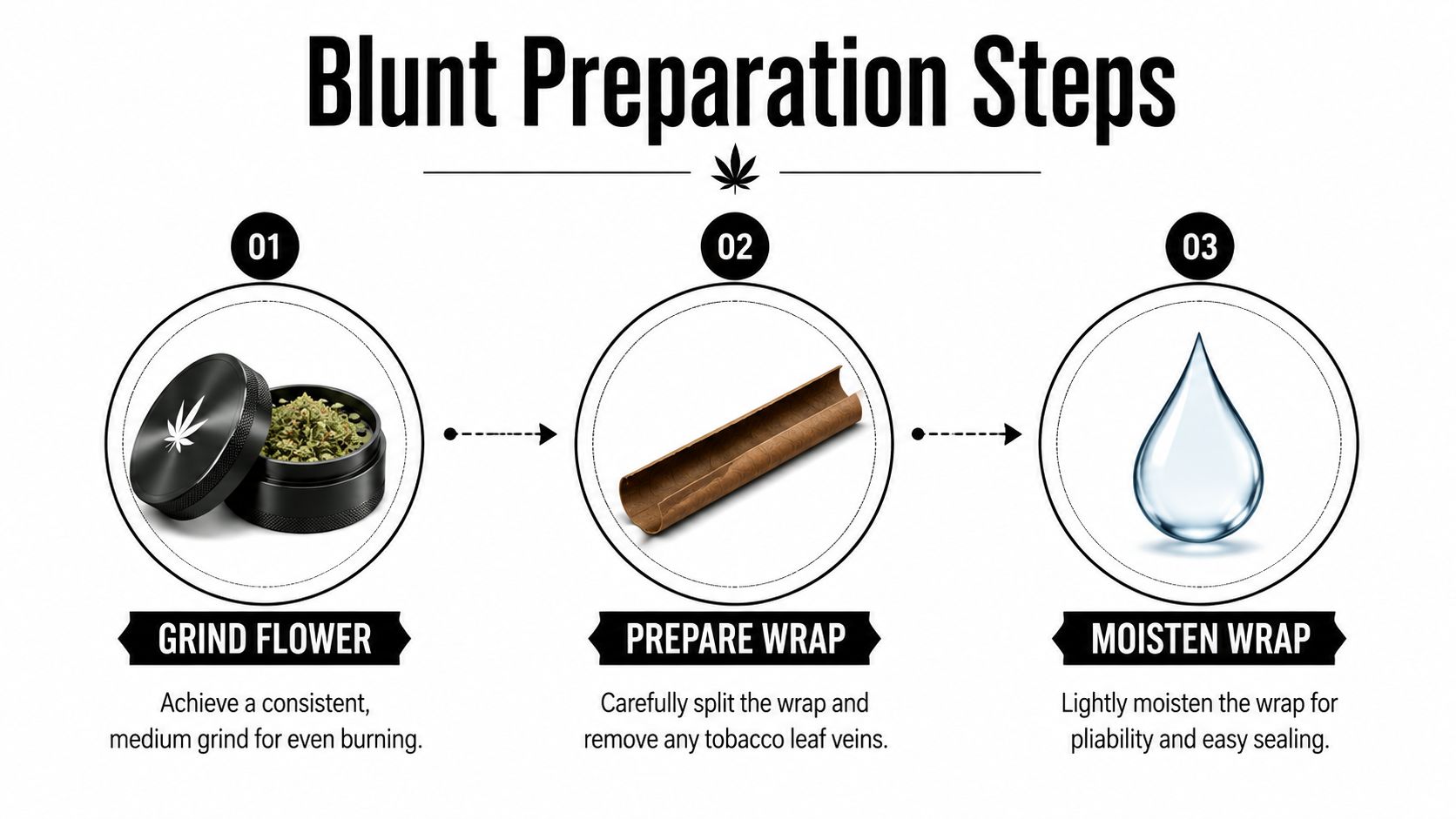
Preparation is where a lot of rolls are won or lost. If the wrap is dry and brittle, or if the flower is ground too fine, the rest of the process gets harder than it needs to be. A good prep job makes the tuck feel natural instead of forced.
Start by breaking down the wrap carefully. If you're using a cigarillo, split it slowly so you don't shred the leaf or create a weak spot near the seam. Empty the filler gently, because rough handling can leave tiny tears that don't show until you're halfway through the roll.
The flower should feel light and even, not dusty. That medium grind matters because it helps the blunt burn steadily without turning airy or packed into clumps. You want the fill to sit like a soft line across the wrap, not a pile with hills and valleys.
Moisture is the other big variable. A wrap that's too dry cracks when you bend it. A wrap that's too wet gets floppy and won't hold shape. A little saliva or water is usually enough to make it pliable, and that small bit of moisture is what helps the seam stay closed later.
Good prep saves the roll. Most people blame their tuck when the real problem was a dry wrap or uneven fill.
If the wrap feels stiff, don't force it. Work it gently between your fingers until it loosens up, then keep your fill ready so you can move straight into shaping while the material is still workable.
The Art of the Roll Tuck and Seal
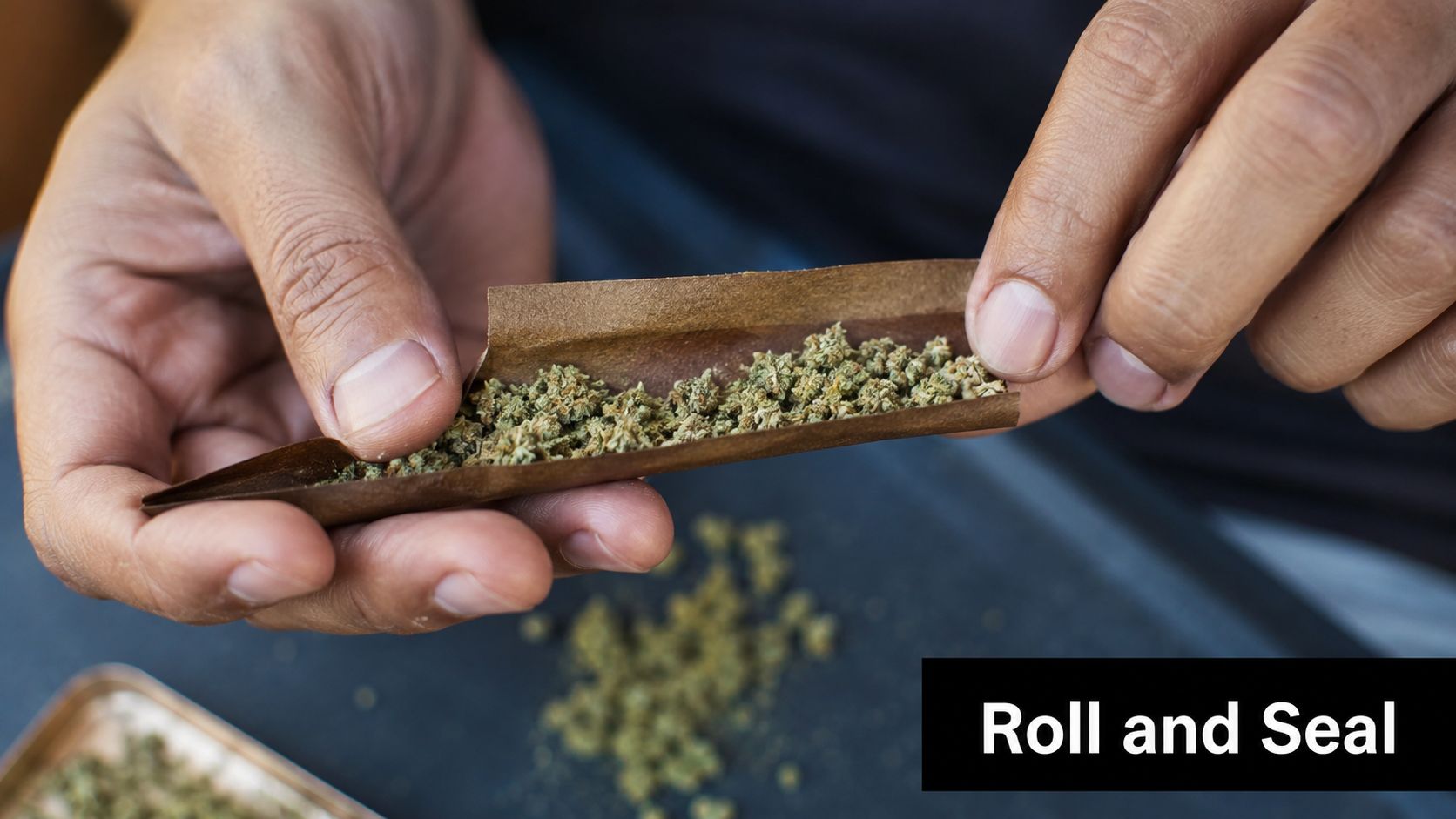
Once the flower is in place, the roll becomes a hand-feel exercise. The best blunt rolls are built by shaping first, then locking the seam. A blunt is typically made by emptying or replacing the tobacco filler in a cigar or cigarillo and refilling the wrap with cannabis flower, and mainstream rolling guides describe the basic process as grinding the flower, packing roughly 1 to 2 grams into the wrap, tucking the edge under the herb, and sealing the seam with moisture before heating it to lock the seal. That sequence is laid out in Mellow Fellow's blunt guide.
Start by spreading the flower evenly along the length of the wrap. Leave a little room at both ends so you can close the tips without fighting the fill. Then use your thumbs to shape the wrap around the flower, rolling it back and forth lightly until it starts to hold its form.
The tuck is the part people overthink, but the motion itself is simple. Bring the front edge of the wrap under the flower, then use your thumbs to guide it into a snug line. You want the wrap to hug the fill, not strangle it. If the wrap won't tuck cleanly, the fill is probably too loose in one spot or too bulky in another.
Once the seam is lined up, moisten it just enough to bond. Press it closed with your fingers, then run a lighter briefly along the seam to dry and stabilize it. Don't linger with the flame. You're not trying to toast the whole blunt, just set the seam.
The cleanest rolls usually follow this sequence.
- Even out the fill so the blunt has a consistent shape.
- Tuck gently so the wrap sits under the flower without tearing.
- Seal with moisture and finger pressure.
- Lightly heat the seam to finish the bond.
A firm roll works better than a loose one, but not so firm that airflow dies. That balance is what gives you the draw you want without making the blunt feel clogged.
Troubleshooting Common Rolling Mistakes
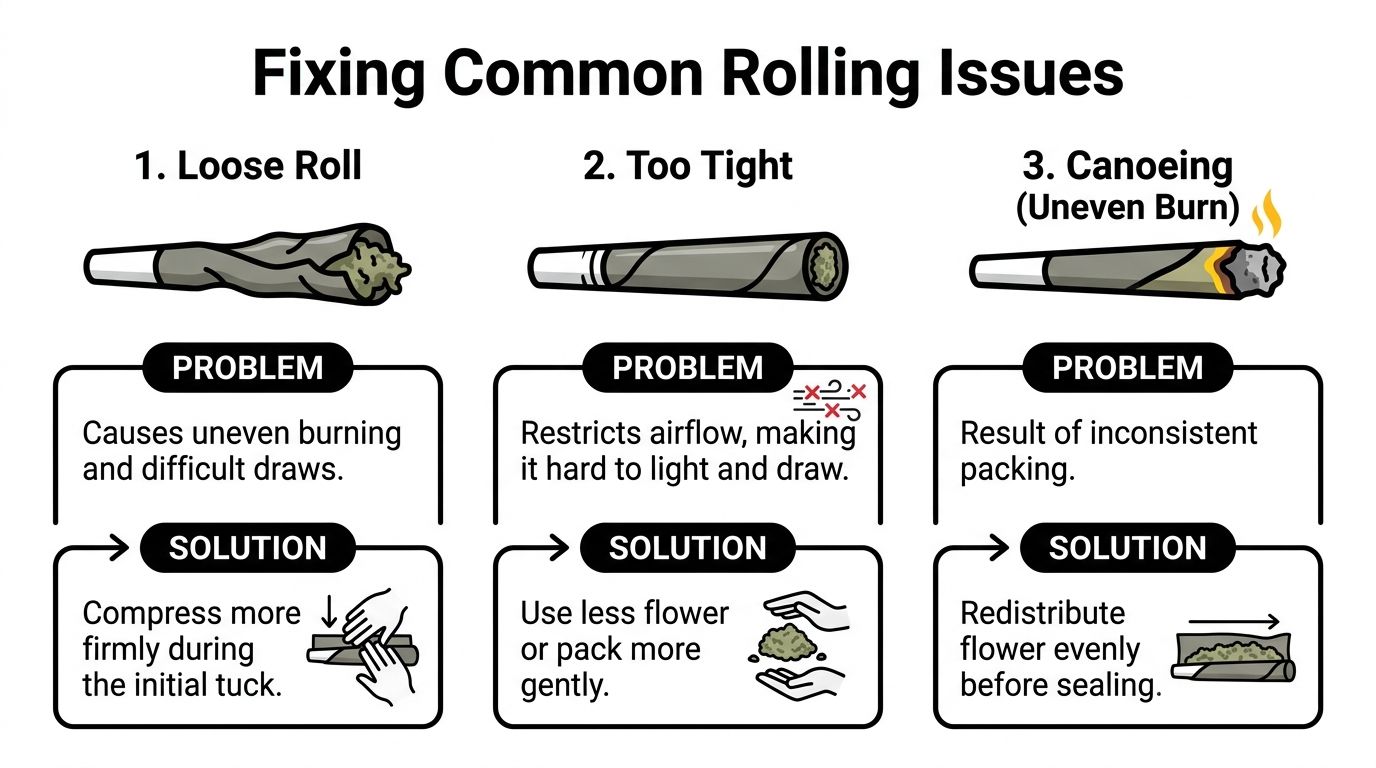
Most rolling problems come from the same three places, seam, structure, and airflow. If you know which one failed, you can usually save the blunt instead of starting over. That matters because the difference between a clean smoke and a frustrating one is often just a small correction.
A loose roll usually burns unevenly and can feel hollow when you draw on it. The fix is simple, compress a little more firmly during the initial tuck so the flower sits more evenly in the wrap. If the blunt looks puffed up or has soft gaps, that's your cue that the fill wasn't distributed tightly enough.
Too tight is the opposite problem. The blunt looks solid, but the draw fights back and lighting becomes annoying. In that case, use less flower or pack more gently next time so the airflow stays open.
Canoeing is the one people complain about most, because the blunt starts burning on only one side and keeps drifting away from a clean line. That usually comes from inconsistent packing or a seam that didn't bond evenly. Redistribute the flower before sealing, then make sure the wrap is closed with steady pressure from end to end.
Cracks and weak seams can often be repaired. Guides consistently recommend moistening the edge, then pressing it closed or briefly running a lighter along the seam to dry and bond it, while also fixing small cracks with tiny amounts of water. One instructional source also suggests letting a repair dry for about 10 minutes in sun, or using a quick flame pass from a few inches away, which is useful if the wrap starts to split after the roll is already shaped.
If the seam keeps opening, stop pulling on it. Re-moisten, press it flat, and let the material reset before you try to light again.
The main thing is not to panic when the roll starts acting up. Most issues are fixable if you catch them early, before the blunt gets too stiff or too dry to handle.
Blunt Etiquette Safety and DC Legality
A blunt is a social smoke, but etiquette still matters. If you're passing it around, don't hover on the tip, don't squeeze the wrap, and don't rush someone who's still drawing. A good session stays smoother when everyone handles the blunt gently and respects the flow.
Harm reduction matters too. Tobacco-based blunt wraps bring nicotine into the picture, so if you're trying to avoid that exposure, hemp wraps are the cleaner lane to look at. The same applies if you're weighing blunt wraps against joints or pre-rolls, because the wrapper changes the smoke as much as the flower does.
DC's legal rules are specific, and they're worth knowing before you smoke at home or share with a friend. Under Initiative 71, adults 21 and older in DC can possess up to two ounces of marijuana and transfer up to one ounce to another adult 21 or older without payment. The Metropolitan Police Department also says marijuana use in public is illegal, and federal law still prohibits possession on federal property inside the District, which is why private, lawful settings are the safest place to enjoy anything you've rolled. You can review the district's own summary in MPD's marijuana guidance.
For anyone ordering through a delivery service, the legal boundary matters just as much as the smoke itself. If you want a plain-language breakdown of compliance issues, this DC legal guide is worth reading before you place anything at the door.
Virginia and Maryland readers should be just as careful about local rules, because crossing a line that's fine in one place can become a problem in another. Stick to private consumption, keep your session discreet, and make sure whatever you've got on hand stays within the law where you are.
If you want a fast, discreet way to keep your next session simple, check out Green Express DC for delivery options that fit a private, at-home blunt roll.