

You're standing in the kitchen with a fresh cart, a charged battery, and the quiet hope that this won't turn into a fiddly little project. That's the normal first impression with a new vape pen. The good news is that the basic routine is simple once you understand the parts, the power button, and the few habits that keep the oil tasting clean.
In the DC area, that matters even more because delivery customers aren't all working from the same legal setup. Washington, DC, Maryland, and Virginia each treat cannabis differently, so a beginner doing vape pen instructions right also needs to think about where the product is going to be used and stored. A calm, practical setup routine saves time, protects the device, and makes the first draw a lot less stressful.
Understanding the Parts of Your Vape Pen
A vape pen looks compact, but it's really just a few pieces working together. Once those pieces make sense, the device feels a lot less mysterious and a lot easier to use correctly. If you've ever held one and wondered what each section does, think of it as a small power system with a removable oil source.
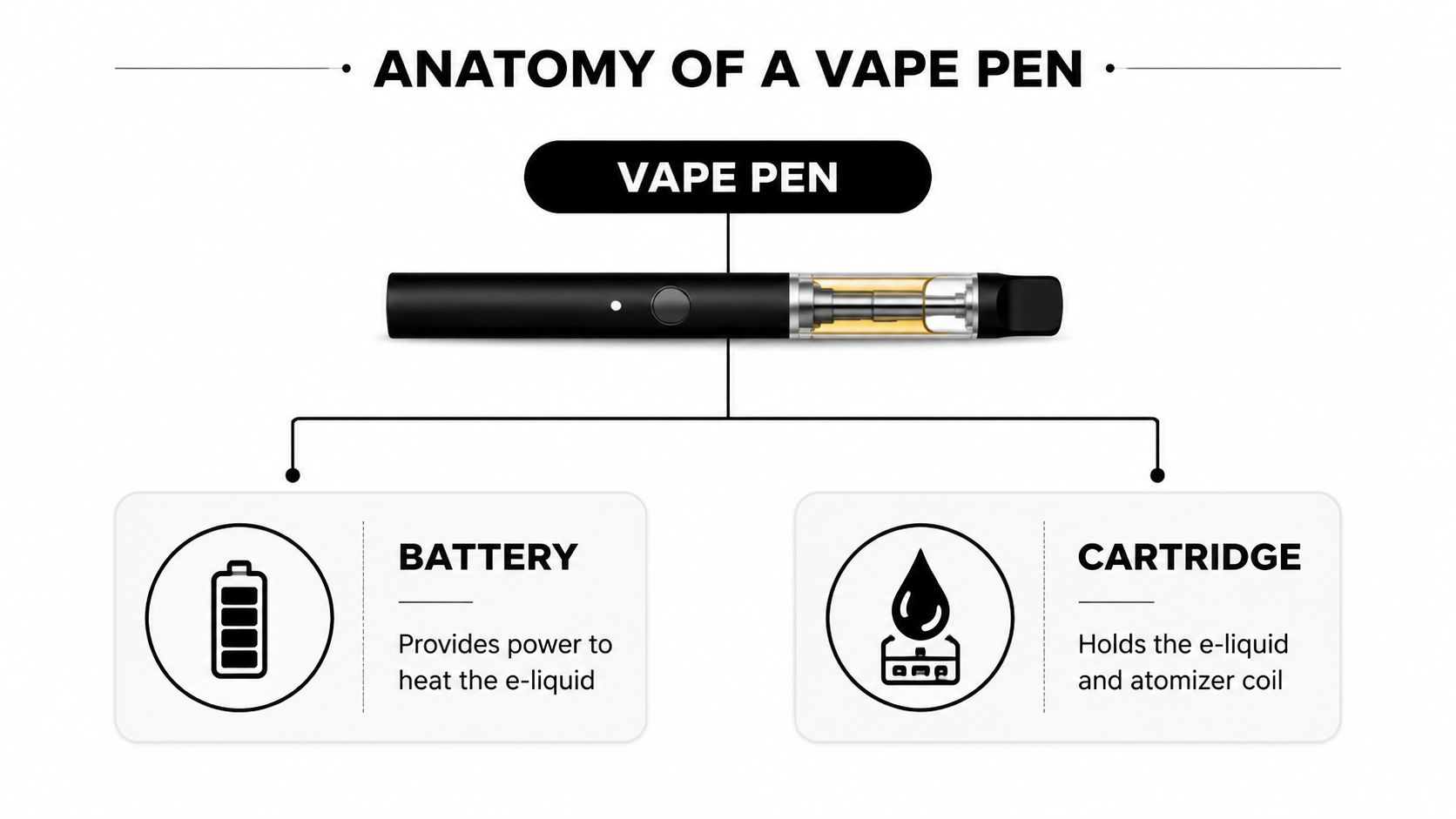
Battery, cartridge, and mouthpiece
The battery is the engine. It sends power to the heating element, which warms the oil enough to create vapor. Most beginner-friendly pens use a rechargeable battery with an indicator light, and that light is your simplest clue about charging or activation.
The cartridge, often called a cart, is the fuel tank. It holds the oil and the atomizer coil, which is the part that heats the oil. Many carts use a 510-thread connection, which is why a lot of batteries and cartridges fit together across brands and menus, including the kinds you might browse from a delivery menu such as Raw Garden vape pen options.
The mouthpiece is where you inhale. It sounds obvious, but mouthpieces vary a little in shape and airflow, so don't be surprised if one pen feels tighter or looser than another. That's usually a hardware difference, not a sign that something's broken.
Practical rule: If the battery, cartridge, and mouthpiece all make sense in your hand, you're already halfway to a smooth first session.
Charging Your Battery and Attaching a Cartridge
The first mistake most beginners make is trying to rush setup. A vape pen that's only half charged, loosely attached, or over-tightened tends to behave badly right away, and that can feel like user error when it's really just a setup issue. A clean first start makes a big difference.
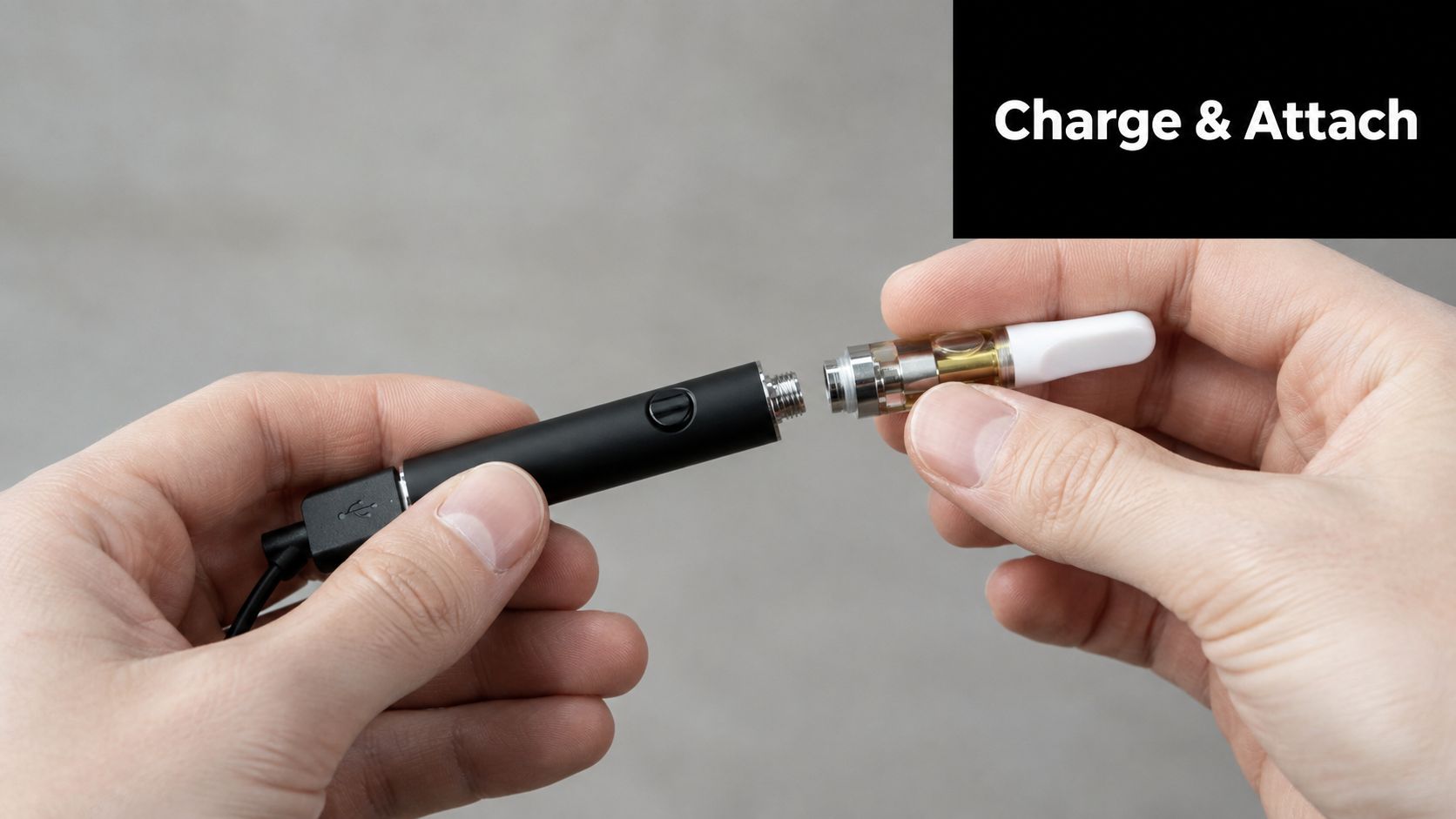
Start with a full charge
For most button-activated vape pens, the standard sequence is to charge it fully, attach the cartridge snugly, then turn the power on or off with five rapid clicks of the button, according to Mission Dispensaries' vape pen guide. That's the pattern users commonly memorize first. A full charge helps the battery perform consistently, and it also gives you a better sense of whether the device is working normally.
Many guides describe the charger light changing from one state to another, or the pen's light stopping its blinking pattern, when charging is complete. Some standard batteries are reported to reach a full charge in about 1 to 2 hours in consumer-facing guides, while other guides describe first-charge windows ranging from 30 to 90 minutes depending on the battery and charger, as noted in the earlier section from the provided research. The exact light behavior varies by brand, so the most useful habit is watching for the charger's signal to change before unplugging.
Attach the cart without forcing it
Screw the cartridge on until it feels snug, not cranked down hard. Overtightening can damage the connector and impede airflow, which makes the pen harder to use and can create a weak draw. A cart that wiggles is a problem, but a cart that's been muscled on too tightly can be worse.
If you've got a refillable setup, let the oil sit and saturate before you fire it. A lot of burnt-hit complaints come from impatience, not from bad hardware. If the wick hasn't had time to soak up the oil, the first pull can taste harsh right away.
Watch the power cycle
Once the battery is charged and the cartridge is attached, turn the device on with the standard click pattern your battery uses. Five quick clicks is the common button-pen pattern, while draw-activated pens skip that step and wake up when you inhale. If your battery has an indicator light, test it before you take the first puff so you know the device is ready.
Don't keep twisting once the cart is seated. Tight enough is enough, and forcing the connection is one of the fastest ways to create a frustrating first session.
A visual guide can help if you're comparing cart styles and battery shapes, which is why many first-time users keep a product page open while they set up their device. If you're checking compatible hardware, Cookies cart battery options are a useful example of how threaded pens and cartridges usually pair up.
Perfecting Your Inhale and Dosing
The smoothest vape hits usually come from a gentler inhale than people expect. A lot of newcomers assume a bigger pull means a better result, but that's how you end up coughing, burning through oil too fast, or making the coil work harder than it needs to. The better habit is to start soft and let the pen do its job.
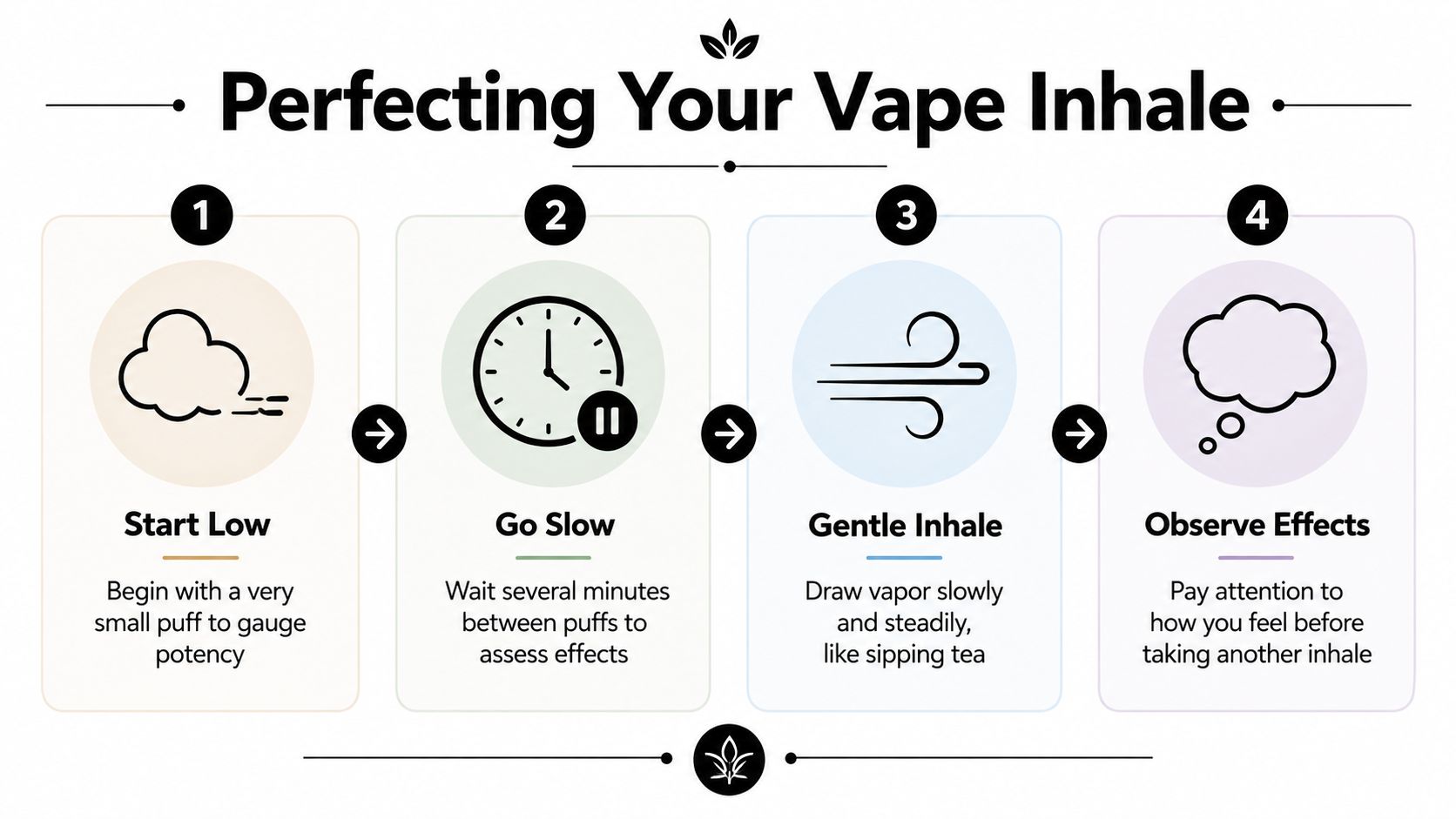
Use a lighter touch
Expert guides recommend starting with the lowest voltage setting and using short, slow pulls of 3 to 5 seconds, with a gentle inhale rather than a forceful one, according to The Social Cannabis guide. That's the sweet spot for most beginners because it gives the oil time to vaporize without blasting the throat. It also helps you taste the cart instead of just feeling heat.
For button pens, press and hold while you inhale. For auto-draw pens, just inhale steadily through the mouthpiece and let the device trigger itself. In both cases, short and calm works better than sharp and aggressive.
Don't over-hold the vapor
Holding vapor in longer than a couple of seconds doesn't increase absorption and can irritate the throat, according to the same guide. That's a useful correction for people who learned old smoking habits and try to transfer them over directly. Vape pens work differently, and the device doesn't need drama to be effective.
A good rule is to take one small puff, then pause and notice how you feel before deciding on another. If the oil is strong or the device is new to you, that pause matters even more. The goal is not to “win” the session, it's to find the lowest comfortable amount that gives you the effect you want.
Match the device to the draw
Button-activated pens give you more control over timing and heat, which is useful when you want a slower, more deliberate pull. Draw-activated pens are simpler and usually easier for true beginners, but they still reward a controlled inhale. In both cases, the cleanest result comes from a relaxed mouth-to-lung draw instead of trying to hit it like a cigar.
Useful habit: Take one short pull, wait, then decide. Most bad first experiences happen when someone stacks hits too fast.
Routine Cleaning and Maintenance for Best Flavor
A clean pen tastes better, connects better, and gives you fewer random annoyances. You don't need a deep maintenance ritual for a simple cart setup, just a few small habits that keep residue from building up at the contact points and mouthpiece. That's especially helpful if you switch between different carts or flavors.
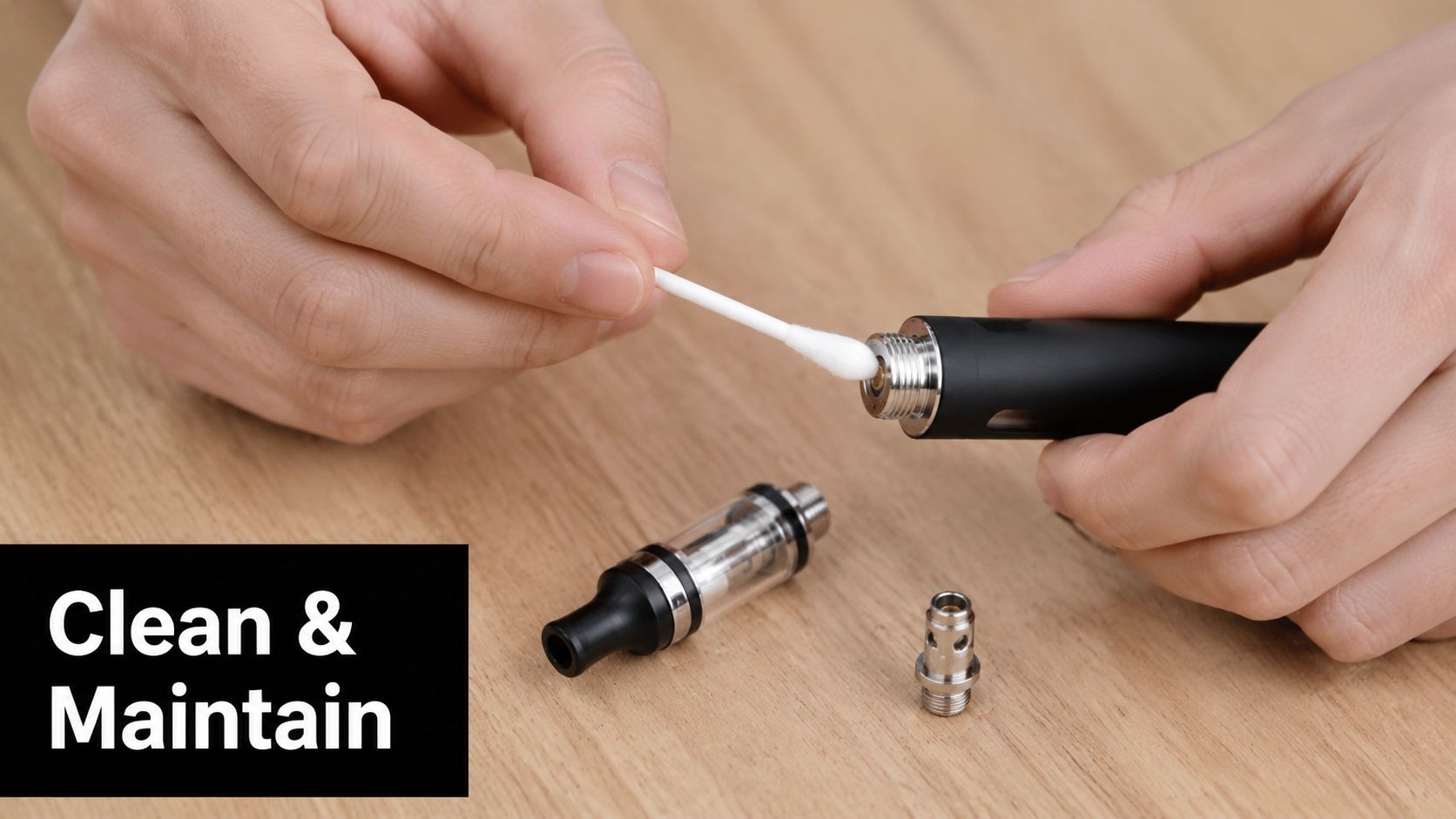
Quick cleanup that actually helps
A cotton swab and a little isopropyl alcohol are enough for basic cleaning. Wipe the threaded connection on the battery and the matching area on the cartridge, then let everything dry before reassembling. That little step helps preserve electrical contact and cuts down on the sticky buildup that can cause poor performance.
The mouthpiece deserves attention too. Oil mist and dust collect there surprisingly fast, and that can affect flavor even when the battery is fine. A quick wipe keeps the first draw of the day from tasting stale.
Clean when the flavor changes
If you're switching from one cartridge to another, especially across different terpene profiles, clean the connection points first. Otherwise, the leftover residue from the previous cart can muddy the taste of the new one. It's a tiny step that makes a noticeable difference in the flavor you paid for.
Store it the right way
Keep the pen upright when possible, and don't leave it in hot spots like a car seat or a sunny windowsill. Heat can thin the oil, and that can create leaks or a harsher first pull later. A pen that's stored gently usually behaves more predictably the next time you pick it up.
If you want a simple benchmark, think “wipe, dry, and store.” That routine is quick enough to do without making a project out of it, and it keeps a lot of minor problems from turning into a replacement purchase.
Troubleshooting Common Vape Pen Issues
Even a well-made pen can act up. A blinking light, weak draw, clogged cartridge, or burnt taste usually points to a small fix rather than a dead device. The useful move is to diagnose the symptom before you start guessing.
| Problem | Likely cause | What usually helps |
|---|---|---|
| No vapor | Low charge or loose connection | Charge fully, then re-seat the cart snugly |
| Weak draw | Clogged airway or tight connection | Warm the cart gently, then check airflow |
| Blinking light | Battery signal or connection issue | Reconnect, clean the threads, recharge |
| Burnt taste | Wick not saturated or voltage too high | Pause, lower heat, and let oil settle |
What to do first
U.S. adult e-cigarette use grew from 4.5% in 2019 to 6.5% in 2023, according to Fernway's vape guidance. That growth means more people are picking up device behavior without much previous experience, which is why simple troubleshooting matters so much. When the basics are clear, most problems are easier to solve than they look.
If the light blinks, start with the battery and the contact points. A loose cart, a dirty thread, or a battery that needs charging is far more common than a major failure. Clean the connection gently, reattach the cartridge, and try again before assuming the pen is done.
Handle clogs without panic
A clogged cart often needs a little warmth and patience. Holding it in your hands for a bit can loosen thicker oil, and a careful check of the mouthpiece can clear obvious blockages. Don't jab at it aggressively, because that can push debris deeper into the airway.
A burnt taste usually means the wick didn't have enough time to stay saturated, or the heat setting was too high for the oil. Give the cartridge a break, lower the voltage if your battery allows it, and take shorter pulls next time. If you keep hammering a dry wick, the flavor only gets worse.
Use the device like a device
Pens work best when they're treated like small electrical tools, not like a lighter you keep firing nonstop. Quick checks, gentle cleaning, and measured inhales solve more problems than anticipated. If a symptom keeps returning after basic cleanup, the cart may be near the end of its usable life.
A small pause often fixes more than a hard pull ever will.
Safe Use and Legal Tips for the DMV Area
A vape pen is easy to carry, but that convenience comes with a little responsibility. Keep it out of reach of children and pets, store cartridges upright when you can, and dispose of empty hardware through the proper recycling stream if your local options allow it. The less loose hardware sitting around, the fewer accidental spills and mix-ups you'll deal with later.
Washington, DC, Maryland, and Virginia don't follow the same cannabis rulebook. The legal frameworks across the DMV vary significantly, with Washington, DC operating an adult-use market under temporary legislation, Maryland transitioning to a licensed adult-use system on July 1, 2023, and Virginia currently prohibiting retail sales for adult use, according to the CDC's DMV cannabis overview. That means delivery, possession, and where you can use a vape pen aren't identical from one side of the metro area to the other.
Keep the legal line clear
For DC users, the local framework matters because delivery services operate inside a distinct city structure, while Maryland and Virginia have their own separate rules. If you're moving a cart across jurisdictions, don't assume one area's norms follow you everywhere. The safest habit is to check the rules tied to the place where you're carrying and using the product.
If you want a plain-language breakdown of compliance issues, this legal guide is the kind of reference people use to keep their order and possession habits aligned with local rules. That matters most for new users who are still learning how delivery fits into the DMV regulatory environment.
Match the product to the setting
A discreet vape pen makes sense for many adults because it's compact and easy to store, but discretion doesn't replace common sense. Don't use it in places where you'd create a nuisance or confusion, and don't leave it loose in a bag where the button can get pressed accidentally. If your device has a power-off option, use it when you're done.
Legal awareness and safe handling fit together here. A well-kept pen is easier to enjoy, easier to transport, and less likely to cause surprises.
If you want help choosing a cart, battery, or vape option that fits how you use cannabis in the DMV, visit Green Express DC and browse the menu with the basics in mind. You'll find delivery-friendly options that make setup easier, and you can pair the right product with the kind of calm, beginner-friendly experience this guide is built around.