
You’re in the DMV, it’s late, traffic is awful, and the last thing you want is to gamble on some sketchy menu with vague product names and no clear rules. You just want quality weed delivered safely, discreetly, and legally.
That sounds simple until you cross a border in this region. Washington, DC, Maryland, and Virginia do not play by the same rules. A service that looks normal in one place can be unavailable, restricted, or operating under a completely different framework a few miles away.
That’s why finding the best weed delivery in the DMV isn’t about flashy menus or promises of speed. It’s about knowing what’s legal where you are, how to spot a serious operator, and what a smooth delivery process should look like.
Your Guide to Cannabis Delivery in the DMV
Cannabis delivery is no longer some fringe convenience. It’s become part of how people shop. The legal cannabis market reached approximately $35 billion by 2025, and the delivery segment is projected to reach $7.5 billion by 2033, according to this cannabis delivery market overview. That growth tells you something important. People want convenience, but they also want a process that feels normal, reliable, and low-stress.
In the DMV, convenience runs straight into legal complexity. DC has its own culture and compliance model. Maryland has a more straightforward licensed adult-use system. Virginia is the one people misread most often, especially if they assume personal use and retail delivery mean the same thing.
Local reality: In the DMV, the best weed delivery option depends first on your address, not your budget or your strain preference.
A good delivery service should make the process feel easy. But you still need to know what you’re looking at before you order. If you don’t, you can end up wasting time on services that won’t deliver to you, don’t verify properly, or hide the one detail that matters most, whether the operation is following the rules in your area.
This guide is built for people in DC, Maryland, and Virginia who want direct answers. No fluff. No fake hype. Just how to order smart, how to avoid bad operators, and how to get cannabis delivered with confidence.
Navigating the Legal Maze of DC, MD, and VA
The DMV confuses people because the laws sound similar at a distance. They aren’t. If you want the best weed delivery experience, start with the basic question that too many people skip. What is legally allowed where I’m standing right now?
Washington DC
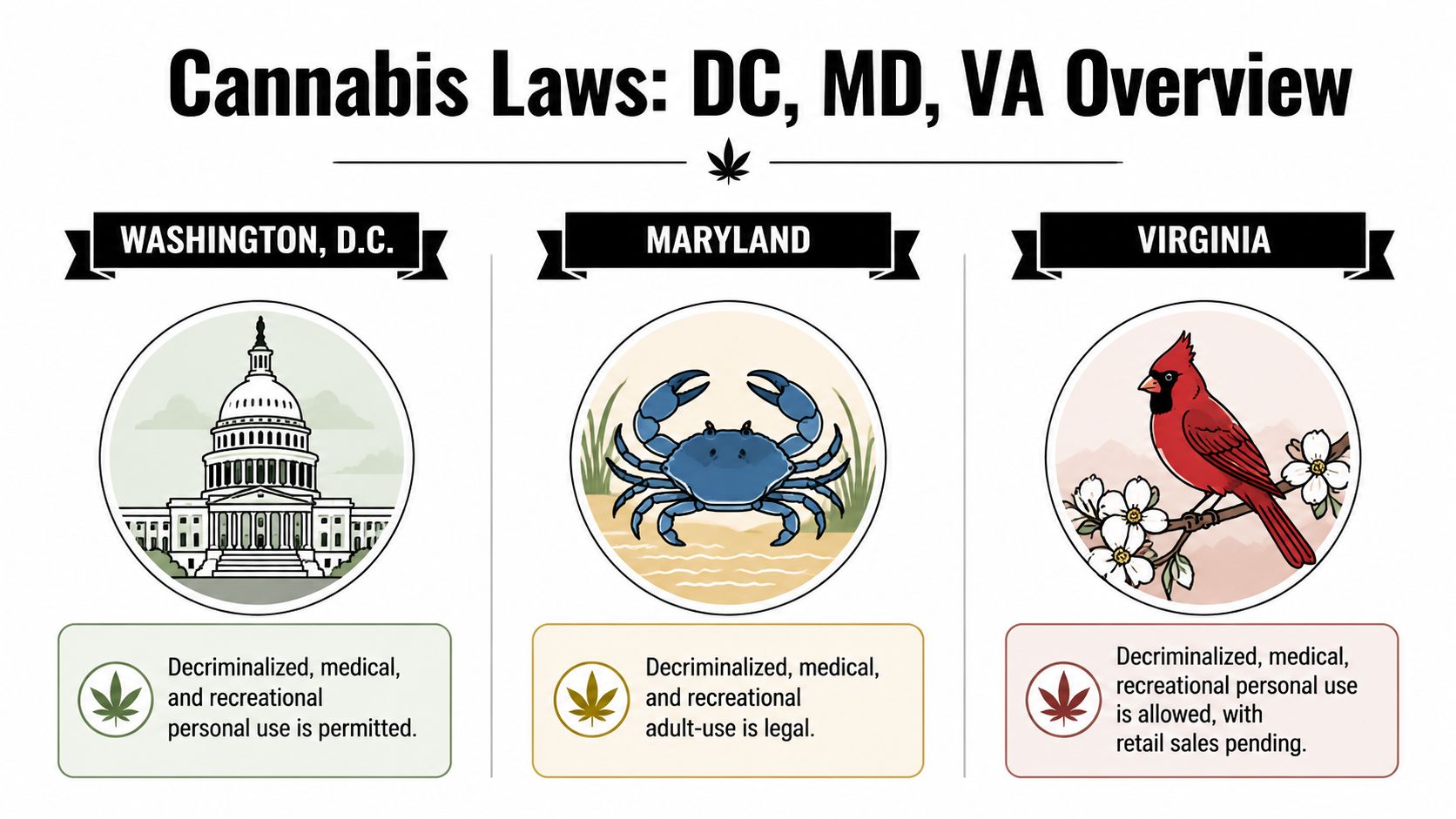
DC has the most unique setup in the region. Adults can legally possess and use cannabis for personal use, but the retail framework has long been shaped by the I-71 gifting model. In plain English, many delivery services in DC operate by selling a non-cannabis item and including cannabis as a gift.
That means consumers need to pay attention to how a business describes its process. If a DC service looks careless about compliance language, that’s a red flag. If you want a clearer sense of how these businesses present themselves, review examples of I-71 compliant shops in DC.
What matters for you as a customer is simple. Use services that clearly explain their ordering process, verify age, and don’t act like the law is optional.
Maryland
Maryland is more straightforward for adult-use consumers. The state has a licensed recreational market, and that changes the customer experience. Instead of navigating a gifting structure, you’re typically dealing with a regulated dispensary environment.
That usually means more standardized ordering, more formal inventory controls, and a process that feels closer to mainstream e-commerce. For many buyers, especially first-timers, Maryland’s structure feels easier to understand because the legal path is more direct.
Virginia
Virginia is where people get tripped up. Personal use allowances do not automatically create a broad retail delivery market. That distinction matters.
A lot of consumers assume, “If I can possess it, someone can deliver it to me.” That’s not how the state works. In Virginia, you need to be much more cautious and much more specific about what kind of service you’re dealing with, whether it’s medical access, limited lawful channels, or something that simply doesn’t have the legal footing customers think it does.
Don’t copy your friend’s ordering habits from DC and assume they apply in Arlington, Alexandria, or anywhere else in Virginia. They might not.
Cannabis Delivery Laws at a Glance DC vs. Maryland vs. Virginia 2026
| Legal Aspect | Washington, DC | Maryland | Virginia |
|---|---|---|---|
| Adult personal use | Permitted | Legal | Allowed for personal use |
| Delivery framework | Commonly tied to I-71 gifting model | Licensed adult-use market | More restrictive environment |
| Retail clarity for consumers | Moderate. You need to understand how the service structures the transaction | Higher. The licensed model is easier for most consumers to follow | Lower. Consumers need to verify carefully |
| Medical card relevance | Depends on the service model | May depend on operator and product access | Often more important than many consumers expect |
| Consumer risk of confusion | High for newcomers | Lower | High |
The practical rule for residents and visitors
If you live in DC, learn the gifting model before you order. If you’re in Maryland, stick with clearly licensed operators. If you’re in Virginia, assume less is allowed until you verify otherwise.
That approach isn’t paranoid. It’s smart. The best weed delivery service is the one that can deliver legally to your exact location without putting you in a gray-area mess.
How to Vet Your Weed Delivery Service
Consumers often vet delivery services the wrong way. They start with price, then speed, then whatever strain names look familiar. That’s backwards. Start with legitimacy and product transparency. Everything else comes after that.
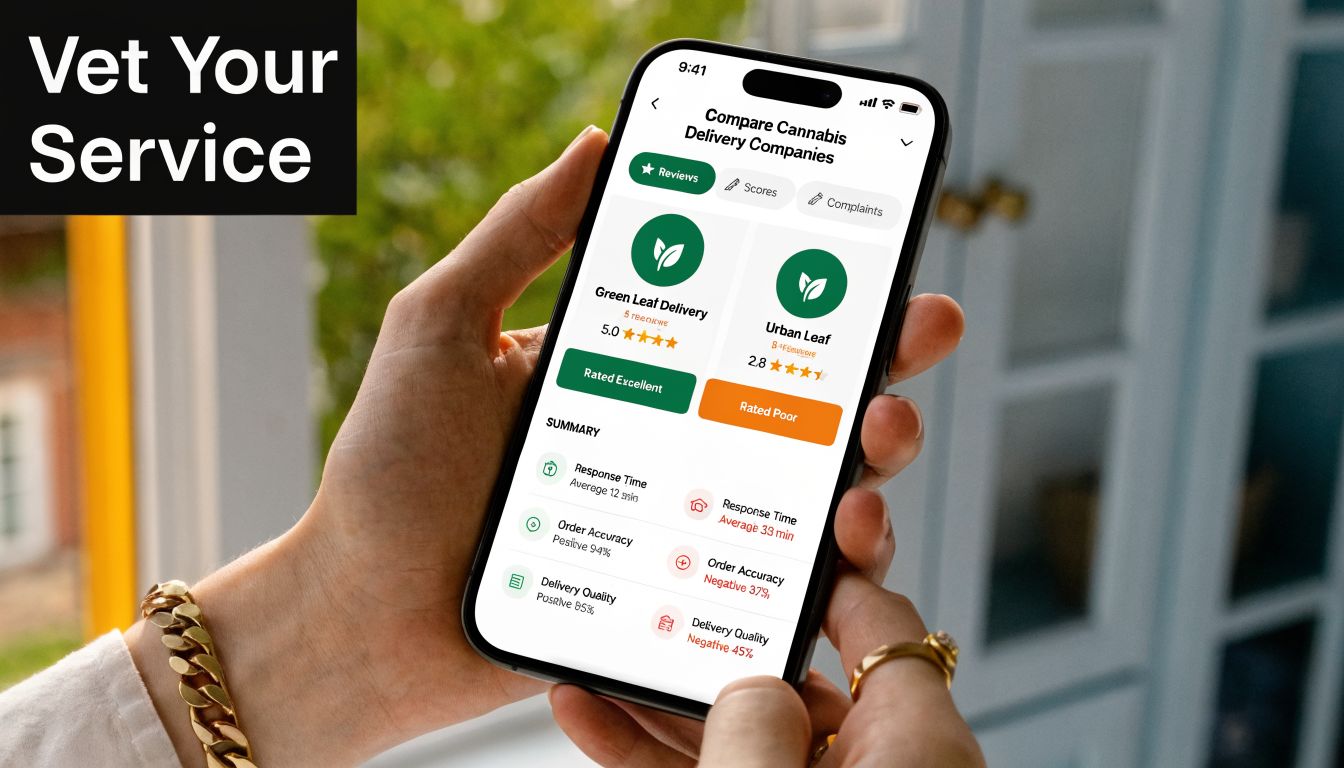
Ask whether the products are actually transparent
A lot of services talk about fast delivery, broad menus, and convenience. Very few put lab testing results or Certificates of Analysis front and center. That creates a real trust gap, as noted in this discussion of cannabis delivery transparency and COAs.
If a service claims products are lab-tested, you should expect more than a slogan. You should be able to find meaningful product information, not just a catchy strain name and a price. Think of lab testing like a nutrition label. It tells you what you’re buying, how strong it is, and whether someone verified what’s inside.
Ask:
- Can I see testing information? If not on the menu, is it available on request?
- Do product descriptions include useful detail? Flower, vapes, edibles, and concentrates shouldn’t all read like generic placeholders.
- Is “organic” or “clean” explained? Real operators explain. Weak ones just advertise.
Check whether the menu looks maintained
A sloppy menu usually means a sloppy operation. If products are constantly listed but unavailable, descriptions are inconsistent, or categories are half-empty, that tells you the back end isn’t tight.
A serious service should show:
- Clear categories such as flower, prerolls, concentrates, edibles, tinctures, and vapes
- Current availability instead of dead listings
- Useful product naming that separates potency products from beginner-friendly options
This is also where services like Green Express DC cannabis delivery fit into the conversation. The key point isn’t branding. It’s whether the menu, ordering flow, and verification process look like they’re being actively managed by adults who understand compliance and customer experience.
Look for signs of real operations discipline
Good delivery isn’t just a driver with a car. Established operators use dispatch systems, route planning, and GPS-based logistics to keep deliveries organized. According to this overview of cannabis delivery fleet tracking and route optimization, route optimization and real-time GPS tracking are central to improving efficiency, reducing wasted miles, and supporting compliance reporting. The same source notes that some operations use integrated platforms with dispatching, mobile delivery apps, and driver tracking, and that better route planning can let drivers process 15 to 25% more deliveries per shift.
You won’t see that machinery directly as a customer, but you’ll feel it. Orders arrive in a tighter window. Communication is clearer. Drivers aren’t improvising.
Practical rule: If a service can’t tell you roughly when your order is arriving, they’re not running a serious delivery system.
Here’s a quick gut check for operational quality:
- Professional communication: Texts or calls should be clear, short, and specific.
- Defined service zones: Reliable operators know exactly where they deliver.
- Stable order handling: You shouldn’t have to repeat your address three times.
A useful explainer on the shopping side of this process is below.
Verify compliance systems, not just vibes
Cannabis delivery businesses have to manage exact weights, exact stock counts, and documented chain of custody. According to this cannabis delivery technology overview, NTEP-certified scales are required for cannabis point-of-sale use, and real-time inventory systems support accurate stock display, delivery manifests, and compliance records. That matters because bad measurement and bad inventory controls create legal risk and customer problems.
You don’t need to ask a driver what scale the company uses. But you should notice the downstream signals:
- Are item quantities clear?
- Does the menu prevent obvious overselling?
- Does your order confirmation look organized rather than improvised?
Vet the customer-facing basics
At this juncture, common sense takes over.
- ID verification: Legit services verify age and identity. If they don’t, leave.
- Packaging: It should be discreet and clean, not attention-seeking.
- Payment clarity: You should know before checkout whether the service takes cash, online payment, or both.
- Minimums and fees: Clear minimums are fine. Hidden fees aren’t.
- Deals: Real value is easy to understand. Gimmicks bury the actual cost.
The best weed delivery service doesn’t just get weed to your door. It proves, step by step, that the people running it care about product safety, legal compliance, and basic execution.
Placing Your Order A Step-by-Step Walkthrough
Ordering cannabis for delivery should feel closer to ordering from a polished food app than doing some back-channel favor. If it feels chaotic at checkout, stop there.
Start with the menu, not the homepage
The homepage sells the vibe. The menu shows whether the business is real.
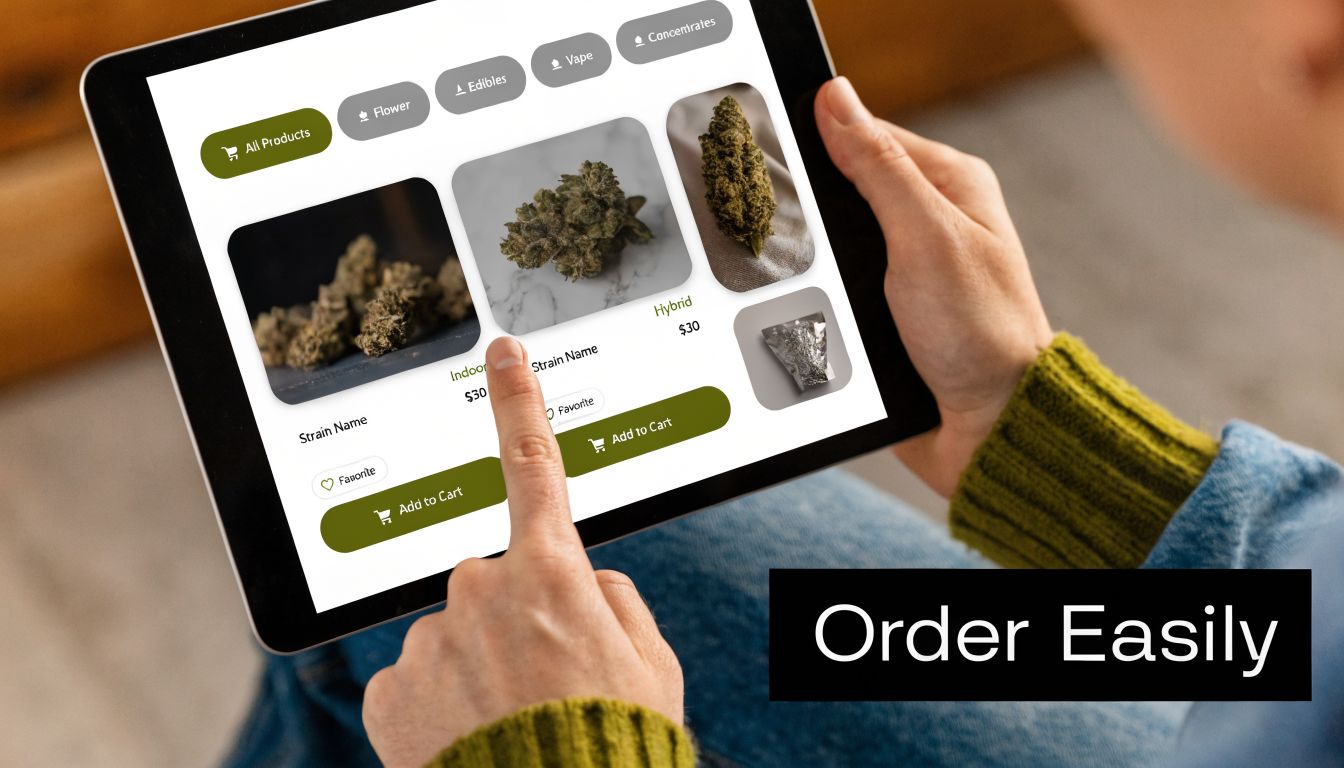
Scan product categories first. Flower should be separated clearly from concentrates, vapes, edibles, and tinctures. Read descriptions carefully, especially if you’re new. Some listings are built for experienced users and won’t hold your hand.
A simple approach works best:
- Pick the category first. Flower for a familiar inhale, edibles for a slower onset, concentrates for high potency.
- Read the form factor. A disposable vape isn’t the same as a cartridge. A preroll isn’t the same as loose flower.
- Check quantity and naming. Make sure the amount listed matches what you think you’re buying.
Build the cart and confirm the delivery area
Once you’ve picked your products, add them to your cart and verify that your address falls inside the service area. DMV shoppers often run into trouble. A service may cover DC broadly but not deliver where you’re staying, or it may have different rules for residential buildings, hotels, or temporary lodging.
Before you submit the order, confirm:
- Your exact address
- Any gate code or apartment instructions
- Your phone number for driver updates
If a service lets you place an order without checking whether they actually serve your location, expect friction later.
Finish checkout and prepare for verification
Through these checks, legitimate operators separate themselves from sloppy ones. You may need to upload an ID, confirm your age, or prepare to show a valid government ID at drop-off. That isn’t a hassle. It’s a sign the service is taking the handoff seriously.
At checkout, look for:
- A clear order summary
- A delivery window or timing estimate
- Payment instructions that make sense before the driver arrives
The smoother this part is, the less stressful delivery day will be. Good services make the process feel normal. Bad ones make you chase basic information.
What to Expect on Delivery Day
Delivery day should be boring in the best possible way. You place the order, get a confirmation, wait for a short update, and complete a clean handoff.
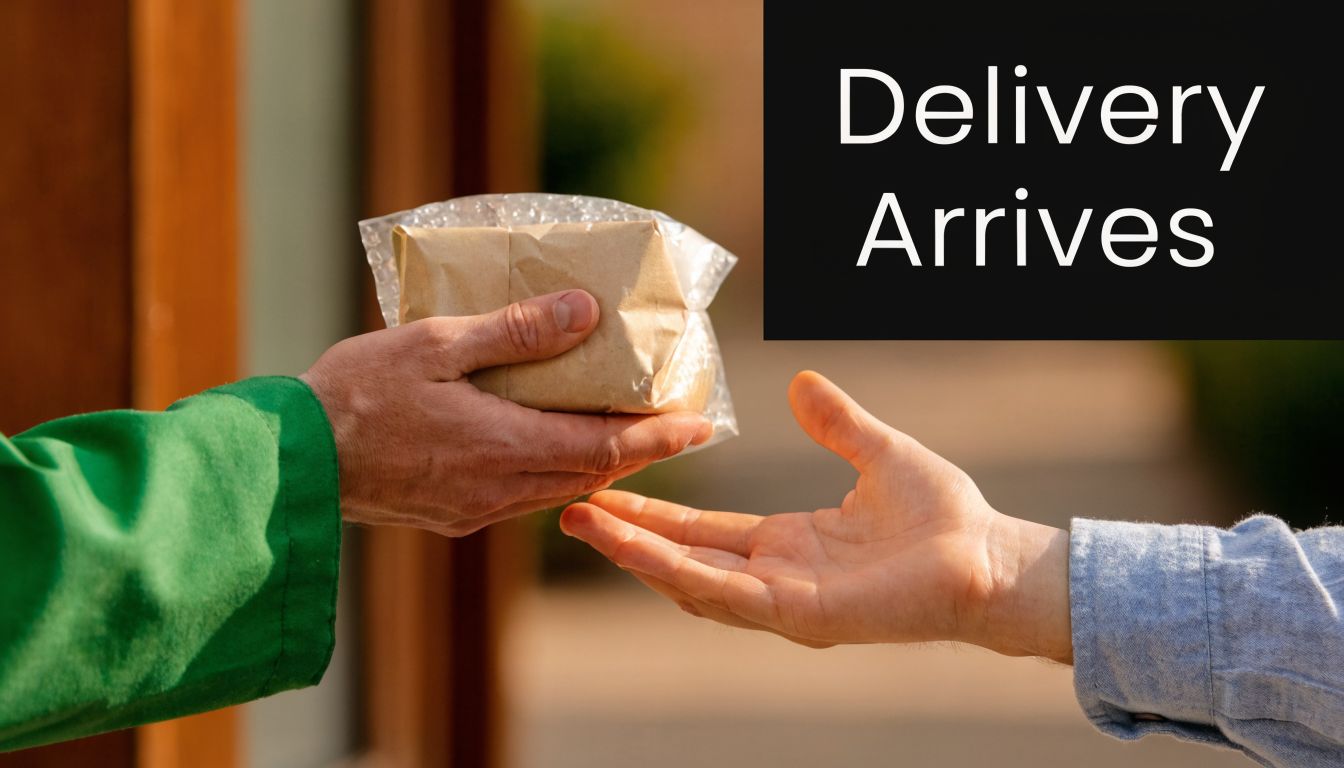
Most professional services send a text or call when the driver is on the way. The message should give you a realistic arrival window, not a vague “soon.” If the communication feels scattered or the driver keeps changing plans, that’s not great service. That’s weak dispatch.
Have your physical ID ready before the driver arrives. Don’t make them wait while you dig through a bag or search your camera roll for a photo of your license. If the service takes cash on delivery, have the payment ready too.
What a clean handoff looks like
A good delivery handoff is quick, discreet, and professional.
- The driver confirms your identity
- You complete payment if needed
- You receive discreet packaging
- You do a fast order check before the driver leaves
Meet in a safe, sensible location if your building setup makes door delivery awkward. A well-lit lobby or front entrance is usually better than creating confusion in a hallway maze.
Check the basics immediately. Right items, right quantities, no obvious issue with packaging. Don’t wait until the driver is gone to realize something is off.
If a service handles delivery well, the experience feels routine. That’s exactly what you want.
A Local Spotlight on Green Express DC
In DC, one service example that fits many of the standards above is Green Express DC delivery service. It operates as a Washington, DC cannabis delivery option for adults 21+ and focuses on same-day delivery, ID verification at drop-off, discreet packaging, and a menu that includes flower, concentrates, vapes, edibles, and tinctures.
That matters because a lot of customers aren’t just looking for speed. They want signs of basic discipline. Clear ordering. Clear minimums. Clear handoff expectations. A service with a curated menu and transparent policies is easier to trust than one that throws a hundred vague products on a page and hopes you won’t ask questions.
Why this example stands out in DC
One notable differentiator is the emphasis on lab-tested and 100% organic products. That lines up with the trust gap discussed earlier around testing visibility and product transparency. In a market where many services lead with convenience alone, that kind of product positioning gives customers a more useful starting point.
There’s also a practical customer-service angle. The service offers a $50 minimum, cash on delivery, same-day availability, and rotating specials, including $150 for 10g of shatter or crumble bundles. Those details matter because they answer the questions people usually have before ordering: What’s the minimum? How do I pay? Is there a reason to order more than one item?
What buyers should take from this
Don’t treat any single service as automatically perfect. Use the same checklist on everyone. Look at the menu quality, the order flow, the delivery expectations, and whether the business explains itself clearly.
If you’re in DC, this is the kind of profile worth looking for:
- A defined menu instead of random listings
- Product transparency instead of empty hype
- Discreet delivery practices that don’t create unnecessary attention
- A simple payment and verification process that feels organized
That’s the difference between a delivery service that’s merely available and one that’s worth using.
Your Final Checklist for a Safe Delivery
If you want the best weed delivery in the DMV, keep the checklist simple.
First, match the service to your location. DC, Maryland, and Virginia don’t use one shared rulebook. A legal order starts with the right jurisdiction.
Second, vet the operator before you shop the deal. Look for testing transparency, a maintained menu, clear ID verification, discreet packaging, and communication that sounds professional.
Third, be ready when the driver arrives. Have your physical ID, payment, and delivery instructions sorted out in advance.
Use this quick filter every time:
- Legal in your location
- Clear menu and checkout
- Visible product standards
- Professional handoff expectations
If a service misses on any of those, move on. There’s no reason to force a bad order when safe, organized options exist.
Frequently Asked Questions
Do I need a medical card for weed delivery in DC, Maryland, or Virginia
It depends on where you are and which type of service you’re using. In DC, many consumers encounter the I-71 gifting model rather than a standard retail setup. In Maryland, adult-use access is more straightforward through licensed channels. In Virginia, assume the rules are tighter until you verify the exact delivery pathway.
Should you tip a weed delivery driver
Yes, if the service allows it and the experience was smooth. Good drivers deal with timing, communication, traffic, and careful handoffs. If they were professional, on time, and clear, tipping is reasonable.
What if you miss the delivery window
Most operators will try to contact you. If you ignore messages or aren’t ready with ID and payment, expect delays or a canceled order. Keep your phone nearby once your order is confirmed.
Can weed be delivered to a hotel or Airbnb
Sometimes, but don’t assume it’s automatic. Some buildings, hotels, and short-term rentals have access rules that complicate handoffs. Call ahead if needed, and make sure the service is willing to deliver to that type of location.
Can a delivery driver leave the package at the door
A legitimate cannabis delivery should involve an in-person handoff with ID verification. If a service is offering unattended drop-off, that should raise concerns immediately.
If you’re in DC and want a straightforward option for fast, discreet cannabis delivery, Green Express DC offers online ordering, same-day service, lab-tested products, and clear drop-off procedures for adults 21+ in the District.