
You're standing in a checkout line or scrolling late at night, and the name Nerd Rope Bites pops up. It sounds like candy you already know, but it could also be a hemp listing, a dispensary edible, or an illicit product with a very different dose profile. If you live in the DC region and you're trying to buy something that's safe, legal, and predictable, that name alone can send you in the wrong direction.
That confusion isn't random. The same rope-style name shows up in mainstream candy, cannabis-adjacent products, and enforcement actions tied to high-dose intoxicating edibles, including packages labeled 400 mg THC per rope, 600 mg THC, and products described as having a 60-minute activation time. Search behavior makes it worse, because buyers often land on mixed listings when they really want a legal adult-use option, not a novelty candy look-alike. If you're trying to sort out what's real before you order in DC, Maryland, or Virginia, the safest place to start is with the product itself.
Why Nerd Rope Bites Confuse So Many Adults
A lot of adults don't run into Nerd Rope Bites through cannabis culture first. They hear the name from a friend, see it in a search result, or remember the bright rope candy from a store shelf, then assume it's all the same thing. That assumption is where the trouble starts, because the exact same visual language is used for a regular candy, a hemp-derived edible, and an illicit THC product.
The confusion gets sharper in the DC region because buyers are often comparing several markets at once. A person in DC might want a discreet edible, a person in Maryland might be comparing dispensary options, and a Virginia resident might still be trying to understand what's legal to possess versus what can be sold through licensed retail. Those are different questions, but the rope-bite name blurs them together.
Practical rule: if a product looks like grocery candy but is being sold with cannabinoid claims, treat it as a separate category until you verify the label, source, and potency.
That matters because buyer-safety questions are practical, not academic. What is it? Is it a mainstream candy, a hemp product, or a cannabis edible? How strong is it per piece? And if you're ordering around DC, what legal delivery path fits your jurisdiction? Those are the questions that protect you, especially when packaging is trying to look familiar on purpose.
For readers who want the candy-side baseline before comparing anything infused, the standard rope candy form is laid out clearly in the mainstream product listing at this rope candy reference. Once you know what the ordinary candy looks like, the look-alikes become easier to spot.
What Mainstream Nerds Rope Candy Is
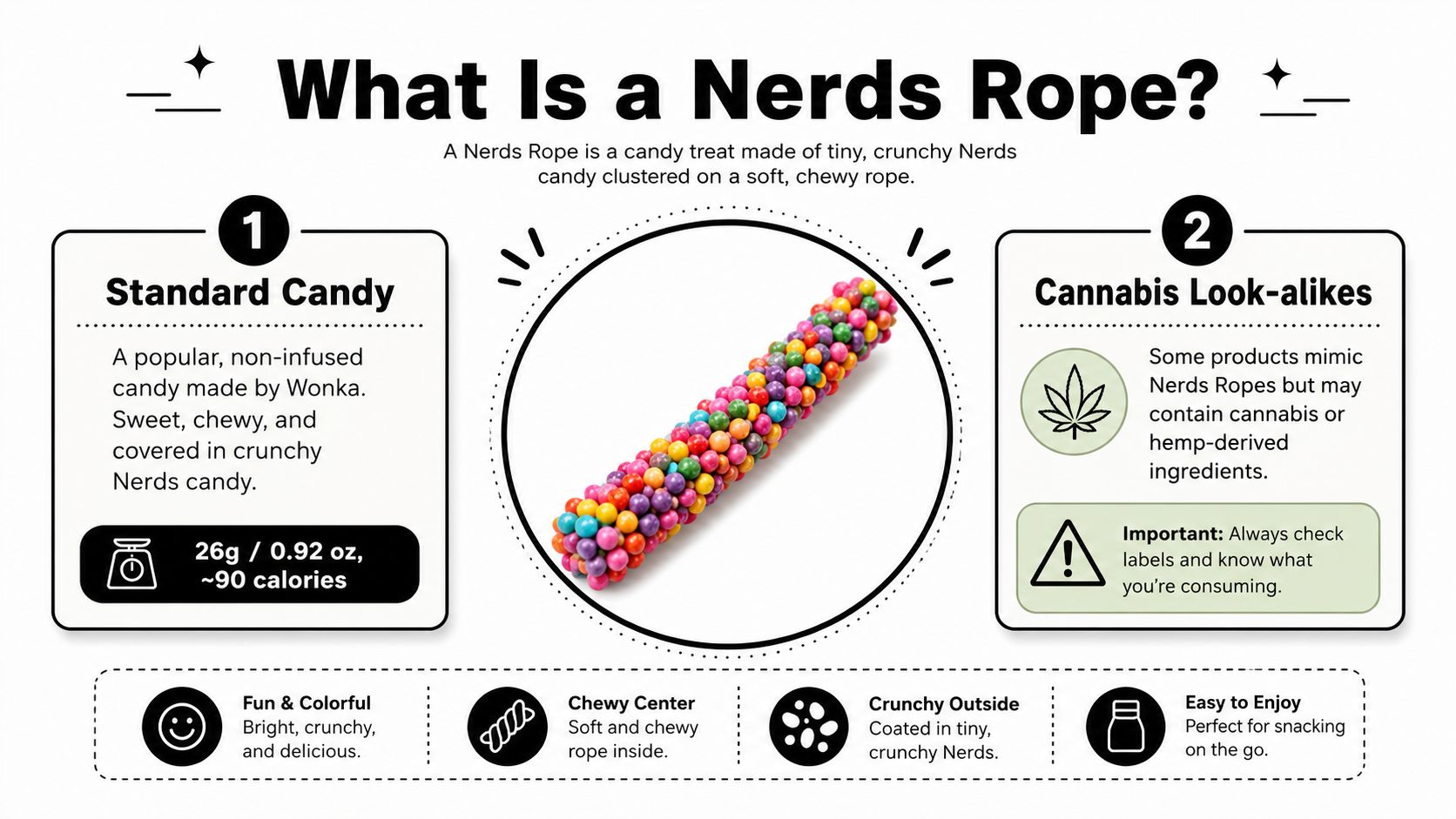
The ordinary version is just candy, and that is the baseline buyers should hold onto. A standard Nerds Rope is a 26 g / 0.92 oz single-serving treat with about 90 calories, 22 g carbohydrates, and 20 g total sugars per rope (Target product listing). It belongs in the familiar candy aisle, not in the cannabis category.
The ingredient profile reads like a confection, not an infused edible. The listing centers on dextrose, sugar, and corn syrup, with gelatin and acids such as malic acid and citric acid giving it the chewy, tart-sweet texture (Target product listing). If you have ever bitten into the regular version, the experience is predictable, sticky, sugary, and built for snacking rather than dosing.
What that means in practice
A mainstream rope candy behaves like a shelf-stable confection. It comes as one piece, with one serving and one ingredient story, and it does not ask you to think about cannabinoid content, activation time, or batch consistency. That is the line buyers need to keep in mind before they click on anything with a similar name.
The candy shape is familiar, but the function changes completely once cannabinoids enter the picture.
That is why the mainstream rope works as a useful anchor. If a product is sold in a store context with ordinary candy nutrition and ingredient language, you are probably looking at the candy aisle. If the label starts talking about milligrams of THC, delta-8, or infused servings, you are no longer looking at the same product family.
Cannabis and Hemp Versions vs the Candy
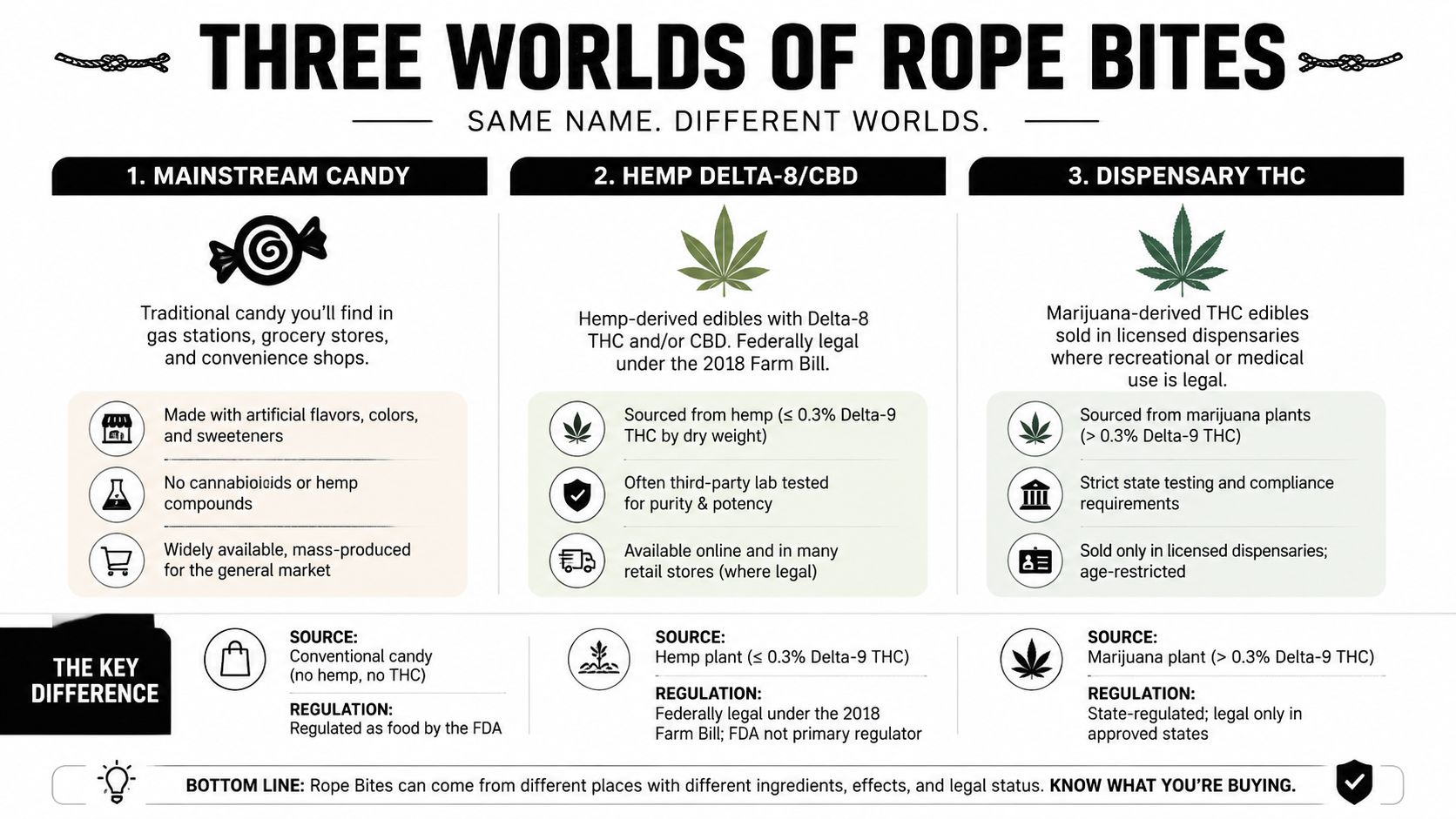
Three different product worlds share the rope-bites name, and they do not work the same way. One is the mainstream candy just described. Another is the hemp or delta-8/CBD version that uses rope-style branding and packaging. The third is the dispensary or illicit THC version, which may look similar but carries a completely different intoxication profile.
Side-by-side differences that matter
| Product world | What it is | Why buyers confuse it |
|---|---|---|
| Mainstream candy | Regular confectionery sold as candy | Familiar look, familiar taste |
| Hemp delta-8/CBD rope bites | Infused product sold in hemp or CBD channels | Same name, but cannabinoid claims change everything |
| Dispensary or illicit THC rope bites | THC edible in rope or bite form | Looks like candy, but the dose can be far stronger |
The enforcement record shows why caution is justified. In 2020 to 2023, Nerds Rope Bites appeared repeatedly in UK and U.S. enforcement actions as an illicit cannabis confectionery product, not a standard candy. One UK report described seizures labeled “Medicated Nerds Ropes, 400 mg THC per rope” and “Medicated Nerdz Rope Bites, 600 mg THC”, while a 2023 FDA warning letter identified “Medicated Dope Rope Bites” and similar delta-8 products as adulterated foods because they contained an unsafe food additive (UK report and enforcement summary).
That history matters because the same rope shape can signal wildly different realities. A buyer who assumes every rope-shaped edible is just candy can miss a very high-dose intoxicating product. A buyer who assumes every hemp listing is equivalent to a licensed dispensary edible can also end up with the wrong cannabinoid type or a different legal status than expected.
Dosing and Onset for Bite-Sized Edibles
Bite-sized formats create a special kind of risk because they feel smaller than they are. A single piece can look harmless, especially if it resembles candy, but the dose still depends on the cannabinoid load, how evenly the batch was mixed, and whether the label is honest. The candy shape doesn't control the effect, the milligrams do.
Independent listings for rope-bite products commonly describe 120 mg THC per piece or about 600 mg THC per package (rope-bite product listing). Recipe guides can point even wider in the other direction, because one source describes 320 mg THC bites, while another references 40 mg per bite across multiple cannabinoids (recipe and guide reference). That spread tells you the core issue is not the snack size, it's the formulation.
A simple adult framework
- Check the total package milligrams. If the package is strong, the size of each bite doesn't make it gentle.
- Divide by the actual number of pieces. Don't guess based on how it looks in the bag.
- Wait through the activation window before redosing. A 60-minute activation time has been reported on rope-style illicit packaging, and that kind of delay is exactly why people get impatient and take too much.
- Avoid untested batches. If one bite can be much stronger than another, your body is doing guesswork instead of dosing.
The practical difference is easy to miss. A rope bite can invite casual snacking because it looks like something you'd eat without thinking, but that's precisely why people overdo it. If the batch isn't uniformly infused or independently lab-tested, one bite can be light and the next can hit much harder.
For readers who want a more detailed look at timing, the wider edible-onset guidance is captured in this when-edibles-kick-in guide. The core message stays the same, wait before deciding the first dose didn't work.
DC, Maryland, and Virginia Rules at a Glance
A rope-bite label can look familiar enough to lower a buyer's guard, but the rules behind it change quickly once the product crosses a state line. In the DC region, the first question is jurisdiction, then product type, then delivery method. That order matters because what an adult may possess, what a licensed seller may offer, and what a courier may deliver are not always the same thing.
In Washington, DC, adults 21+ may legally possess cannabis and use regulated delivery services that verify ID at the door. In Maryland, adults 21+ may possess up to 1.5 ounces of flower and 12 g of concentrate and buy from licensed dispensaries. In Virginia, adults 21+ may possess up to 1 ounce, cultivate up to four plants per household, and share limited amounts without payment, but licensed adult-use retail sales have not opened statewide. For a plain-language overview of how to buy through DC delivery channels, see this guide to buying weed in DC.
Virginia is where many nearby buyers get tripped up. A person can have possession rights and home-grow rights without having access to a conventional adult-use retail market like Maryland's licensed system. That makes DC delivery especially relevant for Virginia-adjacent adults who want a compliant purchase path instead of relying on product listings that may look familiar but tell them very little about legality.
What buyers should keep straight
- DC buyers: use verified adult-use delivery and expect ID checks at the door.
- Maryland buyers: buy from licensed dispensaries and stay within Maryland possession limits.
- Virginia buyers: do not treat possession rights as the same thing as open adult-use retail access.
The clearest rule is simple. Buy through the jurisdiction that can verify age, source, and product type at the point of sale or delivery. Rope-style edibles create extra confusion because the candy look can hide the core issue, which is whether the product is properly regulated and whether the potency information is trustworthy.
Practical rule: legal possession does not guarantee a legal retail purchase path, and a familiar candy shape does not tell you anything reliable about source or potency.
Compliant Alternatives Available Through Green Express DC
The safer path is usually the predictable one. If you want the flavor and convenience of an edible without the labeling chaos that comes with rope-style look-alikes, a compliant adult-use menu is easier to verify and much easier to dose. That's the whole appeal of a regulated delivery option in DC.
A well-built menu gives you real choices without forcing you into novelty packaging. Buyers can pick flower in indica, sativa, hybrid, and preroll formats, or move into concentrates like shatter, live resin, wax, and rosin. If they prefer vapor, disposables and carts give them another route, while edibles with clear per-piece dosing and THC tinctures give more measurable control.
What makes a compliant substitute feel safer
- Clear product labeling helps you compare servings instead of guessing.
- Lab-tested selection gives you more confidence in consistency.
- Discreet packaging and ID verification reduce the risk of accidental confusion at the door.
- Same-day delivery is useful when you want convenience without drifting into an unregulated market.
Green Express DC also highlights rotating specials, including $150 for 10 g of shatter or crumble, along with a $50 minimum, cash on delivery, and 24/7 availability. Those details matter because they make the purchase process straightforward for adults who already know what they want and don't want to gamble on a rope-shaped product with unclear sourcing.
The bigger point is that a tasteful edible experience comes from consistency, not novelty. A chocolate square, gummy, tincture, or clearly labeled bite is much easier to manage than a candy mimic that leaves you wondering whether it belongs in the grocery aisle or the enforcement bulletin.
A Safer Buying Checklist for Adult Consumers
If you're buying in the DC region, keep the check simple. Make sure you're 21+, choose products with clear per-piece milligram labeling, and stick to a licensed source that verifies ID at delivery or pickup. If the item looks like regular candy but offers no batch testing or cannabinoid detail, walk away.
The next part is just as important. Never redose inside the first activation window, because rope-style and bite-sized edibles are exactly where people underestimate potency. The smaller the piece looks, the easier it is to snack past your own limit.
A good purchase should feel boring in the best way. You should know what the product is, how strong it is, and where it came from before you take the first bite.
If you want a cleaner way to buy in DC, Green Express DC offers same-day delivery, discreet packaging, ID-verified drop-off, and a menu built around lab-tested products adults can compare. For buyers who are tired of confusing rope-bite labels and want predictable edibles instead, it's a practical place to start. Visit their site, check the menu, and choose the product category that matches your comfort level, not the one that looks most like candy.