
You’re in the DMV, it’s been a long day, traffic has already taken enough from you, and the last thing you want is to sit in another line just to buy cannabis. Maybe you live in DC, work in Maryland, and have friends in Virginia. Maybe you’re visiting for a conference and trying to figure out what’s legal without stumbling into a gray-market mistake.
That’s where weed delivery gets useful, and also where people get confused fast.
The tricky part isn’t understanding why delivery appeals to people. That part is simple. It’s private, convenient, and easier to fit into real life. The hard part is that DC, Maryland, and Virginia do not follow the same rules. A service that sounds normal in one part of the DMV may be restricted, medical-only, or not legally structured the same way in another.
This guide walks through weed delivery the way a careful local would explain it to a friend. We’ll keep it practical. We’ll focus on safety, legality, and how to choose wisely.
The Modern Convenience of Cannabis at Your Doorstep
A lot of people come to weed delivery for ordinary reasons. They’ve got work, kids, errands, roommates, neighbors, or just a strong preference not to turn a simple purchase into a public outing. Delivery solves a basic problem. It lets adults shop from home, read a menu at their own pace, and receive products without adding another stop to the day.
That convenience didn’t become popular by accident. During the pandemic, cannabis delivery moved from a niche option to a mainstream one. Delivery and curbside pickup surged to 40% of all US weed sales in spring 2020, according to this cannabis delivery market whitepaper. That change was tied to lockdowns, safety concerns, and the appeal of contactless service.
Why delivery feels normal now
For many adults, delivery now fits cannabis into the same mental category as food delivery, grocery drop-off, or pharmacy pickup. You browse, compare, order, verify your identity, and wait at home. That rhythm feels familiar.
A few things make weed delivery especially appealing:
- Privacy at home: You can browse flower, edibles, vapes, or concentrates without standing at a counter while other people listen.
- More time to choose: Delivery menus let you slow down and read product details instead of making a rushed decision.
- Less friction: You don’t have to plan parking, store hours, or a trip across town.
- Better for newcomers: People who feel unsure in a dispensary often find online browsing less intimidating.
Practical rule: Convenience matters, but with cannabis, convenience only counts if the service is operating legally where you are.
Why the DMV needs a closer look
In the DMV, weed delivery isn’t one single thing. A person in Washington, DC may have access to options that don’t work the same way in Arlington or Bethesda. A Maryland resident can’t assume DC rules apply at home. A Virginia consumer can’t assume adult-use delivery exists just because adult possession gets discussed so often.
That mismatch causes most of the confusion. People hear “weed delivery” and picture one standard model. The actual situation differs. The legal path depends on the jurisdiction, whether the order is medical or adult-use, and how the business is licensed.
If you remember only one thing from this section, remember this: weed delivery is now a common part of the cannabis market, but in the DMV, the legality depends on your side of the border. Border lines matter here more than is commonly understood.
Navigating Weed Delivery Laws in DC Maryland and Virginia
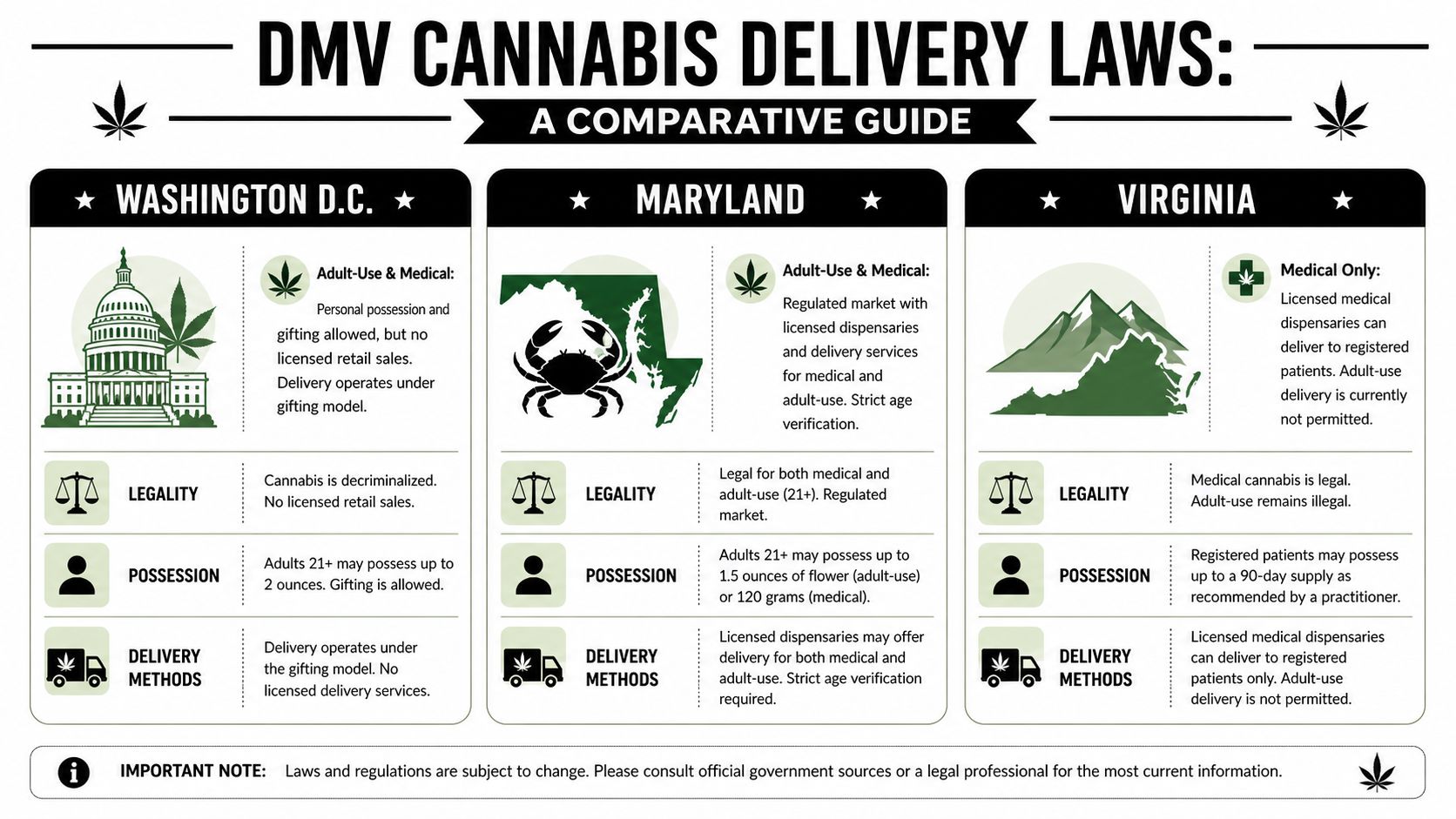
The fastest way to understand weed delivery in the DMV is to compare the three jurisdictions directly. DC, Maryland, and Virginia sit close together on the map, but they don’t handle cannabis delivery the same way.
The core difference at a glance
| Jurisdiction | Recreational Delivery Status | Medical Delivery Status | Key Consideration |
|---|---|---|---|
| Washington, DC | Adult-use access exists in a unique local environment, but it does not work like a standard licensed retail system | Licensed medical delivery is allowed | DC has separate realities for medical delivery and adult-use access |
| Maryland | Adult-use cannabis is regulated through the state market | Medical access also exists | Buyers should expect a more traditional regulated retail framework |
| Virginia | Adult-use delivery is not currently permitted | Medical delivery is allowed for registered patients | Virginia is the most restrictive of the three for delivery |
Washington, DC
DC is the jurisdiction that confuses people most.
Many people have heard about Initiative 71 and the long-running “gifting” model. That history matters, but it often gets mixed up with the District’s licensed medical cannabis delivery system. Those are not the same thing. If you’re trying to stay on solid legal ground, it’s important to separate informal assumptions from licensed operations.
For licensed medical delivery in DC, the rules are strict. Under ABCA regulations, courier vehicles must stay within District boundaries and cannot transit through Virginia or Maryland, as stated on the ABCA medical cannabis courier license page. That sounds like a small detail, but it tells you a lot about how seriously the District treats chain of custody and compliance.
Here’s what that means in plain language:
- The delivery starts and ends inside DC: A licensed courier can’t cut through Maryland or Virginia to save time.
- The route is part of compliance: The trip itself has rules, not just the product.
- Tracking matters: The product must stay tied to a licensed source and a documented delivery process.
In DC, legal delivery is less about speed claims and more about whether the service can document where the product came from and how it reached the customer.
If you’re trying to understand adult-use shops and the local gray areas, it helps to read a focused breakdown of I-71 compliant shops in DC. That kind of context is useful because many consumers use the phrase “weed delivery” to describe systems that don’t all operate under the same license structure.
Maryland
Maryland is easier for many readers to understand because it looks more like a standard regulated market. The state has adult-use and medical cannabis within a formal framework, and consumers generally expect licensed dispensaries, age checks, and clearer retail boundaries.
That doesn’t mean every business model is identical, and it doesn’t mean you should assume all services deliver to all addresses. But Maryland consumers are typically dealing with a more conventional setup than DC’s mix of local policy, medical delivery rules, and broader public confusion around gifting versus licensed activity.
A practical way to think about Maryland is this:
- Expect a regulated purchasing experience
- Expect identity and age verification
- Expect service areas and operating policies to vary by provider
Virginia
Virginia is the most limited of the three if you’re talking specifically about delivery. The key point is simple. Adult-use delivery is not currently permitted, while medical delivery is tied to registered patients through licensed medical channels.
That distinction matters because many people hear “Virginia has cannabis laws” and assume that means delivery is broadly available. It doesn’t. If you’re in Northern Virginia, the legal analysis is different from DC and different from Maryland.
People often get tripped up by geography. You may be only minutes from the District, but cannabis rules don’t travel with you just because the Beltway does.
A few DMV rules people often misunderstand
Some mistakes show up again and again:
- Thinking a DC service can just cross into Maryland or Virginia: It can’t if the licensed framework says the delivery must remain in DC.
- Assuming “adult-use legal” means “adult-use delivery legal”: Those are separate questions.
- Believing proximity changes the law: Living near a border doesn’t blend legal systems together.
- Treating every online menu as equally compliant: A professional website doesn’t prove a legal operating model.
For DMV residents, the safest habit is to start with location. Ask one question first: Where will the order be delivered? Once you answer that, the legal options narrow quickly.
Your First Weed Delivery Order A Step by Step Guide
If you’ve never used weed delivery before, the process is usually simpler than people expect. The anxiety mostly comes from not knowing what happens after you place the order. Once you understand the sequence, it feels much more routine.
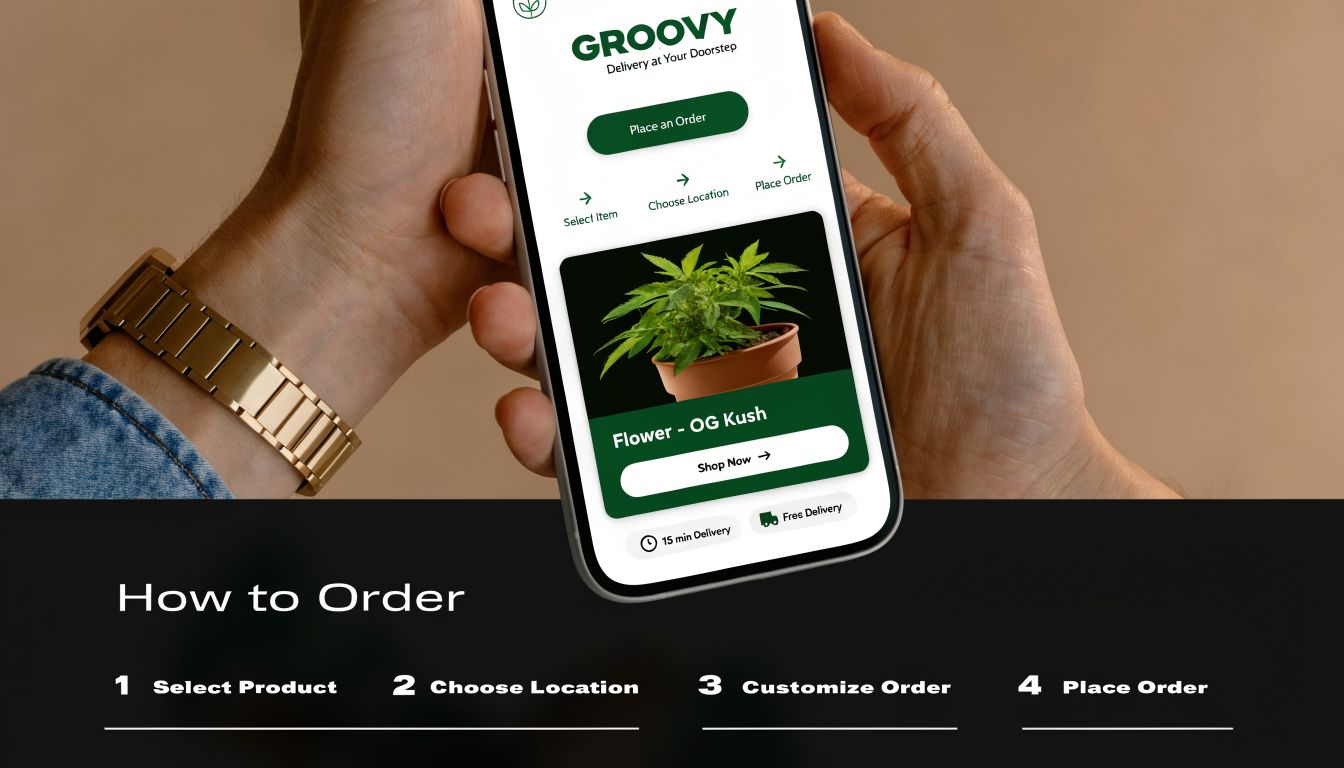
Step one is checking that the service fits your location
Before you browse products, confirm that the service delivers to your address and does so under the rules that apply there. This matters a lot in the DMV because crossing from one jurisdiction to another changes the legal picture.
Look for basics first:
- Delivery area: Does the service clearly name where it operates?
- Eligibility: Is it medical-only, adult-use, or tied to a specific local structure?
- Hours: Delivery windows can be narrower than people expect.
- ID requirements: A serious service explains this up front.
If the site is vague about where it delivers or how verification works, that’s a reason to pause.
Step two is reading the menu like a calm shopper, not a rushed one
A delivery menu can feel overwhelming at first. You may see flower, prerolls, vape carts, disposables, shatter, wax, live resin, gummies, tinctures, and more. Don’t try to understand everything in one pass.
Start with three simple choices:
Product type
Ask whether you want something inhaled, eaten, or used more gradually, such as a tincture.Desired experience
Are you looking for something light, relaxing, social, or more potent?Comfort level
If you’re new, choose the most straightforward format, not the most intense one.
Order the product you understand best, not the one with the flashiest description.
Step three is placing the order
Most services let you order online, and some also accept phone orders. During checkout, you’ll usually enter your name, delivery address, and contact details. Some services may ask for identification details before dispatch. Others verify mainly at drop-off.
The main thing to know is that ID checks are normal. They’re not a nuisance. They’re a sign that the courier is following procedure.
A short visual walkthrough can help if you like seeing the process before trying it yourself.
Step four is preparing for delivery
Once your order is accepted, stay reachable. Keep your phone nearby. Delivery windows can shift with traffic, order volume, and route planning.
Have these ready:
- A valid government ID: Don’t wait until the driver arrives to start looking for it.
- Access instructions: If you live in an apartment, condo, or building with a front desk, be clear.
- Payment method: Some services use cash on delivery, so confirm before arrival.
Many first-time customers ask about packaging. In a legitimate delivery setup, packaging is usually designed for privacy and professionalism. That generally means sealed products and a low-key handoff, not a flashy branded exchange.
Step five is the handoff
When the courier arrives, the interaction is usually brief. They verify identity, confirm the order, complete the transaction, and hand off the package. If you were expecting a long or awkward exchange, it usually isn’t.
A few smart habits make the experience smoother:
- Be on time: Drivers are working a route, not making open-ended social calls.
- Use your legal name if required by the service: Matching records reduces confusion.
- Meet at an appropriate location: Follow the service’s rules for where handoff can happen.
- Check the order promptly: Make sure what you received matches what you ordered.
For most adults, the first weed delivery order feels unfamiliar only once. After that, it’s just another service you know how to use.
How to Verify Quality and Safety in Cannabis Products
When people talk about cannabis delivery, they often focus on speed. That’s understandable, but speed is not the most important question. Quality control is. If a service can’t clearly explain where its products come from, how they’re tracked, and whether they’re tested, convenience stops being a benefit.
The strongest safety concept to understand is seed-to-sale tracking. In DC’s licensed delivery ecosystem, products are logged through a METRC-integrated system so they can be tracked from source to final handoff. According to this DC delivery compliance update, that system enables recalls if contaminants exceed ABCA limits, including pesticides below 0.1 ppm, and it has been associated with a 30 to 40% reduction in adulterated product incidents compared with unregulated markets.
What lab-tested should mean
“Lab-tested” gets used a lot, and some consumers treat it like a decorative phrase. It shouldn’t be decorative. It should signal that the product has gone through a controlled testing process tied to a regulated supply chain.
A careful buyer looks for signs that the service takes testing seriously:
- Clear product labeling: The menu should identify what the item is, not hide behind vague names.
- Consistency across listings: Random, uneven descriptions can signal weak inventory controls.
- Traceability language: A reputable service should be able to explain where products come from and how they’re handled.
- Compliance mindset: If the service talks openly about ID checks, sourcing, and packaging, that’s usually a better sign than a site focused only on hype.
If you want to see how a delivery menu can present products in a more organized way, browsing a structured DC cannabis delivery menu can help you understand what transparent product categories and descriptions look like.
What to watch for when claims sound too loose
“Organic,” “top shelf,” “gas,” and “exotic” can all sound appealing. They’re not useless terms, but they don’t replace evidence of safe handling. A product can be marketed beautifully and still leave important questions unanswered.
Here’s a simple filter that works well:
| Question | Why it matters |
|---|---|
| Is the product clearly categorized? | You should know whether you’re buying flower, concentrate, vape, or edible |
| Does the service explain verification? | Strong compliance often reflects stronger overall operations |
| Does the business sound professional about sourcing? | Safety starts long before delivery day |
| Are the claims specific or just flashy? | Specific information is usually more trustworthy than pure hype |
Safety starts before the driver leaves the shop. It begins with sourcing, testing, recordkeeping, and a business that acts like those details matter.
For beginners, this is the easiest rule to remember: buy from services that make quality boring in a good way. The safer operation is often the one that sounds calm, clear, and procedural.
Choosing the Right Product From Flower to Edibles
A weed delivery menu can look huge, but most products fall into a few familiar groups. Once you understand those groups, shopping gets easier. You stop scrolling aimlessly and start matching a product to the kind of experience you want.
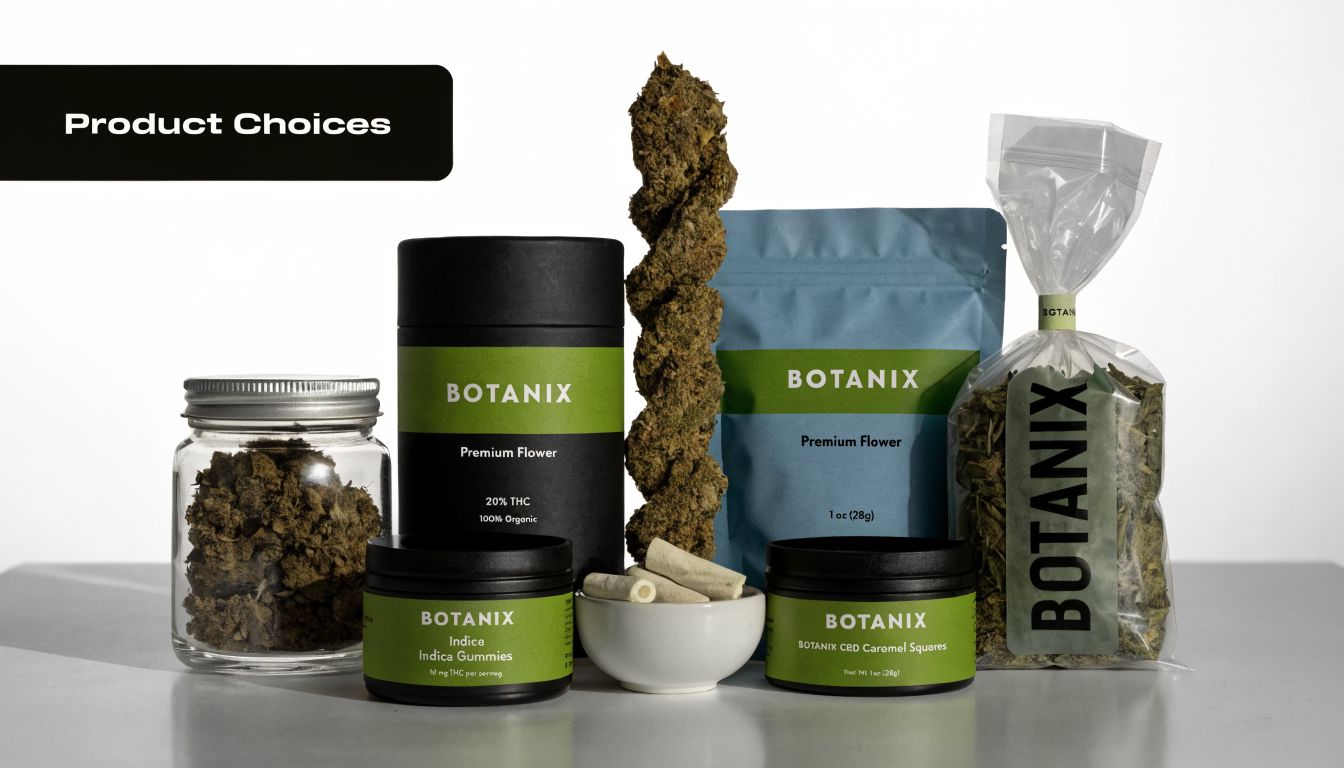
Flower for the classic experience
Flower is still where many people start. It’s the dried cannabis bud sold in jars, bags, or as prerolls. If you’ve heard terms like indica, sativa, and hybrid, that language usually appears here first.
A simple way to think about them:
- Indica-leaning options: Often chosen by people who want a slower, more settled vibe
- Sativa-leaning options: Often chosen for daytime, conversation, or a more lifted feel
- Hybrid options: A middle ground for people who want a blend of effects
Those labels can guide you, but they aren’t magic formulas. Strain details, terpene profiles, and potency all matter too. For a newer user, flower is often easier to understand than concentrates because the experience is usually more familiar and easier to pace.
Vapes for convenience and lower odor
Vapes appeal to people who want portability and a more discreet format. On a menu, you’ll usually see disposables and cartridges.
Disposables are simple. You buy the device ready to use. Cartridges usually attach to a compatible battery. If you don’t already own the hardware, a disposable is often the easier first purchase.
People often choose vapes because they’re convenient, but there’s a tradeoff. They can feel so easy to use that some beginners consume more than intended. Short pulls and patience matter.
If you’re new to vaping cannabis, wait before taking another hit. Ease of use can make it feel milder than it is.
Concentrates for experienced users
Concentrates include products like shatter, wax, live resin, and rosin. These products are more potent and usually better suited to people who already know how cannabis affects them.
The texture and format vary:
- Shatter: Glass-like and brittle
- Wax: Softer and easier to handle
- Live resin: Known for strong aroma and flavor
- Rosin: Popular with buyers who pay attention to extraction style
If you’re brand new, concentrates usually aren’t the best first stop. They can be excellent products, but they reward experience and careful dosing.
Edibles for people who don’t want to inhale
Edibles include gummies, chocolates, baked items, and infused drinks where available. Many adults prefer them because there’s no smoke or vapor involved.
The part that trips people up is timing. Edibles take longer to kick in than inhaled products. That delay causes many bad first experiences, because someone feels nothing, takes more, and then gets far more intoxicated than planned.
A smart beginner approach looks like this:
- Choose a clearly labeled edible
- Start with a modest amount
- Wait patiently before taking more
- Don’t mix impatience with extra dosing
A quick match guide
| If you want | Start with |
|---|---|
| Familiar, traditional cannabis use | Flower or prerolls |
| Convenience and portability | Disposable vape |
| Stronger, more advanced options | Concentrates |
| No inhalation | Edibles or tinctures |
The best product isn’t the one another person recommends with the most enthusiasm. It’s the one that fits your experience level, your setting, and your willingness to go slow.
Spotlight on Green Express DC Services and Deals
In DC, people often care about three things at once. They want convenience, they want discretion, and they want products that feel worth the money. A service stands out when it can handle all three without making the process confusing.
That’s where Green Express DC is a useful example. The service focuses on same-day cannabis delivery in Washington, DC, with a menu that includes flower, concentrates, vapes, edibles, and tinctures. The setup is simple for customers. Browse, order, verify, and receive the package with a professional handoff. You can see the service details on the Green Express DC delivery page.
Why this model fits DC especially well
DC has a lot of people who don’t want a drawn-out retail experience. Some are locals with packed schedules. Others are travelers, conference attendees, or people staying in short-term accommodations who want a low-key process.
That preference is reflected in visitor behavior. According to this contactless cannabis delivery article focused on traveler preferences, up to 40% of urban cannabis-using visitors prefer delivery for privacy, especially when services use unmarked vehicles and vacuum-sealed packaging.
Green Express DC also highlights details many customers look for right away:
- A $50 minimum, which keeps ordering accessible
- Cash on delivery, which keeps payment simple for many buyers
- Rotating specials, including deals like $150 for 10g of shatter or crumble
- Lab-tested, organic products, which matters to buyers who care about safety, not just speed
The practical takeaway
A good delivery service doesn’t just move products from point A to point B. It reduces hassle without making the experience feel sketchy. In DC, that means clear menus, discreet packaging, reliable communication, and a process that respects both privacy and compliance.
For locals, that’s convenience. For visitors, it can also mean avoiding the uncertainty that comes from trying to decode unfamiliar local cannabis norms on the fly.
Frequently Asked Questions About Weed Delivery
Can you get weed delivery to a hotel or Airbnb in DC
Sometimes, but you should never assume. The key issue is whether the service allows that destination and whether the location itself permits a handoff. Hotels, apartment buildings, and short-term rentals may have their own policies, and delivery services may also set rules about where they can complete an order.
The safest move is to ask before ordering. Be clear about whether you’re at a hotel front desk, in a lobby-access building, or at a private rental.
Do you need to show ID every time
You should expect to. That’s a normal part of a professional cannabis delivery process. Even if you’ve ordered before, the courier may still need to verify that the person receiving the order is the correct, eligible customer.
If a service acts casual about ID, that’s not reassuring. It’s a warning sign.
Is packaging actually discreet
Usually, yes, if you’re dealing with a serious service. Discreet packaging generally means the products are sealed, the exterior isn’t screaming for attention, and the handoff is handled professionally.
People sometimes imagine something theatrical. In reality, the best delivery experience is usually uneventful.
The ideal delivery is the one your neighbors never notice and you barely have to think about.
What happens if you miss the driver
That depends on the service. Some will contact you and try to coordinate. Others may need to move on and reschedule. Drivers usually operate on routes, so being unavailable can affect more than just your own order.
If you think you’ll be delayed, communicate early. A quick reply is much better than silence.
Should you tip the delivery driver
Tipping practices vary, and not everyone follows the same standard. If the service is prompt, professional, and helpful, many customers choose to tip the courier the same way they would tip for other delivery services. Check the service’s policy if you’re unsure.
Can a DC delivery service bring cannabis into Maryland or Virginia
Don’t assume that it can. Jurisdiction lines matter. Delivery legality depends on where the order is going and how the business is licensed to operate. A service that can legally deliver in DC is not automatically cleared to deliver across the border.
That’s one of the biggest misconceptions in the DMV, and one of the easiest ways to make a bad decision.
If you want a dependable option in Washington, DC, Green Express DC offers same-day cannabis delivery, discreet packaging, a curated menu of lab-tested products, and a straightforward ordering process for adults 21+ across the District.