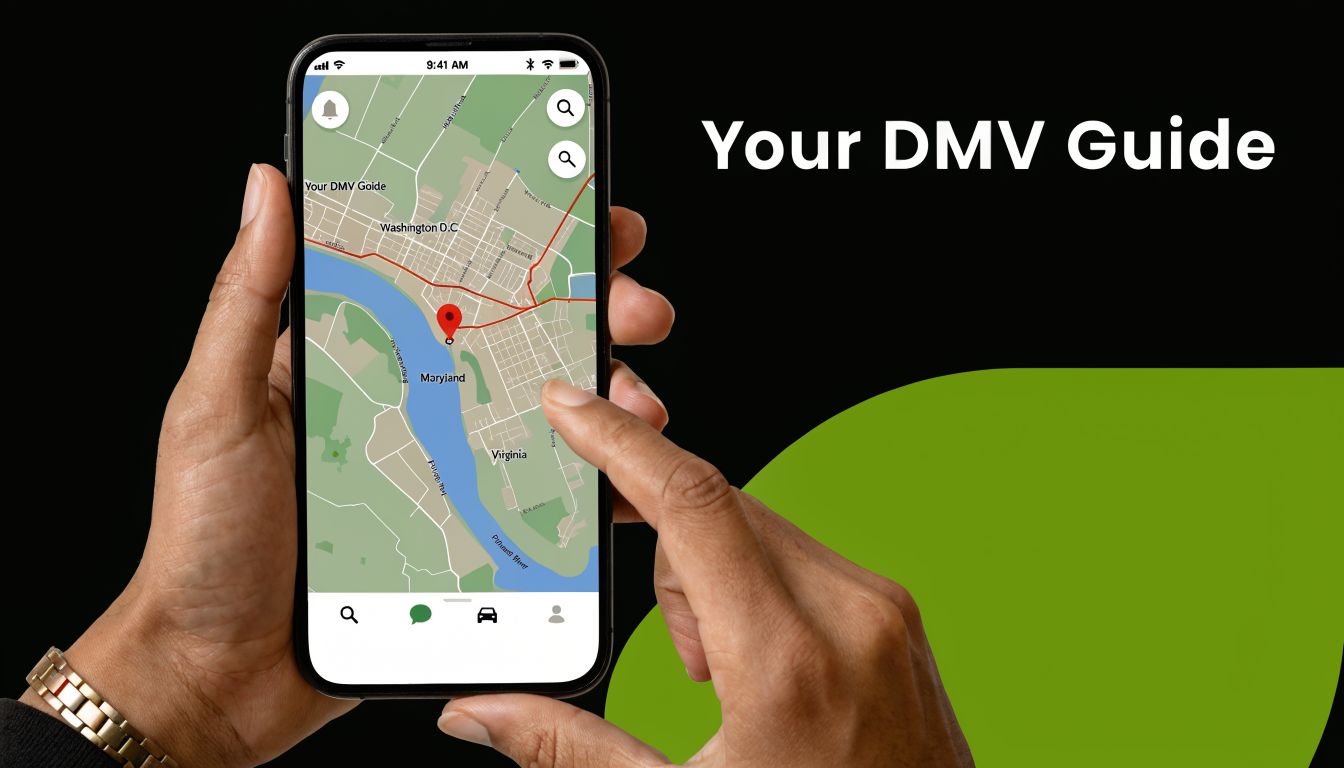
You're probably doing what many in the DMV do. You type Cannabis store near me into your phone, get a weird mix of dispensaries, delivery pages, map pins, and semi-cryptic DC menus, then realize the answer changes the second you cross a bridge.
That's normal here.
The DC, Maryland, and Virginia market is fragmented on purpose. If you don't know the rules, you waste time, overpay, or order from a sketchy operator. If you do know the rules, you can get what you want faster, more discreetly, and with far less hassle. In this region, “near me” often has less to do with the closest storefront and more to do with which access model fits your location, your timing, and your tolerance for inconvenience.
Why 'Cannabis Store Near Me' Means Something Different in the DMV
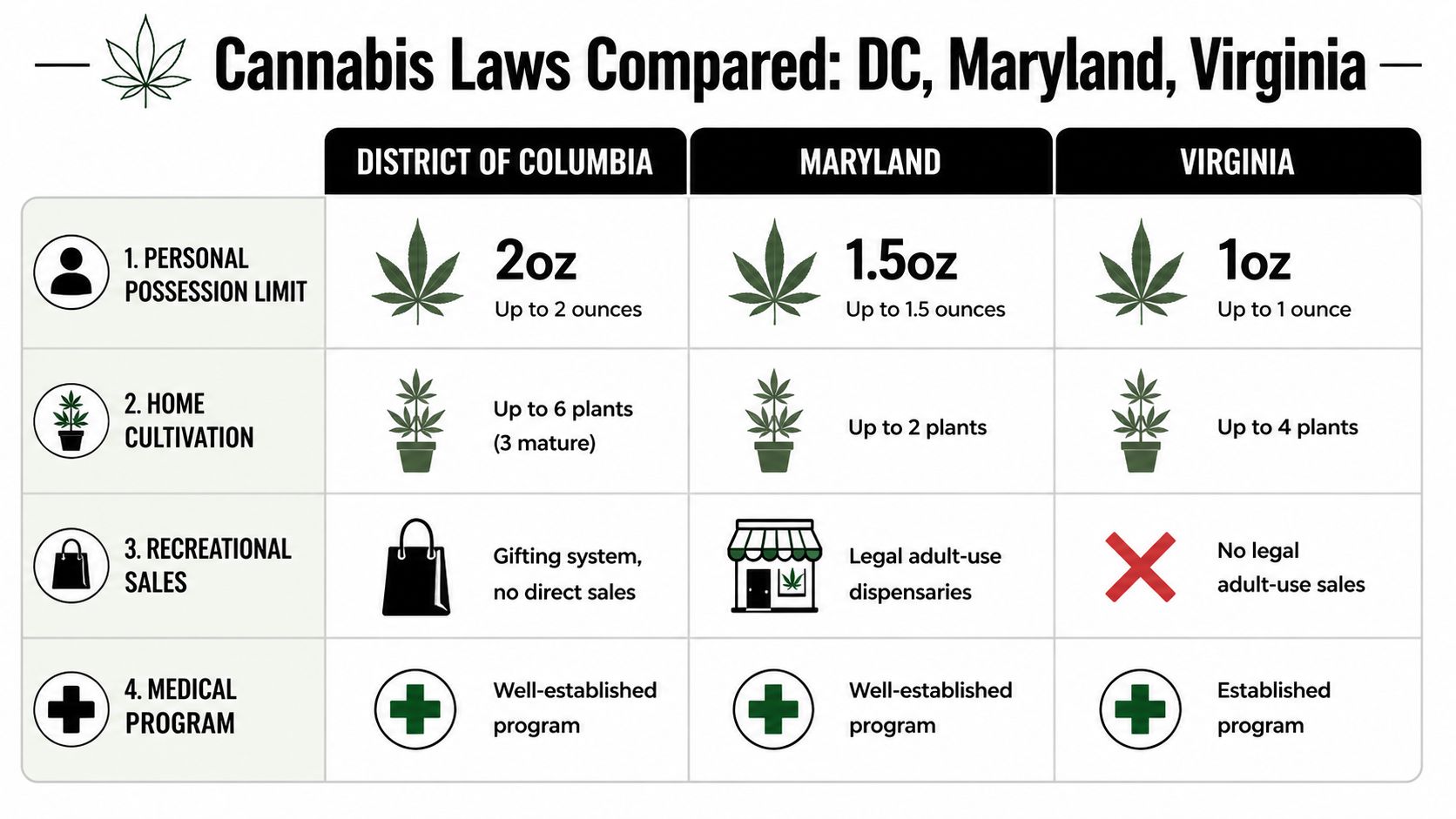
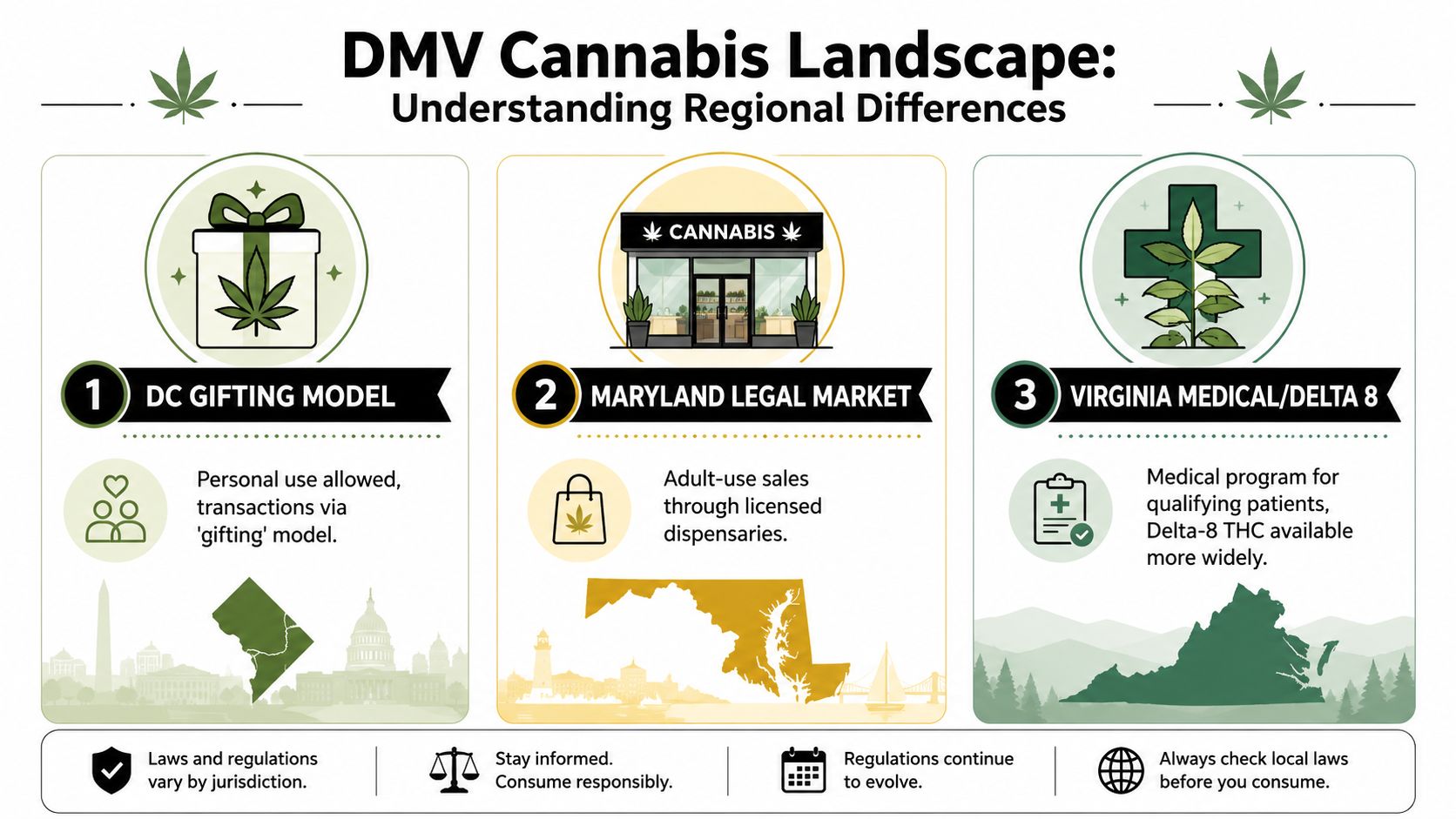
The DMV doesn't have one cannabis market. It has three different systems sitting next to each other.
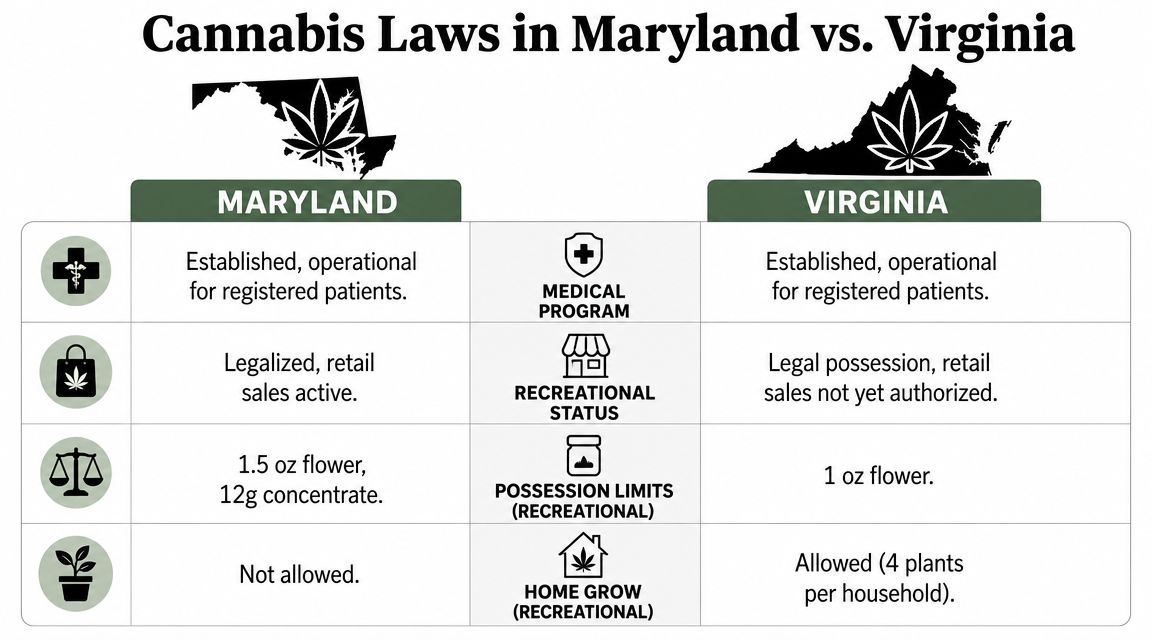
In Washington, DC, adults can legally use the I-71 gifting model, which is why your search results often show delivery services and nontraditional “shops” instead of the same kind of retail dispensaries you'd expect in Maryland. In Maryland, adult-use cannabis is sold through licensed dispensaries. In Virginia, the situation is tighter and more limited, so a lot of people get confused by what they can buy, where they can buy it, and whether delivery is even a real option.
That's why a simple local search in this area can look inconsistent. It is inconsistent.
The DMV side by side
| Area | What you'll usually find | What matters most |
|---|---|---|
| DC | I-71 gifting services, delivery-first operators, some storefront-style experiences | Compliance, menu clarity, delivery process |
| Maryland | Licensed adult-use dispensaries | Store location, online menu, pickup or available delivery |
| Virginia | More restricted access depending on product type and status | Legal caution, verification, not assuming DC rules apply |
A lot of people assume the whole metro area works like one market because the geography feels connected. It doesn't. A person in Capitol Hill, Bethesda, and Arlington can be only a short drive apart while dealing with three different practical realities.
There's also a bigger national backdrop here. Pew Research Center reported that 79% of Americans live in a county with at least one cannabis dispensary, and the U.S. had nearly 15,000 dispensaries in its 2024 analysis. Pew also found that California had 3,659 dispensaries at that time, which shows how much local law changes the density and convenience of legal access across markets (Pew Research Center's dispensary analysis).
Practical rule: In the DMV, don't search for the closest cannabis business. Search for the access model that matches the side of the border you're actually standing on.
Why DC confuses first-time buyers
DC is where people get tripped up most. They expect a standard dispensary experience, then discover the city has its own rhythm. The I-71 ecosystem is built around personal-use legality and gifting mechanics, so delivery plays a much bigger role than many out-of-towners expect.
That's also why storefront language can be misleading. A “shop” in DC may not function like a Maryland licensed dispensary. If you're trying to sort out what's compliant and what kind of operator you're dealing with, start with a guide to I-71 compliant shops in DC before you click the first result.
Why delivery often makes more sense here
A smart DMV insider move is simple. Stop fetishizing the nearest pin on the map.
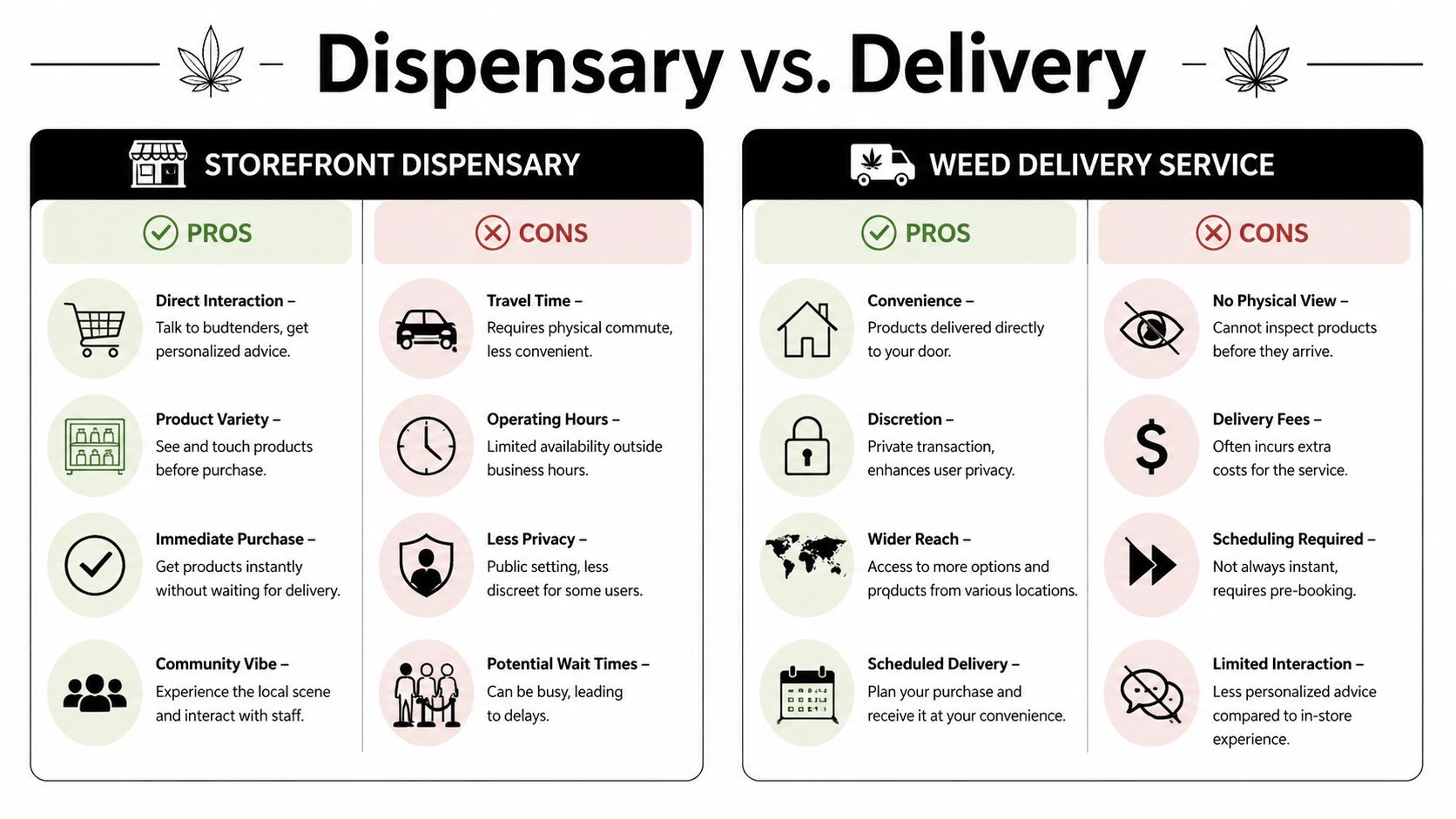
If you're in DC, delivery often beats chasing a storefront. If you're in Maryland, a licensed store may be the cleanest path. If you're in Virginia, you need to slow down and verify what's permitted before you assume the answer is the same as DC or Maryland.
The point isn't just access. It's friction. In this region, the smartest buy is usually the one that cuts down legal confusion, traffic, parking nonsense, and dead-end map results.
Finding and Vetting a Great DC Weed Delivery Service
A solid DC delivery service should look professional before you ever place an order. If the website feels slapped together, the menu is vague, or the ordering steps are murky, move on.
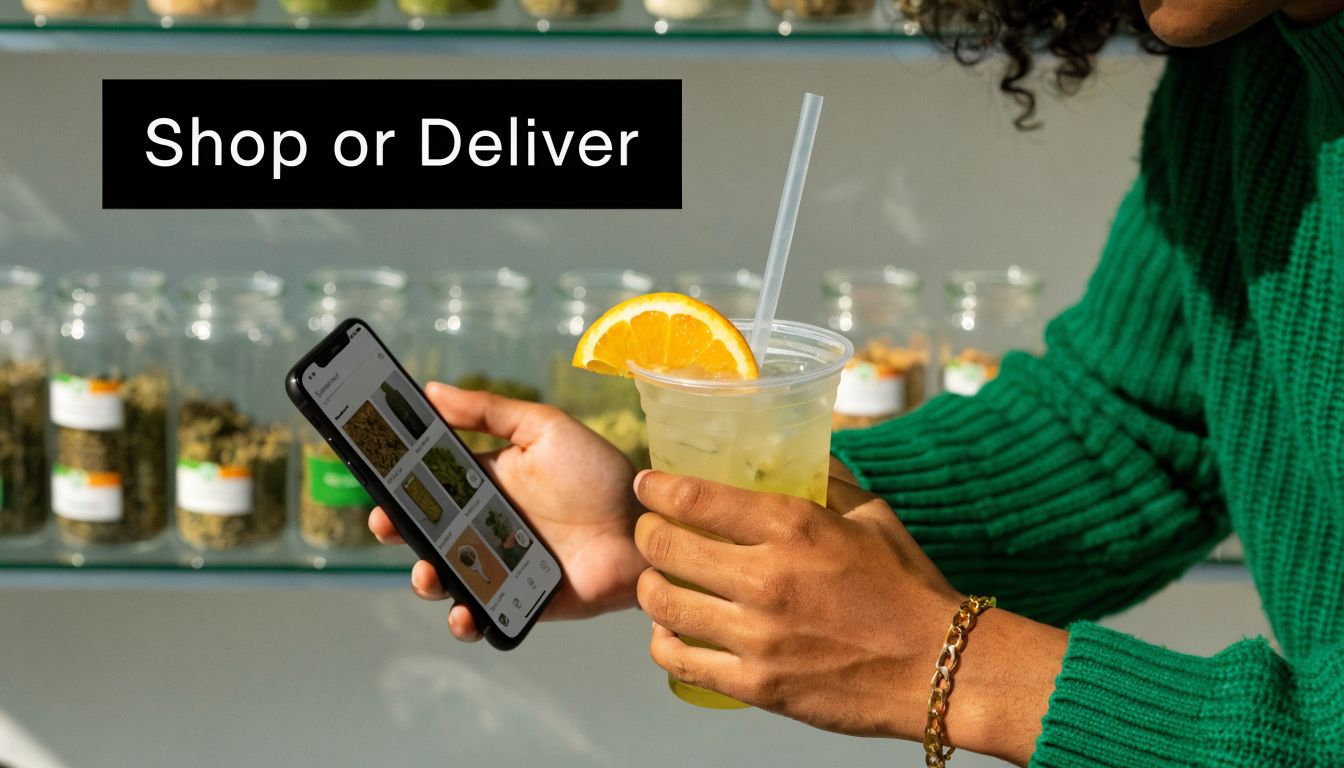
The first thing I check is whether the service is easy to use on my phone. That's not cosmetic. Industry guidance says more than 60% of cannabis customers browse and buy from phones, and the same guidance recommends a mobile-friendly menu, clear product pages, consistent business info, store hours, photos, and recent reviews as core local discovery signals (Meadow's dispensary SEO guidance).
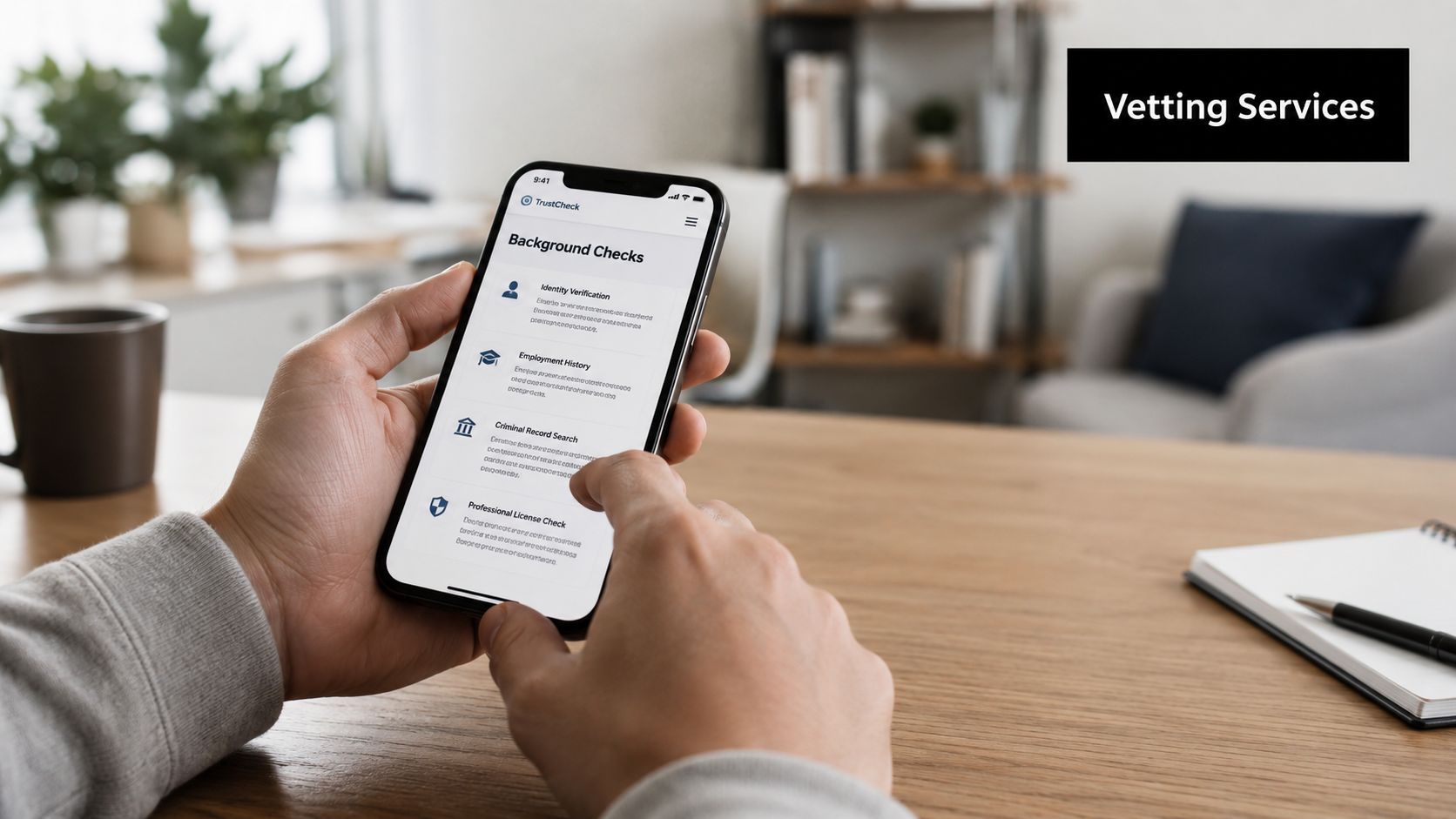
What a legit service should show you
Start with the menu. A real operator should make it obvious what categories are available, what the ordering process looks like, and how to contact them if something goes wrong.
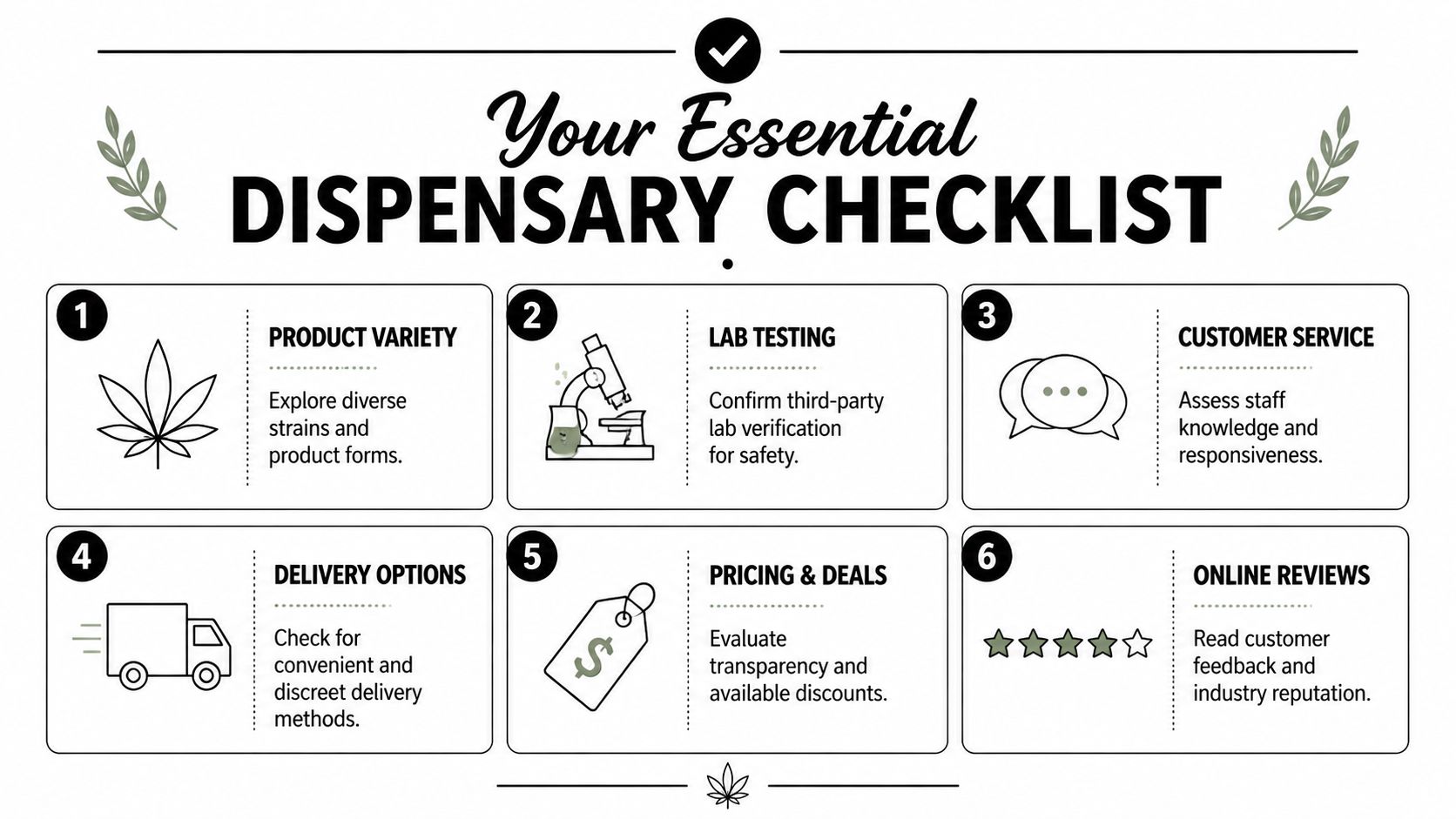
Use this checklist:
- Clean mobile menu: You should be able to browse flower, vapes, concentrates, edibles, and related categories without fighting the site.
- Recent customer feedback: Look for reviews that sound current and specific, not generic praise with no details.
- Clear service process: You want to know how ordering works, what kind of ID check happens, and what payment is accepted.
- Product transparency: Good menus describe products clearly instead of hiding behind hype words.
- Reachable support: If there's no easy way to call or message, that's a problem.
One local option that fits this delivery-first model is DC cannabis delivery, which presents an online menu, same-day service details, and order-by-phone access in a straightforward format. That's the baseline you want from any operator in this category.
The red flags people ignore
Some DC buyers get so focused on speed that they skip the obvious warning signs. That's how you end up with bad carts, mystery flower, or a courier who communicates like a burner account.
Avoid services that do any of the following:
- Hide basic business details: If you can't tell what they sell or how ordering works, don't guess.
- Make loud health claims: Big promises about wellness benefits should make you more skeptical, not less.
- Use blurry or recycled product imagery: If everything looks copied, treat the whole menu with suspicion.
- Post inconsistent info: Mixed-up hours, changing contact numbers, and confusing categories usually signal sloppy operations.
A published U.S. study found that higher nearby counts of recreational dispensaries with storefront signage and health-benefit signs within 2 miles were each associated with greater odds of overall cannabis use, with OR=1.063 and a 95% CI of 1.013 to 1.11 (study on dispensary visibility and cannabis use). My takeaway is simple. Visibility helps discovery, but visibility is not proof of quality.
Don't confuse “easy to find” with “worth ordering from.”
My DC rule for first orders
For your first order with any service, keep it conservative. Don't build a giant cart off branding alone. Test the process first.
Order a small mix from categories you understand. See how they communicate. See if the delivery window feels organized. See if the packaging and ID check are handled professionally. A good DC delivery service should feel boring in the best possible way. Clear, smooth, discreet, no drama.
That's what you want.
Ordering Cannabis in Maryland and Virginia
Maryland and Virginia should never be treated like DC with different zip codes. That mistake wastes a lot of time.
Maryland is more straightforward for adult-use buyers because the retail model is familiar. You look for a licensed dispensary, check the menu, compare pickup options, and decide whether delivery is available from that operator. Virginia is where people need to pump the brakes, because many shoppers assume recreational retail access works the same way there. It doesn't.
How to handle Maryland
In Maryland, think like a normal retail customer. Find a licensed shop, review the menu, compare hours, and see whether ordering ahead saves you a trip.
A lot of buyers in the suburbs make the same mistake. They default to the nearest location without checking whether another shop offers a cleaner menu, shorter wait, or better hours. “Near me” should include convenience, not just distance.
Use this filter when comparing Maryland options:
- Menu depth: Some stores carry broad categories but weak selection within them.
- Hours that fit your schedule: Late-day access matters if you work normal office hours.
- Pickup flow: A clean online ordering setup usually means less time standing around.
- Parking and access: In dense parts of the region, this matters more than people admit.
How to handle Virginia
Virginia requires more caution. Don't make assumptions based on what your friend did in DC or what you saw in a Maryland dispensary ad.
If you're in Virginia, verify what kind of product, seller, and purchase path you're dealing with before you spend money. Be especially careful with vague listings and broad “weed near me” results that blur legal categories together.
A lot of DMV frustration comes from people searching regionally but buying under state-specific rules.
Why delivery changes the equation
Consequently, delivery becomes the practical answer, especially for people bouncing between DC and the surrounding suburbs. Many consumers face the problem of the nearest legal store being inconvenient because of distance, traffic, or hours, and when a store is 15 miles away, delivery is often the better answer to “near me” (reference on inconvenience and delivery as the practical alternative).
That observation wasn't written about the DMV, but the logic absolutely fits the region. A map result in Maryland may be legal but annoying. A storefront on the Virginia side may not solve your actual problem. A DC delivery service may be the cleaner option if you're eligible to use one and you're ordering within the District.
The regional reality
Here's the honest version:
| Situation | Smarter move |
|---|---|
| You're in DC and want speed plus discretion | Use a vetted delivery operator |
| You're in Maryland and want standard retail shopping | Use a licensed dispensary with online ordering |
| You're in Virginia and think the rules are probably similar | Stop and verify before buying |
The DMV punishes lazy assumptions. The buyer who slows down for five minutes usually gets a better outcome than the buyer who clicks the first “near me” result and hopes the law is basically the same everywhere.
Choosing Your Vape Gear Ooze Batteries Carts and Disposables
If you're buying vapes, stop overcomplicating the hardware. You only need to answer one question first. Do you want convenience or control?
If you want the simplest path, buy a disposable. If you want flexibility and lower long-term hassle on hardware, buy a reusable battery and pair it with cartridges that fit it. That's the key decision.
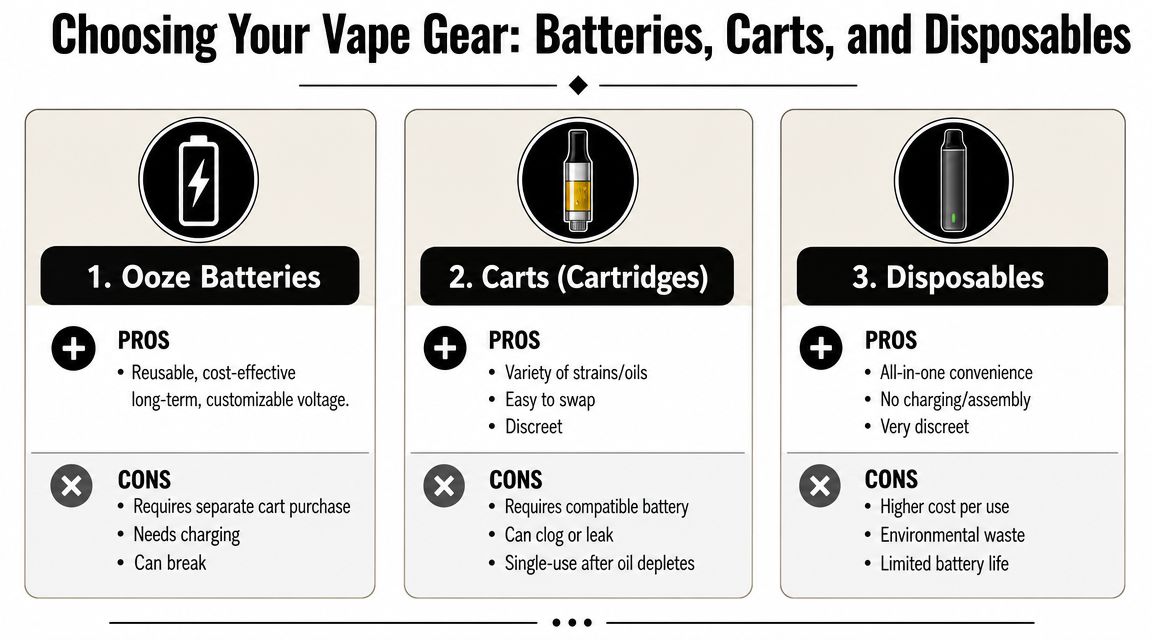
Start with the format, not the hype
A lot of menus throw “vapes” into one bucket. That's useless if you're trying to buy smart. The better way is to match the format to the experience you want. If you want fast effects with low odor, a vape is a better choice than an edible, which is a much more useful buying lens than just listing categories (guidance on matching product format to user needs).
Here's the quick breakdown:
- Disposable vapes: Best for visitors, occasional users, and anyone who doesn't want extra parts.
- Battery plus cartridge: Better for repeat buyers who want to swap strains or oil types.
- Edibles instead of vapes: Better if you don't want inhalation at all, but that's a different pace and a different experience.
Ooze batteries and basic compatibility
An Ooze battery usually matters because people want a simple reusable device for cartridges. In practical terms, the thing to check is cartridge compatibility, charging style, and whether the battery gives you basic control over heat.
For most buyers, a reusable battery setup makes sense if you vape regularly and want to switch between carts instead of tossing an entire device every time. If you rarely vape, disposables are easier.
For menu shopping, I'd rather see a clear cartridge page than a bunch of vague “premium vape” labels. A category like THC cartridges is easier to evaluate because it tells you what hardware path you're shopping for.
To get a visual on vape basics, this walkthrough is useful:
What to buy based on who you are
Not every buyer should use the same setup.
| Buyer type | Better fit | Why |
|---|---|---|
| Tourist or occasional user | Disposable | Less setup, less gear, easy to carry |
| Regular vape user | Battery plus carts | More flexibility and less waste from replacing the whole device |
| Beginner who hates odor | Vape | Faster effects and less smell than many other formats |
| Indecisive menu browser | Start with one disposable or one cart | Easier to test before committing |
Counterfeit warning signs
This matters more than flavor names.
Fake or low-trust vape products usually reveal themselves through sloppy packaging, zero product detail, or a seller who can't explain what they're carrying. If the menu reads like pure marketing and gives you nothing concrete, take the hint.
Watch for these signs:
- Packaging that looks inconsistent: Strange print quality, odd seals, or mismatched labels.
- No product clarity: If you can't tell whether it's a cart, disposable, or concentrate, skip it.
- Seller evasiveness: If basic questions get vague answers, don't force the purchase.
- Too much hype, not enough information: “Exotic,” “fire,” and “top shelf” aren't product specs.
Buy vapes the same way you'd buy any device that goes into your body. With less excitement and more scrutiny.
The smart move is boring. Choose the format that fits your habits, buy from a service or shop that explains what it sells clearly, and don't chase mystery hardware because the name sounds trendy.
Your Pre-Order Checklist ID Payment and Delivery Etiquette
Most ordering mistakes happen in the final ten minutes. Not during browsing. Not during product selection. Right before delivery.
People forget their ID, leave the wrong address note, disappear during the delivery window, or assume payment works like normal e-commerce. Clean this up before you order and the whole experience gets easier.
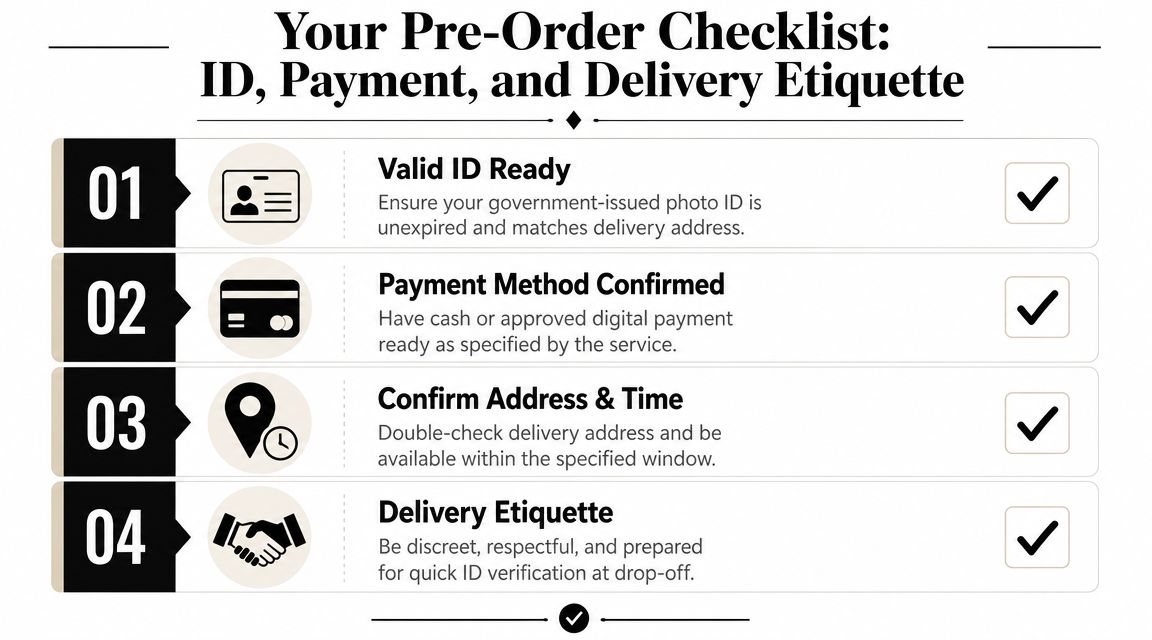
The non-negotiables
Use this checklist every time:
- Valid ID ready: Have an unexpired government-issued photo ID ready for age verification. If a service doesn't care about that, that's a red flag.
- Payment confirmed: Read the payment instructions before checkout. In DC delivery, cash is common, so don't assume card processing will work the way it does at a standard retailer.
- Address checked twice: Apartment numbers, entry instructions, and your actual availability matter more than people think.
- Phone on and nearby: If the courier needs to reach you and you vanish, you're creating your own delay.
Delivery etiquette that keeps things smooth
Be ready when the courier arrives. Keep the interaction short, respectful, and discreet. Don't turn pickup into a scavenger hunt with unclear directions and then act surprised when things slow down.
A smooth handoff usually looks like this:
- Be present: Don't order if you won't be reachable during the window.
- Be discreet: Treat the interaction like any other delivery. No need to create a scene.
- Be polite: Couriers are doing a job, not hosting a party.
- Check basics after receipt: Make sure your order matches what you expected before you settle in for the night.
One more practical note on gear
If you order carts or a battery, charge the device correctly, store it in a cool dry place, and dispose of used hardware responsibly. A lot of “bad vape” complaints are really battery neglect, clogged carts, or people treating disposable gear like permanent equipment.
That sounds small, but it makes a difference.
The Modern Cannabis Store is in Your Pocket
In the DMV, the old idea of a cannabis store doesn't hold up. The answer to Cannabis store near me isn't always a storefront with a parking lot and a neon sign. Sometimes it's a licensed Maryland dispensary with a clean pickup flow. Often, in DC, it's a vetted delivery service with a clear menu, a compliant process, and a courier who shows up when expected.
That's the modern standard. Convenience, discretion, and a buying process that doesn't make you decode three legal systems just to get through checkout.
If you're in DC, I think delivery is usually the sharper move. It cuts out the worst parts of local shopping friction and turns your phone into the actual store that matters.
If you want a straightforward DC option, Green Express DC offers a delivery-based menu for adults 21+ in the District, with lab-tested organic products, same-day service, discreet packaging, and clear ordering details you can review before you buy.