

You're staring at a premium delivery menu after work, and Jack Frost bud catches your eye. The name sounds cold and sharp, the photo looks frosty, and you want to know if it's the kind of flower that fits a focused evening, a social smoke, or a relaxed weekend reset. If you buy in DC, Maryland, or Virginia, there's another layer too, because the same strain name can hide real differences in genetics, lab results, and legal access.
Jack Frost has earned its reputation as a classic sativa-dominant hybrid, not a flash-in-the-pan novelty. It's widely described as a strain bred over a five-year period by Goldenseed, with commonly reported genetics around 70% sativa / 30% indica and a THC range of 18% to 24% (Joint Commerce strain guide). That mix is why it keeps showing up on curated menus. People want something with a lively headspace, but they also want a strain with enough history that the label means something.
Why Jack Frost Bud Deserves a Spot in Your DC Rotation
A DC buyer usually meets Jack Frost bud in a simple moment. You are off work, scrolling through a delivery menu, and trying to choose something premium without having to guess at the experience. Jack Frost earns attention because it is often described as uplifting, creative, and energetic, yet it still carries the weight of a long breeding history. That makes it feel like a strain with real staying power, not just a catchy label.
That matters in a market where menus can feel crowded and repetitive. A lot of flower sounds exciting on the page, then arrives as a generic hybrid once it is in hand. Jack Frost gives experienced buyers a useful reference point, the way a seasoned bartender might use a familiar spirit to judge the rest of the shelf. A guide from Joint Commerce also places it in that established, sativa-leaning lane, which helps explain why it keeps showing up on curated menus.
Why regular buyers keep coming back to it
The appeal is fairly direct. Jack Frost is usually described as a sativa-dominant hybrid with a clear-headed profile, so it tends to fit daytime sessions or early evening use. The long development history gives it another layer of trust, because strains that survive for years usually do so for practical reasons. Growers keep working with them, and buyers keep recognizing what they are supposed to do.
A good way to judge it is to treat the name as a starting point, not a promise. Two batches with the same label can still feel different if the cut, terpene balance, or cure has shifted. One jar may come across brighter and more cerebral, while another feels a little rounder and less sharp. That is why the label alone is not enough for a DC delivery order.
Practical rule: If a menu listing makes Jack Frost sound sleepy, heavy, or dessert-like, pause and check the lab and lineage details. That version may be a different cut, a different phenotype, or simply a loose label.
For DC buyers, the better question is not whether Jack Frost is good in the abstract. It is what kind of Jack Frost this batch is, and whether it fits the session you want. That approach helps you avoid overbuying the wrong flower and use delivery menus like someone who knows how to read a menu, not just a name.
Genetics and the Name Confusion Around Jack Frost
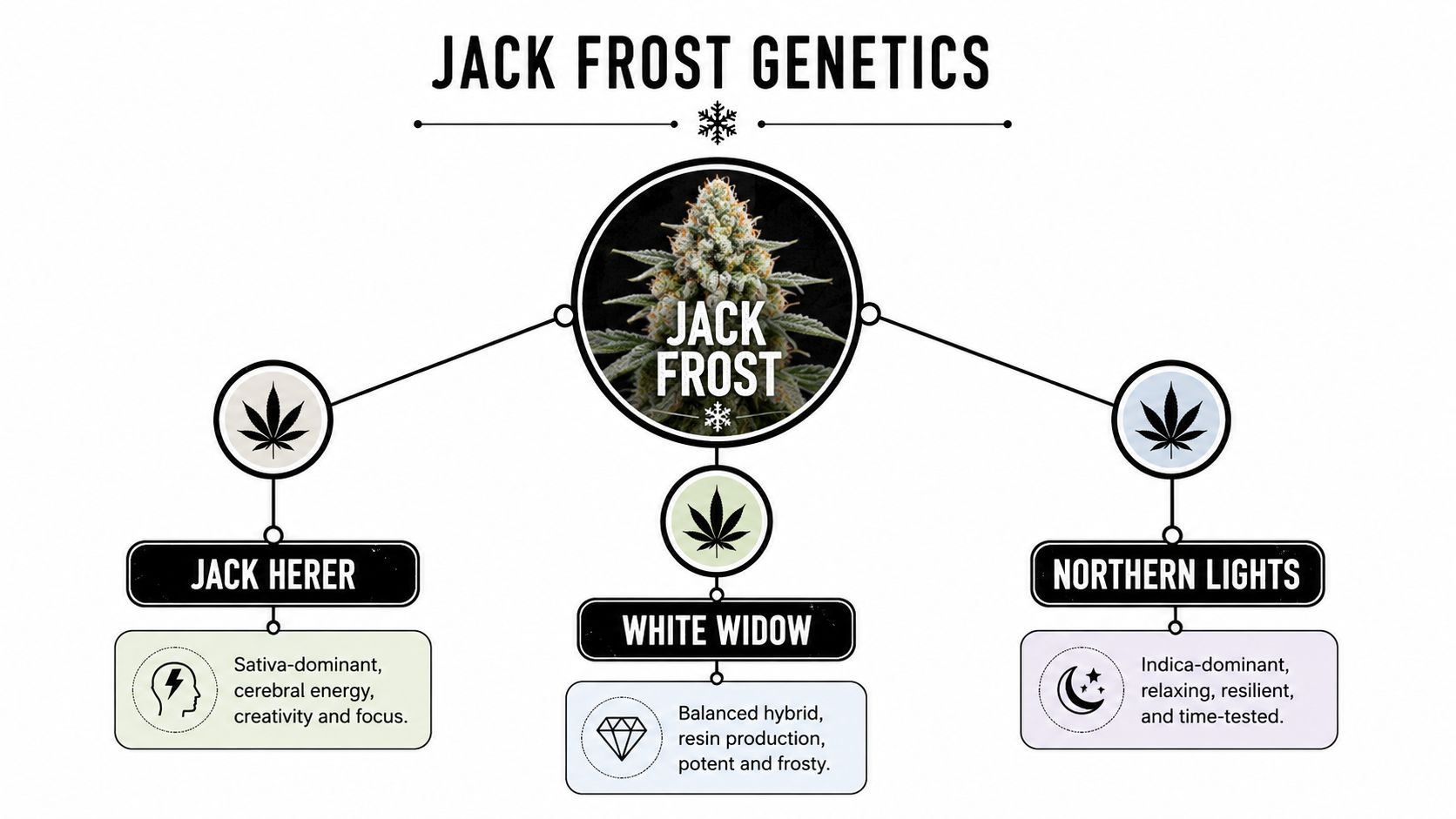
A menu can say Jack Frost and still leave you guessing about what is in the jar. The name is commonly tied to Jack Herer, White Widow, and Northern Lights #5, and many listings describe it as a sativa-dominant hybrid with roughly 65% to 70% sativa genetics (Pacific Seed Bank product page). Another strain guide describes a line developed over a five-year period by Goldenseed and often placed around 70% sativa / 30% indica (Joint Commerce strain guide). Those descriptions line up closely enough to show the same general family, even if different growers and databases phrase it differently.
The confusion starts because “Jack Frost” is used like a family name, not a single fixed package. Some databases shorten the parent list, some add detail, and some flatten everything into a generic hybrid label. That matters for DC delivery buyers, because lineage gives you a first read on how a batch may feel before you place an order. If a menu only says Jack Frost, you still do not know whether that flower leans more cerebral, more balanced, or more resin-heavy.
How to verify you're buying the right flower
Start with the product page itself. Look for the strain name, the listed parents, the THC range, and any terpene notes the seller includes. If the listing stays vague, ask for the batch label or COA before you commit to delivery.
A clean listing should also help you separate Jack Frost from other products that use the same name. The phrase can point to unrelated plants or products outside this cannabis strain, so precise labeling matters if you are trying to verify what you are getting. A reliable menu gives you enough detail to compare the flower against the common strain story instead of making you guess.
If the menu says Jack Frost but the genetics do not match the familiar strain profile, slow down and ask for clarification. The label can still be useful, but only if the seller can explain the cut clearly.
For DC delivery, that verification step is practical. You are checking whether the flower fits your tolerance, your schedule, and the kind of session you want, not just whether the name sounds familiar. If you also want a cleaner read on what the lab shows, a batch review can start with heavy metal analysis in a COA, since that tells you more about quality controls than the strain name ever will.
THC Range, Terpene Profile, and What the Lab Really Says
A Jack Frost label can look familiar and still hide a different experience from batch to batch. That is why the first number buyers usually check is THC, and why the number alone should not make the decision for you. Independent strain guides place Jack Frost in the 18% to 24% THC range. That gives you a useful strength bracket, but it still leaves room for real variation in how the flower feels, especially if your tolerance is modest.
Lab language gives you the next layer of context. Jack Frost is commonly associated with limonene, pinene, and caryophyllene, a combination that often points toward a sharper, cleaner aroma with citrus, pine, and spice notes. A batch that leans brighter in citrus and pine may feel more daytime-friendly, while a batch with more spice and earth can come across as steadier and more grounding. The strain name sets expectations, but the terpene panel helps explain why two jars with the same label do not always hit the same way.
What a COA can tell you that the strain name can't
A certificate of analysis, or COA, helps you compare one batch against another before you place a delivery order. The THC number gives you the rough strength zone, while the terpene panel helps explain the shape of the experience. That matters because a flower sold as Jack Frost can still vary in expression depending on the cut, the grow, and the harvest.
| Jack Frost Typical Lab Ranges | Typical Range | What It Means for You |
|---|---|---|
| THC | 18% to 24% | Potent enough that newer users should start cautiously |
| Genetics | 65% to 70% sativa | More likely to feel active than sleepy |
| Flowering window | 8 to 10 weeks | A fairly standard cultivation cycle for growers |
| Indoor yield | up to 350 to 450 g/m² | Can be commercially attractive when grown well |
| Outdoor yield | 450 to 550+ g per plant | Strong performance outdoors in suitable conditions |
Those cultivation figures come from the strain specification page, which also notes that Jack Frost performs best in temperate, low-humidity conditions where mold risk stays lower and trichomes stay dense (Pacific Seed Bank product page). If you want to judge batch quality more carefully, look beyond potency and read the testing details line by line. A useful place to start is Green Express DC's heavy metal analysis page, since lab documentation should tell you more than a strain name ever can.
The main point is simple. Jack Frost is a phenotype category, not a fixed experience. The label gives you a starting point, but the COA tells you what is likely in front of you right now.
Effects, Medical Benefits, and Choosing the Right Moment
A lot depends on the batch in front of you. One jar of Jack Frost bud may feel bright and social, while another can read as more neutral or even slightly racy if the THC is higher or the cure is less refined. That is why the label alone is only a starting point, and the COA or menu notes matter more than the strain name.
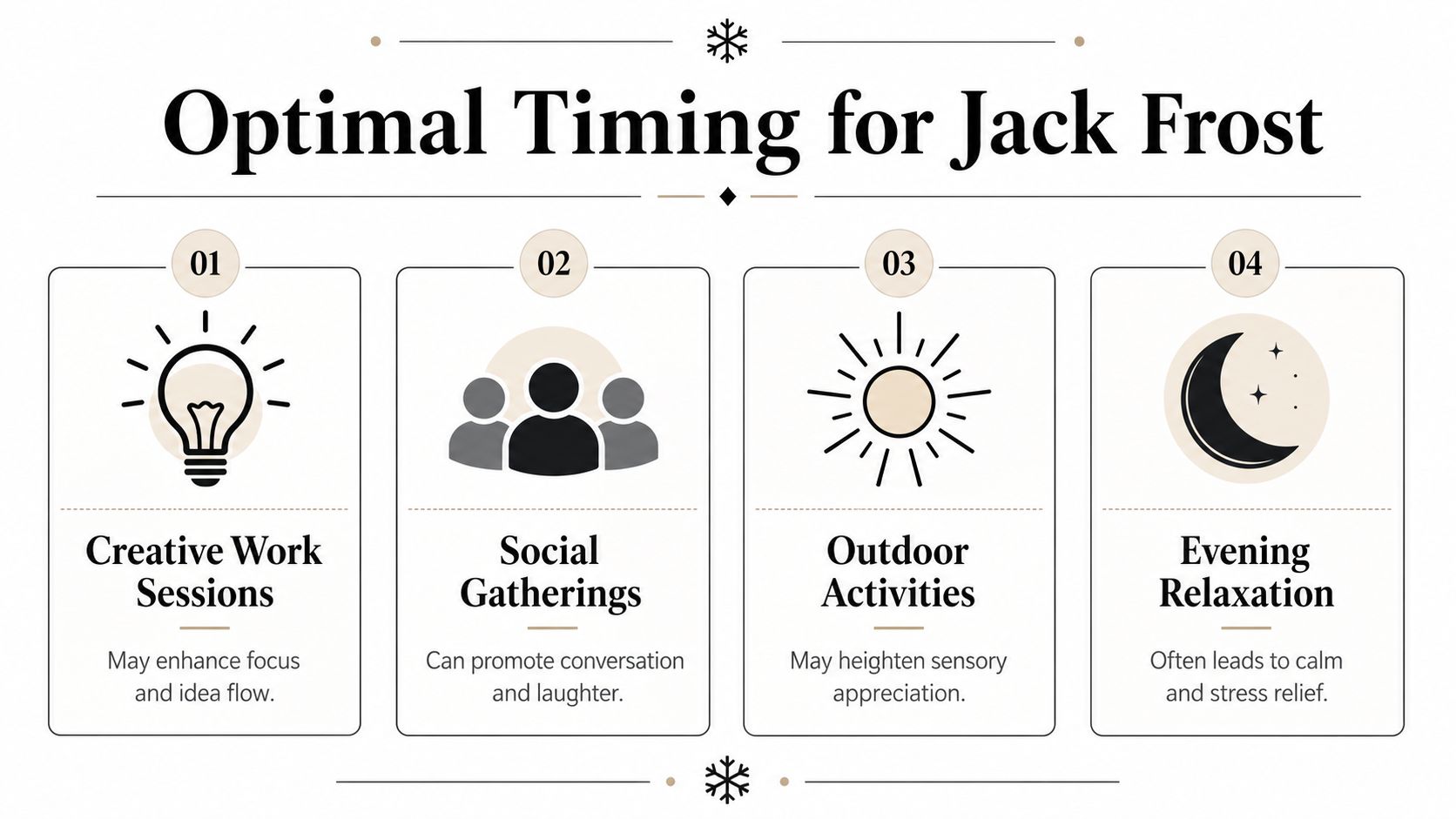
Jack Frost is usually chosen for the way it fits into a day, not for locking someone to the couch. Buyers tend to describe it as uplifting, euphoric, and creative, with a head-led feel that works well for conversation, brainstorming, light activity, or a change of pace. That makes it easier to place in real life than a flower that only makes sense in theory.
For a lot of adults, the best use case is a session with a purpose. Creative work, a walk, a casual hangout, or a relaxed evening with a movie all make more sense than a day when you need to stay completely still and quiet. If you are sensitive to strong THC, the same lively profile that feels energizing to one person can feel a little fast to another.
How to match the strain to the session
Jack Frost fits a head-clear, social, or active smoke better than a heavy indica. If you want deep sedation or bedtime support, a more body-forward flower is usually the easier choice. That is the basic rule, and it helps keep expectations realistic.
Practical rule: Use Jack Frost when you want your mind to stay engaged. Skip it when your goal is to shut the day down fast.
Newer or occasional users should keep the first session small. Because the flower can land in the 18% to 24% THC range, a strong hit can feel much bigger than expected if you are not used to premium flower. Start with a few careful draws, wait, and decide whether you need more. That pace gives you a cleaner read on your tolerance and lowers the chance of overdoing it.
The medical reasons people reach for Jack Frost are usually tied to mood support, focus, and mild tension relief. Those are the kinds of outcomes consumers often hope for with a sativa-dominant hybrid. The strain is less useful when someone wants heavy sedation or a calm, sleepy finish, and that is an important distinction for self-selection.
For DC buyers who want to confirm what they are ordering, Green Express DC's product quality assurance page is a useful place to check how batch details are presented before delivery.
How to Spot Premium Jack Frost Flower Before You Buy
A good Jack Frost jar should give you a clue the moment it's opened. The flower usually earns its name from dense trichome coverage, a resin-rich surface, and a fresh aroma that rises as soon as the seal breaks. If the buds look flat, overly dry, or loose in structure, you may be looking at a weaker batch or a poorly handled one.
Visual quality still only gives part of the picture. Premium Jack Frost usually looks clean and well cured, with trichomes that still have intact heads and a structure that feels deliberate rather than airy or uneven. Once the aroma fades, some of the strain's character usually fades with it too.
What to compare on the menu and in the jar
The safest way to judge flower is side by side, not in isolation. Compare the strain photo, the lab data, and the product description with the kind of session you want.
- Trichome density: A heavier frost usually points to better presentation and fresher handling.
- Bud structure: Tight, healthy structure often tells you more than fluffy buds that only look good in a staged photo.
- Aroma freshness: When you open the package, the scent should feel alive, not dusty or muted.
- Listing detail: A solid menu page should identify the strain clearly and back up quality claims with documentation.
For buyers who want a closer look at how sellers should support quality claims, Green Express DC's product quality assurance page is a useful reference point. That kind of documentation helps you compare delivery options with more confidence, especially when you are trying to figure out whether a listing reflects the flower in the jar or just a polished description.
Jack Frost can look appealing at first glance, but premium batches usually show their quality in smaller details. The bud should have presence, the aroma should arrive quickly, and the listing should give you enough information to make a real choice.
Consumption Methods, Dosing, Storage, and Safety
Jack Frost works well in the formats most flower buyers already know. A glass pipe or bong gives you a fast read on potency, while a dry-herb vaporizer can make the terpenes feel cleaner and more layered. Vapor tends to preserve more flavor, while smoking usually feels more immediate and a little heavier in the throat.
Method choice changes the session. If you want a quick test of a new batch, smoking makes the onset obvious. If you care more about flavor and smoother draws, vaporizing usually gives you a more controlled experience. Either way, the strain's THC range means you should still pace yourself.
A simple dosing approach that works in practice
If you're newer to premium flower, take one or two small pulls, then wait and reassess. That's more useful than trying to “power through” a session right away. With a batch that can test as high as 24% THC (Joint Commerce strain guide), restraint keeps the experience closer to what you wanted.
Store Jack Frost in a cool, dark, airtight container. Keep it away from heat, light, and repeated opening, because those are the conditions that flatten aroma and dry out the flower. If you want the strain to taste like itself a week later, treat the jar like part of the session, not an afterthought.
Safety comes first, especially with a strain that can feel more active than expected.
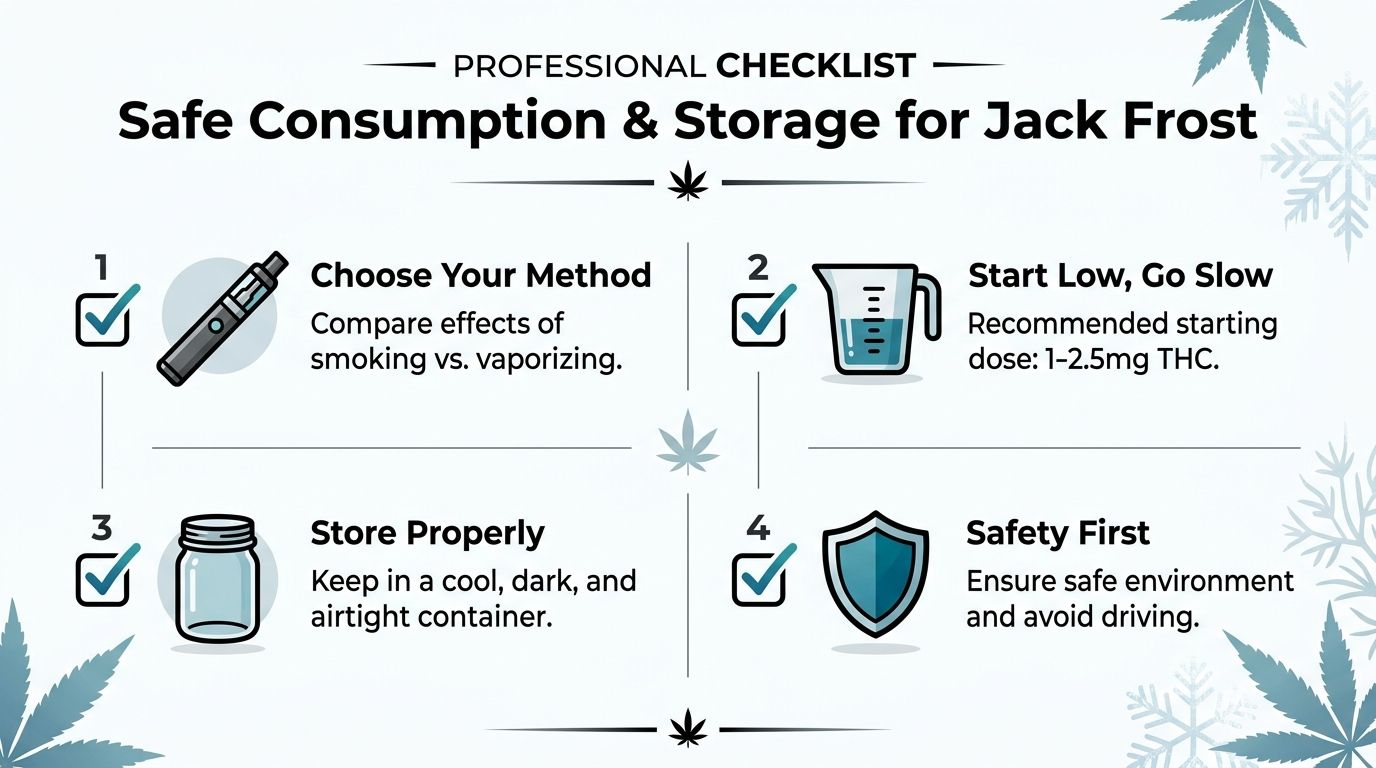
- Choose Your Method: Compare smoking versus vaporizing before you settle on a routine.
- Start Low, Go Slow: Give the first session time before adding more.
- Store Properly: Use a cool, dark, airtight container.
- Safety First: Keep the setting calm and don't drive.
Common side effects with a strong sativa-leaning flower include dry mouth, dry eyes, and occasional overstimulation if you overshoot your dose. If you know you're sensitive to THC, build in a slower pace from the start. That's the easiest way to make each batch feel predictable instead of random.
Ordering Jack Frost via Green Express DC and Regional Delivery Notes
If you are ordering in DC, the process should feel clear from the start. Open the menu, find Jack Frost bud by name, then check the posted lab data, product description, and batch details before you add it to your cart. Green Express DC offers cannabis delivery in Washington, DC, including same-day delivery and online ordering for flower and related products, which makes it a practical place to look for a strain like this when you want delivery without a long wait. You can review the service details on the Green Express DC weed delivery page.
Have a valid government ID ready at drop-off. That is part of the normal delivery process in DC, and it keeps the transaction clean and compliant. If you are comparing options across the region, the legal details matter just as much as the strain name.
DC, Maryland, and Virginia are not the same market
Maryland's adult-use market is statewide and regulated, but delivery is still limited by licensing structure and product rules. The state's legal purchase limit for adults is 1.5 ounces of cannabis flower or the equivalent per transaction, and dispensary delivery only works within license and compliance rules (Verilife Maryland overview). A delivery-friendly menu still has a legal boundary you cannot ignore, even if the product listing looks straightforward.
Virginia works differently. Adults 21 and older may possess up to 1 ounce of cannabis and cultivate up to four plants per household, but there is no legal adult-use retail system for normal cannabis delivery, and sales remain restricted to the medical system (Sativa University overview). If someone claims broad retail weed delivery across Virginia, read that carefully and make sure they are separating medical access from adult-use retail.
One more point helps keep expectations realistic. Jack Frost is often discussed as a phenotype-based strain experience, so the name alone does not tell you exactly how a batch will land. Genetics, THC, and terpene expression can shift the effect from one harvest to the next, which is why the label, the lab sheet, and the delivery rules should all line up before you buy. That is the practical buyer move, order where the delivery system is legal, confirm the product details, and check the ID rules before the driver arrives.
Your Quick Jack Frost Buying Checklist
Before you place the order, check four things. First, confirm that the flower is Jack Frost and not just a loosely labeled hybrid. Second, read the THC range and terpene notes so you know what the batch is likely to feel like.
Third, match the strain to your plan for the session. Jack Frost makes more sense for focus, conversation, creative work, or a lighter active evening than for deep sedation. Fourth, check the delivery rules where you live, especially if you're ordering across DC, Maryland, or Virginia.
If the listing gives you clear lab data, a believable lineage, and a delivery process you understand, you're in good shape. That's how you buy premium flower with confidence instead of gambling on a menu photo.
Green Express DC keeps the process simple with same-day delivery, a menu that includes premium flower, and clear ID verification at drop-off. If you want to order Jack Frost bud with a local service that serves adults 21+ across Washington, DC, visit Green Express DC and check the menu before you buy.